



close

FEATURED

FEATUREDNEWS

Ex-Min. Mbayo Troubles: What Went Wrong?

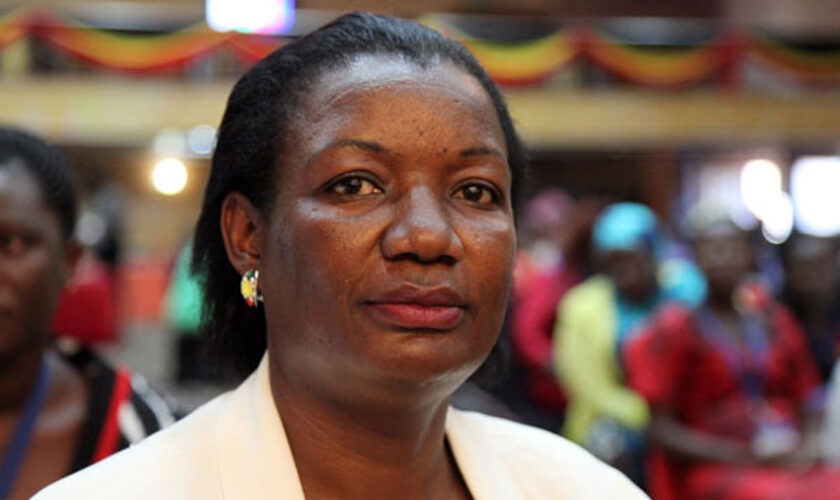
Three weeks ago, embattled former minister for presidency Esther Mbayo held a meeting. The meeting took place in Jinja and was baptized as Busoga Sugar Factory meeting. A line of legislators from Busoga attended and even the minister for finance. The meeting decided that a sugar factory for Busoga be set up but situated in her Luuka district which she represents in parliament.


Our Inspectors reported that the meeting much as it addressed a noble cause for the good of suffering Basoga involved in cane growing, some things weren’t clear. To begin with, not all MPs turned up and even those who attended, majority of them are allegedly not cane growing members. However, inspectors revealed these seemed to position themselves for the stewardship of the intended factory to cost over Shs130bn.


The invites to the meeting were also allegedly done selectively the reason some prominent people with influence like Daudi Migereko never attended since he got his invite on the last minute.
The president also had a line of his trusted people he expected to be in that meeting to feed him with some vital info.
“The invites were sent to some members on the last day. There was no way they could attend” an inspector said, adding that the likes of Migereko followed the proceedings on media platforms in form of news.


Inspectors revealed that this alleged selective invitation gave chance to speculation that the intended factory was being fronted to benefit some individual members’ interests.
The suspicion heightened after some farmers came out and started badmouthing the whole project claiming they were never consulted yet they are the ones in actual cane growing business.

The farmers according to a brief before Museveni complain that they cannot sell their canes because of failure to have license and yet these licenses are allegedly held by politicians who don’t even run any cane garden. This is why some sections of cane farmers immediately came out to bash Mbayo and her group over the factory.


And yet, according to security circles, Mbayo had already secured herself a ‘rotten egg’ in the eyes of the president.
Inspectors revealed that at the time of election of the speaker of Parliament, Museveni got a brief about all hitherto ‘incumbent ministers’ on their stand on the issue of Rebecca Kadaga VS Jacob Oulanyah for speakership.

Intelligence reportedly trickled in suggesting that Mbayo, Sarah Opendi, Rukia Nakadama and another female MP from Bugisu weren’t siding with Oulanyah. However, later Nakadama and the Bugisu female MP managed to secretly pass the test after they finally towed Museveni’s line at the actual time of voting leaving Opendi and Mbayo in the trap. It so happened that when it was apparent that some members were determined to vote Kadaga, Museveni and his strategists got scared and therefore, a tactical move was hatched. At first, according to inspectors, Museveni wanted to net these rebel ministers using his boys but he abandoned the idea and came up with a fresh one and done through parliament.


In the initial plan, tents were supposed to be mounted at Kololo and be used as polling stations.
In the voting tent, there was supposed to be a security person deployed secretly in the tent.
“Not that he was supposed to intimidate the voter, but the purpose was to see who was ticking who?” An inspector explained.
However, our Inspectors revealed, this idea was abandoned after it was seen as invading on the independence of the legislature.


When it flopped, another tactical move allegedly came up. Here, members were given ballot papers but they all had hidden serial numbers. Every member was tactfully spied on shortly after the election. And upon security analysis, it was discovered that four hitherto ministers allegedly voted against Museveni’s man Oulanyah.
Among these included our dear now former minister Esther Mbayo!


“Museveni is always on top of every game. He never runs out of schemes to catch someone if he wants. She refused to vote his candidate and this is where the genesis of her troubles started” an inspector revealed.

Minister Milly Babalanda


In fact, inspectors revealed that for Mbayo to have missed out on cabinet appointment, this was the mother of her troubles. It should be recalled that Museveni waited for the election of speaker before he finally released his 6th term cabinet. The Bugisu female MP who had been backing Kadaga upon a security analysis of the ballots, actually voted Oulanyah and this is how she ended up in cabinet.


To prove how disgusted he was with Mbayo, Museveni shipped in Milly Babalanda from his office at Kyambogo and placed her in Mbayo’s former office of presidency. It is now Ms Babalanda making the final assault on Mbayo. The assault began by an investigation on how funds were misused in the UPPC. She’s now a candidate for police investigation and so are some other bosses being lined up for grilling.


Back in Busoga, Kadaga and Mbayo worked together and it is believed that it’s both Luuka and Kamuli districts which greatly benefited from the pilot poultry project under the Kasolwe Stock Farm program.
And yet, inspectors revealed, Mbayo had already been placed under a ‘red banner’ following the nasty events of November 18 2020 which badly dented Museveni’s government.

Rebecca Kadaga


“Mbayo was under pressure from NUP and in the process of fighting for her survival, she looked to security forces thinking it was a small matter. The president got disappointed with this high-handedness yet she was the reigning presidency minister. In effect, her actions bordered on misuse of security forces and this affected Museveni’s election legitimacy” an inspector added.
It was reported that when the Bobi riots ended arising from the Luuka incident, Museveni kept a keen eye on Luuka to see what he will get from there on the voting day. To his dismay, Luuka just like Kamuli were among the eight districts Museveni badly lost and this loss was attributed to the November 18 actions.


To make matters worse, when elections were done and it was clear Museveni had lost Buganda and Busoga, Mbayo sat in her chair and decreed that Museveni’s loss in Buganda was because of Mengo and the Catholic church. This statement instead attracted more rhetoric against the president who was trying to find ways of letting the issue pass.

On the other hand, inspectors said the project to bring down minister Rebecca Kadaga’s influence is alive especially after the 2012 Intel that she was using her then parliamentary outreach program to market her presidential bid. Watch this space!

read more
FEATUREDNEWS

M7 gets creative with numbers to woo Arab Investors

President Yoweri Museveni went scientific as he resorted to the power of statistics in an effort to woo Arab investors into Uganda. The president delivered the enticing pitch for business in an address to Arab investors that graced the 2020 Dubai expo in the United Arab Emirates.

Delivering his case with a tinge of pan-African sentiments, the president urged the investors to come and invest in Uganda so that they get a pass to sell their goods to a growing African population whose market potential is estimated to grow to over a billion by 2050.

Also making a case for Uganda’s own population, the president painted the long term market picture thus: “We are 42 million people, the youngest population. We will be a market of 106 million by 2050. Products made in Uganda can be sold to 1.4bn people in Africa.”

The world trade expo in Dubai will run for 3 days and pits together investors from across the world while also giving chance to countries with trade opportunities to showcase their potential. This year’s event has a host of African presidents, with the east African confederation being represented by Museveni and his Rwandan counterpart Paul Kagame.

Uganda has already made a huge impression at the expo, with the Burj Khalifa, the tallest building in the world, getting draped in Uganda’s flag colours. As if to lead by example, Museveni who has severally accused his ministers of not doing things to his actual liking, seems to have decided to take the bull by the horns. He is flanked at the expo by a host of Ugandan dignitaries including Speaker Jacob Oulanyah and Ruth Nankabirwa among others.

read more
FEATUREDNEWS

Katikkiro Mayiga, Daughter Shame Tribalism Crusaders

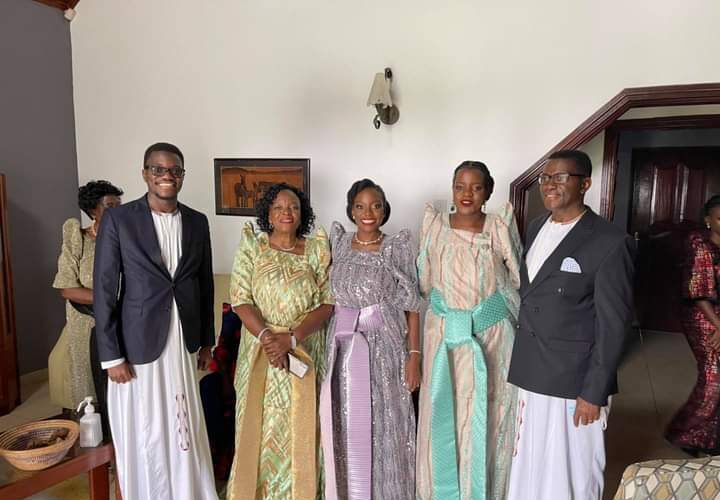
Buganda Katikkirro Charles Peter Mayiga proved yet again that sectarian and tribal tendencies in Buganda have since been cast in the Stone Age by marrying off his daughter Samantha Nanziri to the East.

This happened as he hosted an entourage from Dhopadhola land which escorted one Emmanuel Ofwono to ask for his daughter’s hand in marriage.

The function which took place at the Buganda premier’s home in Lweza on Saturday largely passed off as a low key ceremony thus highlighting Mayiga’s protracted crusade against flashy traditional marriage ceremonies.

It should be recalled that recently, Mayiga came out to issue a stern warning to Baganda youths and families to stop exaggerating Kiganda traditional marriage rites of Kukyala and Kwanjula.

This followed Mengo’s observation that the exaggerations not only vulgarize cultural norms but also scare off youths from marriage thus increasing the incidence of unofficial marital unions in the land. And as if to walk his talk, Mayiga pulled off a function that was graced by very few people but still went as planned despite his deep connections and bevy of friends and well-wishers.

The function, however, will also send a strong message to anti-Buganda propagandists that have in the recent past painted the powers that be at Mengo as heavily tribal, sectarian and thus unwelcoming and intolerant of Ugandans from other areas.

This is because despite Buganda teeming with many educated youth from strong Buganda families, the premier let love lead the way, ignoring any tribal or sectarian obstacles.

The Katikkiro’s daughter follows the route taken by the Kabaka’s daughter princess Nkinzi who is betrothed to former socialite Gareth Onyango.

read more
FEATUREDNEWS

MAAIF Calls For Stakeholders’ Retreat To Study Busoga Poverty Question

The ministry for agriculture, animal industry and fisheries has observed the need to have a stakeholders’ meeting aimed at interrogating the never-ending poverty question in Busoga sub-region.
This was arrived at during the sector’s 4-days retreat at Kyankwanzi.


According to the sector’s minister Frank Kagyigi Tumwebaze, the ministry will have a special retreat at Kasolwe Stock Farm in Kamuli district where different stakeholders from the region will interact with the ministry on why poverty still persists in Busoga and the possible interventions that can be made to change the situation.


“I want to request that we have a meeting at Kasolwe. We must talk to all people concerned on this matter and they give us their views. Why is it that this situation persists?” He said before requesting the Senior Presidential Advisor on Busoga in charge of Poverty Alleviation hon. Florence Mutyabule to ensure that the stakeholders are fully mobilized for this meeting to take place.


Meanwhile, state minister for animal industry Lt. Col. Bright Kanyontole Rwamirama attributed the situation to poor attitude among some people in Busoga towards saving. He said that some of them have poor financial discipline the reason they don’t invest their savings but instead invest in women.


As a result, the minister said the Basoga end up having large families which they cannot sustain in terms of basic needs and land. He said high fertility rate among Basoga is the main cause of the poverty in the region, hence the need for sensitization on family planning and attitude change towards saving.


He said, it is very rare to find a Musoga man with a family of less than five kids but instead, most of them have more than 10 children.


“We must face facts as they are. The poverty in Busoga is caused by big families they have. You find a man with merely three acres of land but has 10 or 12 kids. Most of them lack financial management discipline. When he gets money, instead of saving to invest, he will end up marrying another woman. Myself here, I have four kids. I have done something for myself, I can still produce more kids but I am not doing so. But those Basoga, they will just produce and produce. These people must be told the truth. They live a reckless life. Therefore, attitude change is paramount” he said.


The issue of poverty in Busoga was ignited by the senior presidential advisor on Busoga in charge of Poverty Alleviation, hon Florence Mutyabule who attended this treat on request by Gen. Salim Saleh. Saleh is the coordinator of OWC.


In this meeting we understood, Mutyabule told the retreat that it was important for MAAIF to come up with a deliberate plan to study more closely the issue of poverty in Busoga and how best this sector can help arrest the situation.


“In the recent research by UBOS, Busoga again scored it’s usual position of being number one when it comes to poverty prevelance rate. We stood at 14.5percent compared to the rest of other regions. This shows something is lacking and MAAIF, needs to question this trend since most people are more familiar with it’s work. What haven’t you done? Are people being involved in your planning or you just dump projects to them?”

Mutyabule ignited the fire.
Agriculture ministers Hellen Adoa, Rwamirama and Tumwebaze at the retreat


The meeting, speaker after speaker became concerned but also questioned why Busoga remains in poverty yet there are many big projects that have gone there. In addition, the meeting questioned the relevance of many top leaders from Busoga in government if their region continues to lag behind.


“There are many projects that have gone to Busoga in the name of economic empowerment. What has been their impact? Government sends a lot of funds to finance those beautiful projects but nothing changes! Busoga has had many big people in government, they have been asking for funds to help their region, but why is it that poverty is still high there? What have they done?” The participants queried.

The MAAIF PS Maj. Gen. David Kasura-Kyomukama


Indeed, Busoga has had many big people including speaker of Parliament Rebecca Kadaga, NRM secretary General, minister for presidency, PPS in addition to several permanent secretaries and commissioners. Currently, the region has two deputy premiers and a number of ministers. However, the region continues to score badly in terms of national ratings on poverty reduction.


The retreat chaired by MAAIF minister Frank Kagyigi Tumwebaze resolved to hold a special retreat at Kasolwe Stock Farm in Kamuli district with all stakeholders to interrogate the poverty question in the region. The premier Robinah Nabbanja represented president Museveni and closed the retreat.

read more
FEATUREDNEWS

Min. Nankabirwa Opens New ERA Offices, Asks For Low Power Tariffs

The minister for energy and mineral development Dr. Ruth Nankabirwa Ssentamu has challenged the Electricity Regulatory Authority (ERA) to work towards reducing power tariffs.
She said that now that new power stations are being brought on board, she expects ERA to bring down power tariffs especially after clearance of loans.


She said already government has financed Karuma and Isimba hydro power plants; a development that is going to boast the generation capacity.


Nankabirwa noted that Isimba was already commissioned in April 2019 while Karuma will be commissioned in June next year.
“People are demanding for power. You’re the regulator. I just want to hear the good news that tariffs are adjusted downwards. We are having new stations like Isimba and Karuma coming on board and we expect that as we clear the loans, we will be able to achieve a cheaper power” she said.


The minister made the remarks today while officiating at the official handover of new ERA offices at Lugogo in Kampala.
This ‘state of the art’ office block has six levels each fitted with sophiscated technology to enable proper management.
According to the contractor-ROKO Construction Ltd, this is a unique building and the first of its kind in the whole of Uganda.
The construction site according to ERA Chief Executive Officer Eng. Ziria Tibalwa Waako was handed over to contractor on June 18 2018 and was supposed to last 18months.


However, she explained; because of various challenges including Covid lockdowns, it took extra 22months to be completed.
“The project was designed to cost shs34.379,953,726. However, it has cost about shs26,764,813,161. This represents a cost saving of shs7.6bn” she said and attributed the cost saving to what she called prudent project management processes. She explained that when the decision was taken to construct these offices, it was decided from the onset that the whole process should be corrupt free.


“We said there should be zero tolerance to corrupt tendencies. There should be no tips, no kickbacks of whatever sort. We went ahead and put in place 3 layers of supervision. There was one at CEO level, contract management committee and the board oversight committee. So, we were able to supervise everything from the dot. I want to categorically state that, the supervision has been very efficient” she said.


This building baptized as ‘Smart Green’ house has a basement with power house, parking slots, water tank. The building is also has a gym, cafeteria, conference rooms, office, prayer rooms, resource center, a retractable roof, lifts and an air void to enhance air circulation.

Nankabirwa with Eng. Waako, Dr. Kanaabi and Amb. Joan Rwabyomere


Technically, the building according to Eng. Ziria Tibalwa Waako is fitted with a building management system (BMS) which monitors on all key systems including the lifts, access control, power usage and light management.
It also has an open void to allow natural air circulation, in addition to having two standby power systems including a UPS and solar power.


“This building has been built as a smart green building. Everything is monitored because it has sensors. We can now know the amount of water we have, temperature in rooms and who’s accessing the building among other things” she said. She said that because the building has been fitted with various facilities and technology, ERA is going to make a lot of savings on power and other facilities like wellness center, hiring conference rooms among others.


“On power alone, we have been spending shs5m per month but now, we have multiple power sources which are cheaper” she said, adding that the building had also catered for breast feeding mothers.A Eng. Ziria.


Meanwhile, the Authority board chairperson Dr. Sarah Wasagali Kanaabi commended members for exercising integrity. She said in the whole process, there was no money exchanging hands. She said the entity is now looking at increasing affordability, accessibility, reliability to power in the next five years.

She said power connections (customer base) had grown from 405,000 in 2010 to 1.6m by June 2020. She said now that power generation has increased, ERA is looking at having at least 300000 new connections annually. She commended government for always supporting ERA and the funds provided for this work.


Nankabirwa commended ERA for transparency in execution of his new task and conglatulated them for getting a new magnificent office block. She said government would continue supporting ERA and the power sector at large as per the NRM manifesto and the National Development Plan III.


She challenged the ministry for works to ensure that even other government agencies and ministries borrow a leaf from ERA and set up similar smart green buildings for efficiency.

read more
FEATUREDNEWS

Shock As COSASE Boss Alters Custodian Board Prime Property Report

Departed Asians Property Custodian Board (DAPCB) Executive Secretary George William Bizibu is trapped in fresh trouble after a State House boss forced an ex-legislator to rescind a report in which parliament had exonerated the former of alleged irregular sale of a prime property in Kampala City’s Central Business District.


Documents seen by The Inspector indicate that former Makindye East MP Ibrahim Kasozi Biribawa retracted his earlier clearance of Bizibu and the Custodian Board after Sandra Ndyomugyenyi, a Legal Officer to the President directed him to do so after she chose to resurrect a matter relating to the true ownership of a building comprised vide LRV 183, Folio 7 on Plot 9 Luwum (Allidina visram) Street) in Kampala.


Facts of this matter indicate that the property has since 1992 been a subject of investigation. The probe came after a whistleblower purportedly petitioned state house to investigate claims that the Custodian Board fraudulently awarded and later sold the building to a one Robert Mulinde instead of handing it over to government following compensation of its original Asian owners by the united nations high commission for refugees in 1972-1973 subsequent to the expulsion of Asians by President Idi Amin. However, available documents from the land registry would show how Mulinde procured this property as early as 2008; nine years before the current DAPCB Executive secretary G W Bizibu assumed office.


In the realm of property transactions, clarity and transparency are paramount, as exemplified by the intricate investigation surrounding the property in question. The convoluted history, spanning decades and involving multiple parties, underscores the importance of due diligence when seeking to acquire a property. Just as in this case, where documents from the land registry shed light on the timeline of ownership, prospective buyers must delve deep into property records to uncover any potential discrepancies or hidden complexities.


Navigating the real estate market can be akin to untangling a web of intricacies, necessitating a reliable ally in the form of a comprehensive property search platform. When embarking on the quest for the perfect property, individuals can benefit from the streamlined process offered by platforms like EZ Home Search. With its extensive database, customizable search filters, and expert insights, it provides a better way to navigate the complexities of property acquisition. So, when in search of your next abode or investment opportunity, remember to see for yourself how EZ Home Search can simplify your journey.


The matter was later taken over by the parliamentary Committee On Commissions, Statutory Authorities and State Enterprises (COSASE) but whose investigations later proved that there was no irregularity caused by the DAPCB. It thus came as a shock when ex-COSASE chairman Kasozi buckled under the weight of Ndyomugyeni’s pressure to quash his earlier report. The Inspector dag deep into this matter and below are the findings we unearthed concerning the miraculous turnaround:

Genesis
Our investigations have revealed that queries over this property began when, on August 2, 2018, state house’s Ndyomugyenyi wrote to the custodian board Executive Secretary thus:
“…The President received a petition claiming that though the above property was among those that were fully compensated by the UNHCR in 1972-73 it never returned to government as should have been the case. Instead, it’s still being occupied by the same Indians under the guise of Robert Mulinde.” Ndyomugyenyi further informed Bizibu that she had engaged the said Mulinde who informed her that the building’s former Indian owners had legally repossessed it and were in possession of a repossession certificate. That Mulinde promised to take the said Indians to Ndyomugyenyi but then vanished. However, Ndyomugyenyi directed Bizibu to investigate the matter and report findings to her.


Later, lawyers of Kibedi & Company advocates wrote to the DAPCB on October 12 and 23, 2018 seeking its indulgence over claims that some people were conspiring to grab their client’s property.


But in a November 22, 2018 letter to the Lawyers (Kibedi), DAPCB Divestiture committee Chairperson Byakatonda Abdulhu noted that the first transfer of this property happened on October 30, 1996; which was past the mandatory 5 years within which such transfer was required to be authorized by the Finance Minister.
He added that there was no compensation done for this ‘BUILDING’ but there was rather compensation of “stock” to one “Mrs. Rashid” to a tune of 85,703.50 (no currency indicated).


Subsequently, in 1992, the original owners of the building including Ayoob Haji Ebrahim, Abdulshakur Haji Ebrahim and Abdullatif Haji Ebrahim repossessed the building as vide certificate No. 1289 on November 16, 1992.
Further, on November 18, 1996, owners identified as Abdul Qadir and others registered a certificate on title for this property under Instrument No. 283773 on October 30, 1996.

MULINDE COMES IN
Byakatonda revealed that from 1996, the building would be transferred thrice until it was sold to Robert Mulinde by Sahnaz Nasser on July 8, 2008. It was then registered on him under Instrument No. 398961 at 2:47pm.

Bizibu Replies Ndyomugyenyi
However, because the contentious transactions on this property happened before Bizibu assumed office in 2017, he wrote to the Commandant Police Land Protection Unit to investigate the matter further so that he could get Ndyomugyenyi’s answers. Sadly, the police investigations report was nit produced — and it still isn’t available to date.
This forced the custodian board team to comb the relevant offices.

Kampala Land Board Queried
Deeper investigation of the building’s property file revealed that Mulinde later on November 28, 2011 converted his leasehold tenure into a freehold through the Kampala District Land Board (KDLB). However, it is at this juncture that DAPCB unearthed some inconsistencies. Thus, on October 23, 2020, Bizibu wrote to KDLB Acting Secretary Martha Komugisha to explain them. Bizibu’s letter, however, came over a year after a one Mash Investments Limited tried — albeit unsuccessfully — to lay claim over the same property.


At the time, Mash Investments’ lawyers of R. Nsubuga & Co. Advocates enquired about a minute through which KDLB agreed to convert Mulinde’s tenure from leasehold to freehold. In reply, Komugisha on March 28, 2019 said, “This is to notify you that I have checked the available records and I can confirm that the said minute KDLB 20/9.3/2011 “DOESN’T” constitutes part of our records of the board”


However, another correspondence to Robert Mulinde showed that on the same date, the same Komugisha wrote saying, “This is to notify you that I have checked the available records and I can confirm that the said minute KDLB 20/9.3/2011 constitutes part of our records of the board.” The Board apparently sat on November 30, 2011.”


Owing to the above anomalies, on October 23, 2020 Bizibu wrote to the Secretary KDLB notifying her about the investigation by state house and also asked them to particularly address the ambiguities surrounding Minute KDLB 20/9.3/2011.
“This communication serves to urgently request you to vividly verify the documents herewith attached and give a narrative on how the above property was dealt with by KDLB,” Bizibu wrote. He added: “It is also imperative for you to elucidate on the inconsistency in your communication dated 28/3/2019 and 28/11/2011.” He then forwarded the matter to CIID.

COSASE COMES IN
The matter came to the attention of the COSASE which was then chaired by MP Kasozi Ibrahim Biribawa. Following a series of appearances and explanations by DAPCB officials, Kasozi on November 30, 2020 wrote to Mulinde saying, “The committee therefore do hereby drop all the queries on the property above.”

COSASE ARM-TWISTED?
With parliamentary clearance, it was thought that the matter had been put to bed. However, on March 11, 2021, Ndyomugyenyi wrote to the parliamentary Sub-committee on DAPCB directing COSASE Chairman Kasozi to rescind his letter clearing Mulinde and DAPCB. In her letter, Ndyomugyenyi stated that her directive was based on the fact that the police investigations report was yet to be released as had been directed by Bizibu in his July 30, 2020 letter to the Commandant Police Land Protection Unit.


She also noted that because of this, Mulinde had demolished the suit property much to the chagrin of the petitioners. She then also tasked COSASE to physically locate Mulinde whom she said was still elusive ever since she summoned him over the same matter.


And on March 25, 2021 Ndyomugyenyi wrote afresh to Bizibu requesting for a reply to her August 2, 2018 queries.
“On 2/8/2018 I wrote to you requesting to verify if the above-mentioned property was indeed among the properties that were compensated by the UNHCR 1972-1973. I therefore request for a reply to the above query and certified copies of all documents related to this property to aid my report,” she wrote in the letter that was received by DAPCB on March 29, 2021.
And pursuant to this letter, Bizibu on April 8, 2021, wrote to Ndyomugyenyi explaining DAPCB’s findings and chronology of this matter as follows:


That the property was first held under lease No. 36317 by Osman Macci, Abdulreman and others of P.O. Box 507 Kampala for 35 years starting January 1, 1940.
That in 1963, its proprietorship changed to Osman’s widow, Zinabai, Mohamed and Abdulreman as executors of Osman Macci’s estate under instrument No. 153960 at 11:47am.


On January 17, 1963 at 11:51am under instrument No. 153962, the proprietorship again changed to Mahamed Osman Macci and others as tenants in common in equal shares.


However, Bizibu critically noted that at the time of expropriation, the registered owners on the title were Ayoob Haji Ebrahim, Abdulshakur Haji Ebrahim and Abdullatif Haji Ebrahim as tenants in common in equal shares.
It was also curiously noted that there was a special certificate of title revealing several transfers from 1996-2003 which purported that the original title got lost.


That, however, the current owner is Mulinde Robert who was registered on the property in 2008. And that although there is no trace of the repossession process on file, there is a photocopy of a certificate (No. 1289) of repossession on file. Also, that whereas by the time of expropriation the property owners were Ayoob Haji Ebrahim, Abdulshakur Haji Ebrahim and Abdullatif Haji Ebrahim, the property was repossessed by a one Abdul Qadir and others. Bizibu also point out his request to have KDLB investigated over the shadowy change of tenure. He also noted that as he was still awaiting the police report, the divestiture committee clarified that the rightful owner of the property was Mulinde while shortly after, Kasozi wrote clearing Mulinde and henceforth stopping any queries on this property.


He also noted that the only form of compensation on file on that property was for stock and not building and the money was given to one Mrs. Rashid but not the owners of the building. This in essence means that the building was not compensated as alleged.

Kasozi Rescinds Clearance
Nevertheless, on April 29, 2021, Kasozi wrote to Bizibu a letter rescinding his earlier clearance as per Ndyomugyenyi’s directive. Insiders at DAPCB however revealed that the rescinding has caused a new row for Bizibu, with detractors now fighting to make a scandal out of the matter. Very intimate details show that already, Bizibu’s head is being forcibly dragged to the chopping chop, with a former legislator being touted as those among Bizibu’s possible replacements should the Plot 9 scandal take him.

Watch this space!!

To comment on this story,
Email: info@theinspector.co.ug or contact 0701822301

read more
ENTERTAINMENTFEATURED

Shock as PM Nabbanja endorses Bobi Wine

In a shocking display of socio-political maturity, Prime Minister Robina Nabbanja has endorsed singer Robert Kyagulanyi aka Bobi Wine as her favourite artiste.

The Prime Minister made the revelation during an interview via Sanyuka TV.

The minister was on the station to speak about various topics regarding her works, including recent relief to Rwenzori region, Covid-19 vaccination among others. But despite being a legendary NRM diehard, when speaking music, Nabbanja who is a major player in the hotel industry (she owns a hotel in Kakumiro) revealed that she loves musicians but (now NUP’s) Bobi Wine and Pastor Wilson Bugembe are her favorites because of their lyrical maturity that makes their songs stretch one’s imagination. She however urged musicians to get vaccinated against covid-19 and also rally their fans to get immunized as this is the only way to quickly hit the 4.8 million threshold of required vaccinated people before the entertainment industry is opened.

read more
FEATURED

Why Victoria University’s affair with Shanita is BAD for education, BLACK for the girl child

By Richard Kintu

Victoria University pulled a ‘first’ of sorts when it announced socialite and self-confessed professional prostitute Shanita Namuyimbwa aka Bad black as its brand ambassador. As expected, the move caught many Ugandans off-guard. It has since divided opinion.

While some quarters believe this was a marketing masterstroke, others believe it is a mockery of education as in the true sense of brand ambassadors, Bad Black is not the ideal pick for an institution that is meant to be a centre of academic excellence.

It is true that Bad Black has a huge media following especially on social media and as a result she has hit the ground running with her social media posts involving Victoria University. Concern though is that while the numbers are already guaranteed and coming on board, the quality and spirit of her promotional messages leave a lot to be desired.

For instance, her acceptance post read: “Guess your not ready mbwa mwe here I come as Victoria university ambassador bwahahahaha kati big books on table no joking this time round.” She then later posted another clip blasting girls from other universities who are into barhopping. In this particular clip however, the most trending words now are “basala” (a corrupt pronunciation of bursary and “constrate” (an attempt at concentrate).

It is such glitches, grammatical errors and unethical diction that have raised questions as to Victoria University’s true intentions. One school of thought is that by going for Bad Black, the universities bosses are likely desperately trying to sway the public debate from the institution’s recent negative publicity.

This is upon realization that the recent arrest of its Vice Chancellor Dr. Lawrence Muganga over alleged espionage directly dented the university’s brand while the ongoing controversy surrounding tycoon Sudhir Ruparelia’s hitherto contentious purchase of Architect Peter Kamya’s Simbamanyo Building indirectly adds insult to the institution’s wounds.

When put into perspective, Dr. Muganga’s arrest and near-deportation over claims of espionage involving Rwanda is a very grave problem in the Ugandan context. It thus needs to be erased from public memory and debate as soon as yesterday. This is considering that Rwanda still remains some sort of taboo topic which has already led to the closure and raids on media houses and telecoms; while it has also led to the arrest of many in the security circles.

WIN BIG!!

In fact, it is thought that had the President ignored Muganga’s pleading entourage, the VC would now either be in jail, deported or at worst the university would have been closed altogether (like the Monitor, Red Pepper in 2017).

Also, most recently President Museveni intervened in the controversial Simbamanyo building sale case by directing Bank of Uganda to do fresh investigations to ascertain whether tycoon Sudhir did not unfairly buy the property. By extension, this is also a case that indirectly affects Victoria University because it has the potential to impact on Dr. Sudhir’s finances and ultimately those of the entire Ruparelia Group of Companies to which Victoria University belongs.

This also needs to be swept under the carpet very fast because at this stage, Dr. Sudhir is at the peak of Abraham Maslow’s needs’ pyramid. This means a good name and legacy can be more valuable than some money.

To perfectly cover this up, the university needed a mother of diversions — and Bad Black ploy they brought. In honesty, as a BCOM student I am aware that Bad Black has very high brand equity and as such will grant any company — especially one seeking recognition and numbers — top of the mind awareness.

However, from my teaching background I believe universities should look beyond quick fixes but rather seek to uphold morals and values which they strive to pass onto their students for a better society. Traditionally, universities are supposed to be centres of excellence for knowledge and skills, which are imparted through quality education.

On the surface, a university student’s basic competencies should be seen in being able to articulate the language of instruction both in oral and written form. However, Bad Black’s huge social media following is aware that Mama Jonah has time and again admitted that she did not attain formal education thus her comfort and ease in speaking broken English.

Secondly, as a teacher by training, I was taught that a holistic education is one that shapes a learner’s affective, psychomotor and cognitive domains for the common good. The affective domain is all about shaping morals and attitudes. It is however public knowledge that Bad Black lacks — or at least lacked in this aspect! This is in light of her having been convicted of corruption and theft while she was still an amateur prostitute.

The argument here would be that she is reformed but that could be far from it as she keeps proudly bragging about these vices. Basic marketing rule postulates that brand ambassadors are, or should be as good as the brands they represent. That now beggars the question: is Victoria’s choice of her as brand ambassador meant to show that their university espouses Bad Black’s values and career choices or that they want to perpetuate her lifestyle to their girls through their institution? How shall we tell our girls that education pays when a whole university overlooked so many educated and successful girl children and women and went for a semi-illiterate confessed prostitute as brand ambassador? It is true Bad Black has the figures and has already got the university likes and trending hashtags on social media. But must a whole university throw caution to the wind in its choices? What Victoria University has done is akin to an action of a man who suspects he has erectile dysfunction but then quickly runs to buy a prostitute to test his ‘machines’ instead of sitting back to find a lasting remedy with his wife.

WIN BIIIIIIGGGG!!!!!!

But that said, the university could also be playing catchup by going the Ugandan way of doing the obvious and avoiding the laborious but legal process. That is why we vilify those who try to do the right thing and go ahead to praise the wrong. For instance, we have heard cases where incorruptible public servants are hounded out of office by the corrupt who incidentally use the loot by buying off the police investigators, prosecuting magistrates and nosy media to turn guns on the innocent person.

Later, we praise the corrupt as being suave, sharp and brilliant— especially if they are willing to share the loot. This is the sad bastardisation of our country that was started by the political class. In any case, if the president could appoint people known for vulgarity, abusiveness and drug addiction (without proof of rehabilitation) as special envoys, presidential advisors and chief mobilisers, then maybe Victoria University is justified.

What if Bad Black is their magical combination of “Useful Idiot” and “fisherman”! The hard truth though is that this partnership has hallmarks of the Namuyimbwa-Greenhalgh affair in which the old man got instant gratification but in the end lost much. In light of this therefore, Congratulations Mama Jonah, but Prayers to Victoria University and Uganda’s girl child.

The Writer is a journalist, teacher and budding accountant

Contact: 0782262814, Email: kintu33kintu@gmail.com

read more
FEATUREDOPINION

How Busoga can finally achieve its takeoff in this term

BY FARUK KIRUNDA

Busoga sub-region is often reported to be the poorest in the country. This is despite the immense opportunities and natural strategic positioning enjoyed by the sub-region on the head of the great Lake Victoria, at the source of the Nile and at the “gate” from the East. If these endowments were available to other sub-regions, those sub-regions would be “light years” ahead. What is Busoga’s problem?


Despite generations of leaders that come and go, Busoga’s problems are yet to see the end. Not that all problems can end but a level of progress in tackling them can be measured or judged on the basis of several factors. One such factor is Unity-of purpose.


For long, Busoga’s transformation has been weighed down by failure of leaders from the sub-region to work together.
This problem has been recurrent with each generation of leaders from as far back as I can remember. Intrigue and Pull Him/Her Down (PHD) syndrome is another name for Busoga. Previously, I have detailed how everyone who gets an opportunity to rise in the ranks of Uganda is torn down by fellow Basoga penning dossier after dossier to the powers-that-be.


At the same time, when such leaders are granted an opportunity to serve at a higher level, they become obsessed with the airs of authority and prestige, start shooting down everyone else, believing that they know better than everyone else and expecting to be worshipped. In the end, they isolate themselves; the next thing we know they have fallen from grace, and with them all the hopes for Busoga that were tagged on them while they were still the stars of the moment.

When will this trend end?
The new crop of people’s representatives under the Busoga Parliamentary Group led by Luuka South MP, Hon. Stephen Kisa, was recently inaugurated and set out to make a difference, or so I heard. And when the Minister of Finance, Hon. Matia Kasaija, came to Busoga to launch the new sugar factory, the MPs attended, in an early show of solidarity-in a new term. However, the next day sugarcane farmers came up in protest against the new factory. Were they acting alone or they were being pushed by some of the very leaders present at the commissioning? If they were acting alone, didn’t they consult with their MPs on the project and discuss a harmonious way of progressing?


Kisa is a new MP and not very experienced. He came to the limelight when he nominated former Speaker of Parliament, Rt. Hon. Rebecca Kadaga, for reelection. I believe that he is flexible, but can he use his term in office to redeem Busoga? Can Busoga see its takeoff under the current term (2021-2026)?


In this year’s elections, the people of Busoga – like other Ugandans – made their voice heard.
They voiced areas of great need and interest and which the leadership – regardless of party or other affiliation- must prioritise. Can the elected leaders rise above petty fights and divisionism and intervene!


Government allocates a lot of money to transform Busoga through various channels. More funds have been available but due to the failure by leaders to follow up and lobby, that untapped money is idle or reallocated to other areas where leaders are serious.
I have also established that we have our local business people who choose to invest in others areas and completely starve their ancestry of opportunities.


They have set up factories, schools, major shopping centers, farms, and so on, everywhere but not in their home areas. They should be encouraged to set up branches to share opportunities with their immediate neighbours in order to develop together. Leaders should join the move to attract local investments as one way to spur economic revival and keep Busoga on top as the industrial hub of Uganda.


Just after the NRM primaries last year, President Yoweri Museveni appealed to losers in those primaries to work with winners and vice versa for the best interests of the party and Busoga. Did the NRM leaders heed the president’s wise counsel? NRM should make the first step towards real unity for others to learn from.


Apart from participating in the liberation struggles that set Uganda free, Busoga historically votes NRM and President Museveni because of his attachment and concern for Busoga’s well-being. That goodwill, if not harnessed now, may never be enjoyed in future.


Apart from political leaders, Busoga has many sons and daughters in high places of authority and decision making. These, too, should coalesce around common interests and team up with others to leave a legacy that they will be forever remembered for. Why fight each other?


Busoga is known for being impatient with leaders. At most elections, the attrition rate is higher than elsewhere, not sparing ministers and “stunt politicians”. I foresee a case where in 2021, the rate will rise higher unless the current crop learns from the mistakes of their predecessors and take a different trajectory. Busoga is not poor; it’s the attitude of Basoga that is poor!

The author is a Private Secretary to H.E the President in Charge of Media Management
Contact: kirundaf2@yahoo.com
0776980486/0702980486

read more
FEATUREDNEWS

How Kwagalana tycoons’ Shady deals forced BMK into Muhwezi will deal  

Deceased hotelier Bulaimu Muwanga Kibirige aka BMK was the epitome of local business success in the hotel industry. From scratch, he built the Hotel Africana dream from a small 42-room facility into an expansive national, regional and continental brand. Such business efficacy inspired so many Ugandan businessmen to copy and strive to be like him. One such silent tycoon is Joseph Ssettuba, the proprietor of Sir Jose hotel.

“My dream is to be like BMK so that I can build my hotel to be like Africana. You see BMK started with about only 42 rooms but by the time of his death they had grown to over 400 rooms,” Ssettuba intimated recently. But Ssettuba is not alone as tycoons Kirumira, Yanga among others have on record waxed lyrical about BMK’s influence upon them.

Last week however, the business community was cast into a frenzy after local publication Bukedde published what it called a leaked will of the tycoon. According to the report, BMK left his business in the hands of Susan Muhwezi, the wife to controversial minister Jim Muhwezi.

As per the said will, Muhwezi will oversee the operations of the Africana hotels as part of the professional lot left in the management of the hotel. Conversely, BMK’s children and other beneficiaries will be paid stipends arising from dividends and profits made from the businesses.

BMK Muhwezi Front Accusations

By Ugandan standards, BMK’s action is unprecedented and it is not surprising that it led to widespread chants of ‘ebintu bimaze ne biddira nnyinibyo’ (the wealth has finally been returned to the owner). To begin with, most cultures in the land dictate that a person’s wealth is almost by default bequeathed to relatives and children. Usually, these are clan mates. This wasn’t the case for BMK. One would have expected BMK to leave these things under stewardship of one of his clanmates or even prominent Muganda or Muslim buddies.

This however wasn’t these case; thus raising endless questions. Muhwezi hails from a different region and so many could not see the link that could make the departed tycoon “leave her in his things”. In fact, ever since this happened, many commentators opined that the only way things can play out in the way they are said to have played out is if BMK was a front for the Muhwezis. It is worth noting that in Uganda there’s a common fallacy that nobody can establish a multibillion empire and survive government sabotage. That the only businessmen that survive are those that either accept to work with the big generals or at worst, those that work for them as their fronts.

WIN BIG !!!!!

In this regard, it is worth noting that Susan’s husband Jim is a big-name general who is part of the NRA fighters; most of whom have since amassed a lot of wealth. It is thus easy to convince someone that he would have had the money to give to BMK. Secondly, Jim has been implicated in a number of big money scandals so it is natural for one to think that he could have stashed away some of this money and then gave it BMK to either give him a stake in his business or even buy him out.

Hotel Aficana extension land

The story is said that when late BMK wanted to expand his hotel, government gave him land near the controversial centenary park land. Ideally, this was supposed to be a wetland. However, he was able to reclaim it and establish a parking lot for the hotel’s patrons. The ease with which he got this land; and moreover in a wetland, convinced many that BMK could have had a powerful godfather in government— after all building in wetlands or even accessing and grabbing wetlands land is mainly a privilege of the high and mighty in the land.

Selling booze in his hotels

A few years ago, BMK got into issues with fellow Muslims who accused him of going against Islamic principles by selling booze in his hotels. A resolute BMK however quelled all such rebukes when he insisted that the booze would not make its way out of the hotels because having it was among the standards based on to rate the hotel. While his argument made business sense, many devout Muslims were not convinced. They were actually shocked that a staunch Muslim like BMK would defend the selling of booze in his hotels. This lent credence to the theory that he could have been a front who was simply working for an invisible master who had little to do with the concerns of Muslims.

No loans

The typical Ugandan tycoon is one who is always trapped in debt. This has been evident following the death of tycoons Mabiriizi, Ssemakula ‘General Parts’ and Andrew Zzimwe whose estates were so encumbered by loans that the beneficiaries had to lose some properties just to repay the huge loans. For BMK’s case however, not anything has been heard about loans, much to the bemusement of some Ugandans. It is however worth noting that in his book, BMK narrates how he was so religious and efficient at managing his debts and therefore always endeavored to pay his suppliers so as to keep in their good books.

WIN BIG !!!!!

This was reinforced by a recent clarification that was penned by his biographer Dennis Juuko. But despite the explanations, those that didn’t buy remained convinced that the man could have been a Muhwezi front and so it was possibly the Muhwezis that always pumped ceaseless millions in the business to steer it from accumulating any loans.

The real truth?

Despite the above theories, a credible theory has emerged to try and explain why, if indeed true, BMK decided to leave his wealth under the supervision of Susan Muhwezi.

A story is told that being an honest and straightforward businessman, BMK greatly despised people who amass wealth by employing shady and underhand methods. Unfortunately, by the time he neared his death he had learnt that many of the business cronies around him were not as straight as he would have expected them. It is at this juncture that the tycoon decided that he would not leave his children under such people lest they grab his children’s inheritance.

WIN BIG !!!!!

Sources say that towards his last days, BMK summoned all his 18 children first to Dubai and later Nairobi, where he read to them what he was leaving for each child and how he wanted the properties managed when he is gone. It is however said that in the said meetings, he stressed to his children not to deal with some so-called city tycoons because they were not very straight in their business dealings.

He thus promised to choose people who he thought were cool headed and without a huge appetite for his wealth. Sources say that it is through this criteria that he zeroed on Muhwezi’s wife Susan to be among these people. It should be noted that Suzan is a big-time hotelier and she is actually the chairperson of Uganda’s hoteliers’ association. This means she has vast experience in the business yet she is distant from the family in terms of blood ties and therefore it is unlikely she can stake any claim of BMK’s estate.

read more
1 … 337 338 339 340 341 … 348
Page 339 of 348