
close

FEATURED

FEATUREDNEWS

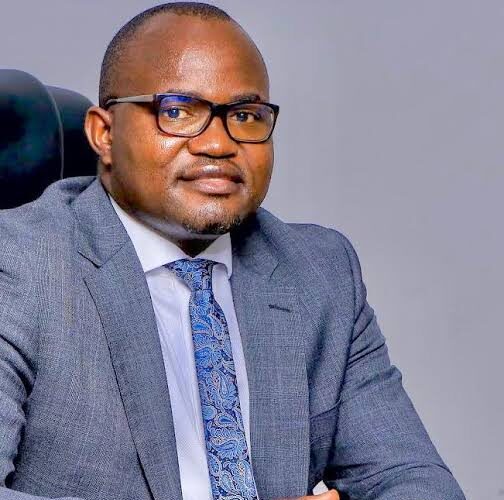
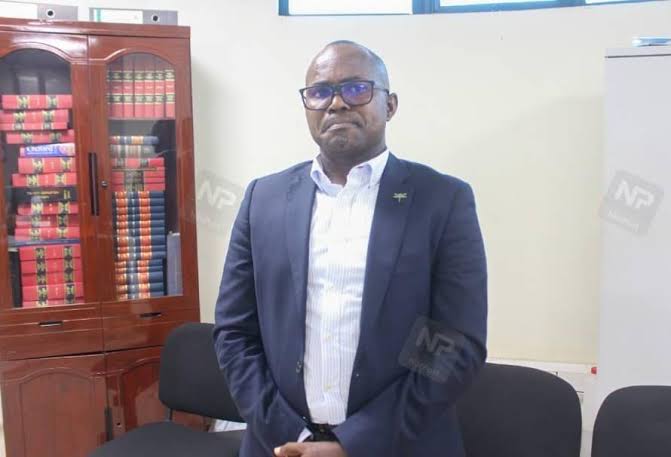
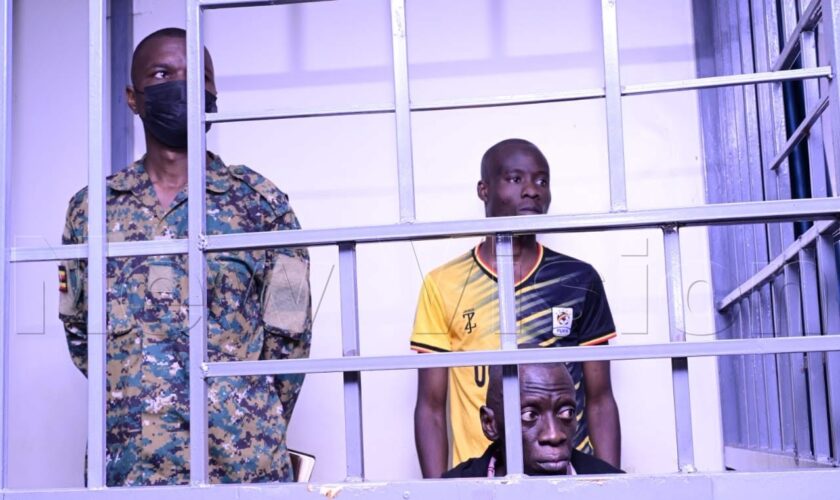
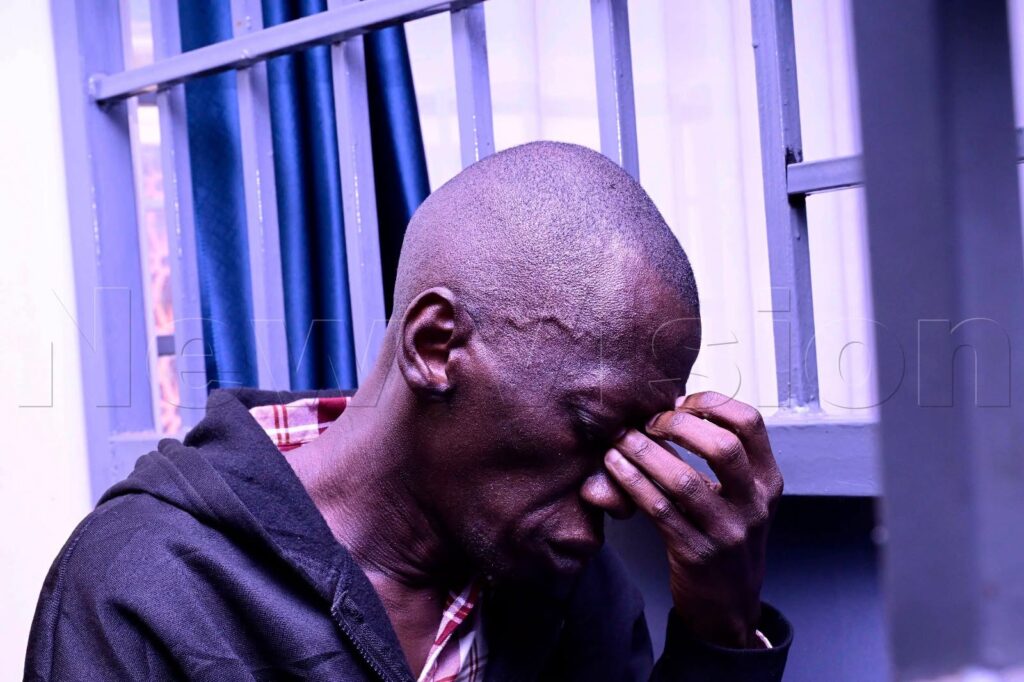
UNEB Scouting Forgery Case: Police Officer, Teacher Await Bail Ruling as Court Seeks Document Verification

A police officer and a teacher accused of forging Uganda National Examinations Board (UNEB) scouting appointment letters will remain in Luzira Prison after their bail hearing was postponed to allow the prosecution to verify documents presented by the defence.


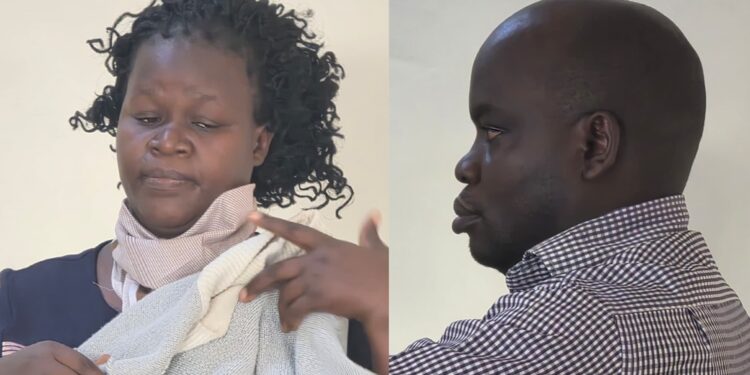
Augustine Tukei, a police officer attached to Natete Police Station, and Lydia Mirembe, a teacher, appeared before Kawempe Magistrates Court on Thursday, November 19.


Their lawyers submitted additional documents in support of the bail application, including details relating to the proposed sureties and a medical report purportedly issued by Mulago National Referral Hospital.
The State Attorney asked for an adjournment to establish the authenticity of the documents before making a response to the application.


Chief Magistrate Doreen Ainembabazi granted the request and fixed November 24, 2026, for the next hearing.
The adjournment means the court has not yet considered the bail application, leaving the two accused in custody at Luzira Prison.


Tukei and Mirembe were first arraigned on November 16. They face four charges: forgery, uttering false documents, conspiracy to commit a felony and personation.


The prosecution’s case relates to allegations of forged UNEB scouting appointment letters during the 2026 Primary Leaving Examinations.


The next court session is expected to establish whether the prosecution has completed verification of the documents and is ready to respond to the suspects’ request for temporary release.
read more
FEATUREDNEWS

Legacy! Alupo Commissions Multi-million Church Accommodation Facility Named After Archbishop Kaziimba Mugalu

By John Okello Lapok 

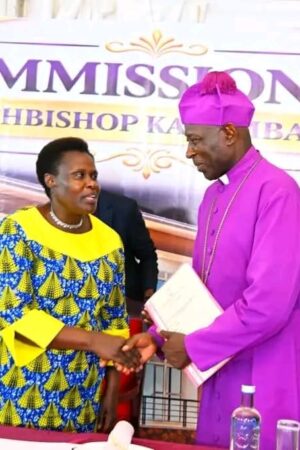
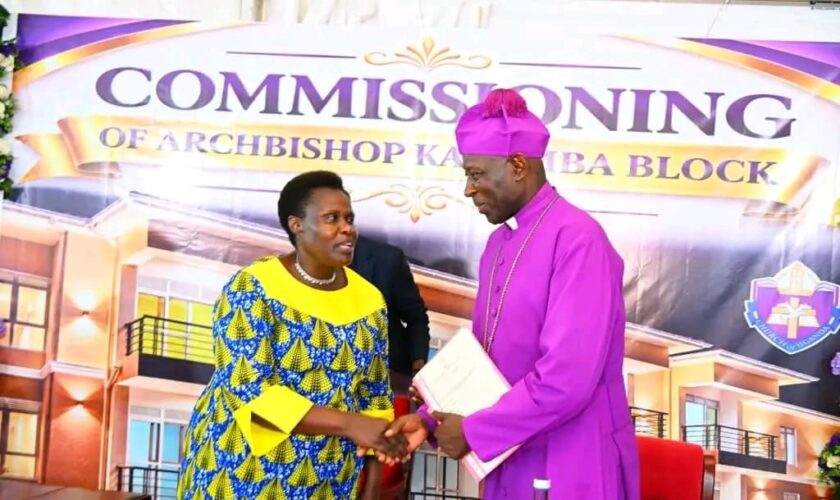
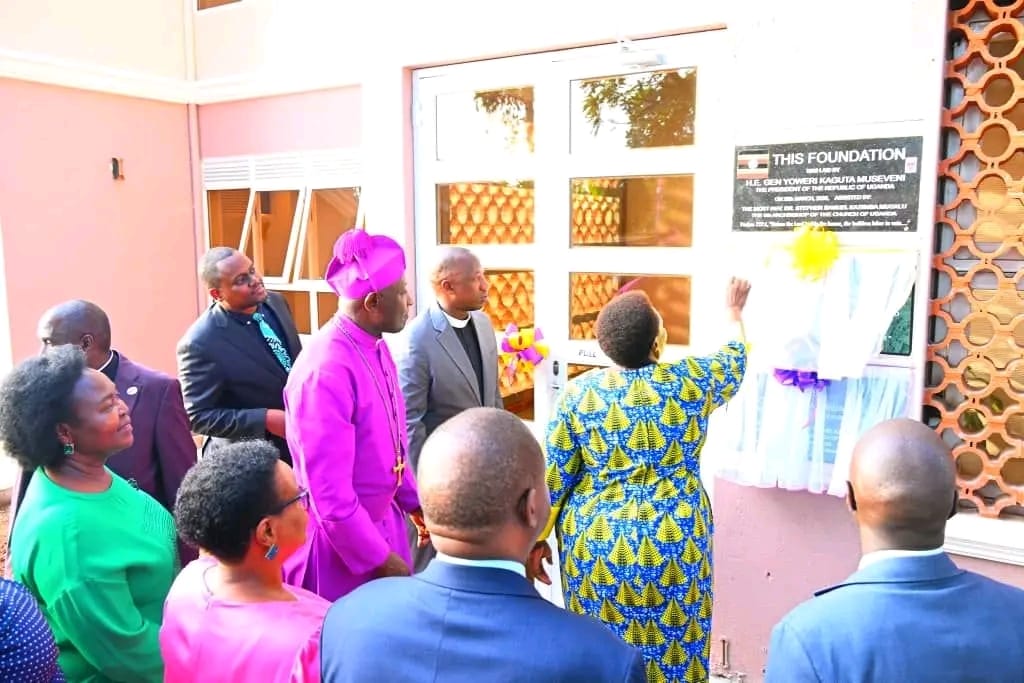
Vice President Jessica Alupo has commissioned the newly constructed Archbishop Kaziimba Block at the Lweza Training and Conference Centre in Wakiso district.

The block features modern state-of-the-art accommodation facilities built to elevate the centre’s hospitality and conferencing capacity for both local and international delegates, including upcoming Global South Anglican bishops’ conferences.

The new building is part of the Church of Uganda’s Ziimba Lweza fundraising campaign—a Shs 50 billion development drive aimed at establishing a self-sustaining income-generating complex complete with training facilities, a skilling centre, and recreational parks.

Speaking during the commissioning, vice president Alupo reminded the congregation in Psalm 127:1 that unless the Lord builds the house, the builders labour in vain and unless the Lord watches over the city, the guards stand watch in vain.

She therefore encouraged the church to continue using the facility to equip households to promote hard work, unity, and moral values that build a strong Uganda.

The accommodation block is more than bricks and motar, it is a centre for training, retreat, learning and transformation. It also will host the clergy, lay leaders, youth, women, farmers, and communities to be equipped for service.

It will strengthen the mission of the church to advance socio-economic and human resource transformation through training and hospitality.

Alupo recognized and appreciated the contribution of the church in partnering with government to build the nation through education, health, peace-building, and household transformation.

The commissioning coincided with an ongoing retreat of Retired Bishops of the Church of Uganda and their wives. The VP used the same opportunity to acknowledge their contribution. 

“You have served this Church and the nation faithfully, shepherded God’s people through difficult seasons, prayed for this nation, counseled leaders, and mentored generations”, Alupo said.

She further stressed to the retired bishops that this nation owes them a debt of gratitude. 

“I pray that this retreat will renew your strength, and that this Centre will continue to be a place of rest and refreshment for you”, Alupo said.

She emphasized that as government, they remain committed to working with faith-based institutions through programmes such as the Parish Development Model, Emyooga, and the Household and Community Transformation agenda to ensure that every household moves from subsistence to the money economy. 

She highlighted that centres like Lweza Training and Conference Centre will help government to organize and inspire Ugandans to embrace the above transformation.

Archbishop of the Church of Uganda, the Most Rev. Dr. Stephen Samuel Kaziimba Mugalu, said Lweza Training and Conference Centre is well placed to host both national and international gatherings. 

“We are investing in its facilities so that it can offer world-class services for training, conferences and other engagements”, he said. 

From 13th to 17th April 2027, Church of Uganda will host the Second General Assembly of the Global South Fellowship of Anglican Churches here at Lweza. 

The archbishop is looking forward to welcoming Archbishops, Bishops and other delegates from around the world to Uganda.Dr. Kaziimba thanked the Government of Uganda, under the leadership of His Excellency President Yoweri Kaguta Museveni, for partnering with Church of Uganda to fight poverty at household level, particularly through agriculture. “We are grateful for the tractors, the Government has already provided. We look forward to receiving the additional tractors pledged to the Church. They will help us expand agricultural mechanization and support more farming households”, he said.He appreciated her Excellency for her support and for the generosity of our Christians and our mission and development partners. 

“Together, you have helped us reach this milestone. In 1 Samuel 7:12, Samuel set up a stone and named it Ebenezer, saying, “Thus far the Lord has helped us.” Indeed, the Lord has helped us reach this day”, he said.

In attendance were Maama Margaret Kaziimba, Provincial Secretary Rev. Canon Capt. William Ongeng, State Minister of Trade David Bahati, and a gathering of retired bishops and their spouses.

read more
FEATUREDNEWS

Safety! Bolt outlines Safeguards Designed to Protect Passengers and Drivers

By John Okafor 

In GHANA 

ACCRA-Ride-hailing giant Bolt is intensifying its safety education efforts in Ghana, placing greater emphasis on preventive safety measures, robust vetting and verification processes, as well as driver and passenger accountability. 

The initiative reinforces the company’s commitment to safer mobility by raising public awareness of the safeguards in place before a journey begins, the in-app safety tools available during rides and the importance of shared responsibility between passengers and drivers.

The company outlined its prevention-first approach during the Bolt Safety Experience Workshop in Accra, bringing together representatives from the National Road Safety Authority (NRSA), passengers, driver-partners and members of the media to demonstrate how its safety technology and processes work in practice.

At the centre of Bolt’s approach are the checks conducted before a driver begins operating on the platform. These include identity verification and the review of applicable driver and vehicle documentation, designed to help establish eligibility and accountability before drivers can accept trips.

For passengers, preventive safety continues before entering a vehicle. The Bolt app displays driver and vehicle information, allowing passengers to confirm that the details match their assigned ride. 

Additional safeguards, including Pickup Codes and voluntary Rider Verification, provide further opportunities to strengthen trip confirmation and accountability.

Jonathan Ahumah-Sackey, Senior Operations Manager at Bolt Ghana, said the company believes safety should be addressed proactively rather than only when an incident occurs.

“Safety should not begin when something goes wrong. It starts with the checks we put in place before a driver accepts a trip, the information passengers receive before entering a vehicle and the safeguards available throughout the journey.”

Our focus is on ensuring these measures are not only in place, but that passengers and drivers understand how they work and the role they play in supporting safer journeys.

“Bolt’s continued focus on safety comes against the backdrop of its 2025 Ipsos Safety Index, which found that 81% of surveyed ride-hailing users in Ghana considered ride-hailing safer than other transport options. While the findings reflect positive passenger perceptions, the company recognises that maintaining confidence requires continued investment in technology, awareness and responsible behaviour.

During the Safety Experience Workshop, participants were taken through practical demonstrations of its core in-app safety features: Emergency Assist, Share Location, Pickup Codes, Audio Recording, Voluntary Rider Verification and Ride Check and its 24/7 in-app support.

Emergency Assist provides a way for users to seek assistance during an emergency, while Share Location allows passengers to keep trusted contacts informed about their journeys. Pickup Codes provide an additional step for confirming the correct ride before departure. Audio Recording can help document a journey and support the review of reported concerns, while Ride Check uses technology to identify certain unusual trip patterns and prompt appropriate safety follow-up.

Participants also learned how to report safety concerns through the app and how Bolt’s Safety team reviews incidents and determines appropriate next steps.

Beyond technology, the company emphasised the importance of passenger and driver behaviour in supporting safer journeys. Bolt encouraged passengers to verify their ride details, use available safety tools and report suspicious activity, while reminding drivers of their responsibility to operate through verified accounts, follow road-safety requirements and report concerns.

“Technology alone cannot address every safety risk. Passengers, drivers and mobility platforms all have a role to play, and awareness is essential to ensuring the safeguards available are used effectively,” Ahuma added.

“As we approach the festive season, we want more Ghanaians to understand the measures available to them before they need them. This is why safety education remains an important part of our ongoing work.”

The event also featured a panel discussion under the theme “Closing the Safety Awareness Gap: How Technology and Education Can Improve Ride-Hailing Safety in Ghana.”

The discussion brought together Bolt representatives, road-safety stakeholders, passengers and drivers to examine the role of technology, public education, responsible road use and shared accountability in supporting safer mobility.Speaking at the event, Perpetual Akoto Ofori, Senior Manager, Planning and Programmes Directorate at the National Road Safety Authority (NRSA), emphasised the importance of prevention, public education and shared responsibility in improving road safety.

“Road safety begins with the decisions people make before and during their journeys. While technology provides important tools to support safer mobility, its effectiveness also depends on responsible behaviour, awareness and compliance with road-safety regulations.“Passengers must remain vigilant, drivers must prioritise safe driving practices, and transport operators have a responsibility to promote safety awareness. Continued collaboration between industry players, regulators and road users is essential to building a stronger culture of road safety in Ghana.”Bolt said the Safety Experience Workshop forms part of its continued efforts to strengthen safety awareness in Ghana, complementing its investment in safety technology, verification processes and engagement with relevant stakeholders.

The company reiterated that safer mobility requires continuous investment, education and collaboration, alongside responsible behaviour from passengers and drivers.

read more
FEATUREDNEWS

Theft! NDA Boss Charged Over Alleged Embezzlement Of Shs296 Million 

By Sadique Bamwita

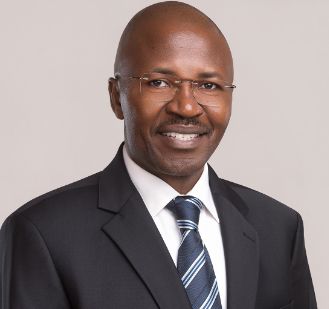
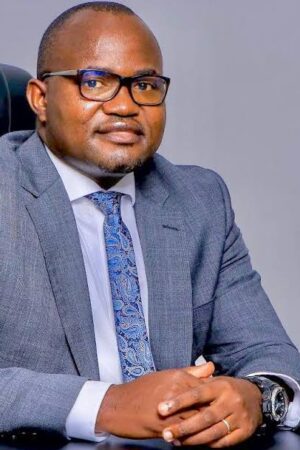
The National Drug Authority (NDA) Manager of Public Relations, Abiaz Rwamwiri, has been charged before the Anti-Corruption Court over alleged false accounting involving Shs296.075 million in public funds.

Rwamwiri, 41, appeared in court on November 18,2026, before Principal Magistrate Paul Mujuni who charged  him with false accounting by a public officer and wilfully obstructing an investigation by the Inspectorate of Government (IG).

Prosecution told court that between July 2023 and March 2026, Rwamwiri was entrusted with Shs324.56 million to facilitate media relations and community engagement activities at the National Drug Authority.

However, investigators allege that he submitted false accountability documents amounting to Shs296.075 million to the Secretary of the authority.

The alleged offence of false accounting by a public officer is contrary to Section 22 of the Anti-Corruption Act, Cap 116.

In a separate charge, Rwamwiri is accused of attempting to interfere with an investigation by the Inspectorate of Government into the utilisation of public funds at the authority.

According to the charge sheet, between February and April 2026, in Kampala, Rwamwiri allegedly attempted to influence witnesses to give false information to investigators in a case registered under file number HQT/CO/161/2026.

Prosecution contends that his actions were intended to obstruct the Inspectorate of Government from carrying out its investigations.

Wilful obstruction of an investigation by the Inspectorate of Government is an offence under Section 34(g) of the Inspectorate of Government Act, Cap 32.

The allegations relate to expenditure on media relations and community engagement programmes, through which the authority communicates its regulatory activities and public health information to the public.

Rwamwiri has been a regular spokesperson for the NDA, particularly on matters concerning the regulation of medicines, enforcement against illegal drug outlets and public awareness campaigns.

Meanwhile, his attempt to secure court bail was unsuccessful as the state attorney requested for more time to study his bail application. The Magistrate deffered hearing of his bail application to Friday November 20,2026 when court will determine whether to release him on bail or not.

Embattled NDA boss- Aboaz Rwamwiri
read more
FEATUREDNEWS

Karamoja, Iran, and the Cost of the Gun

By Counsel Twinobusingye Severino 

OPINION-The ongoing escalation of hostilities in the Middle East, beginning with the February 28, 2026 military strikes by the United States and Israel on Iran, has once again underscored a familiar truth: where weapons dominate, instability follows. 

The reported killing of senior Iranian leadership, including Ayatollah Ali Khamenei, triggered swift retaliation, with Iran launching missiles across the Gulf targeting U.S. installations and allied interests in Bahrain, Kuwait, the United Arab Emirates, Saudi Arabia, and Israel.

Since then, the region has descended into deeper crisis. The US continues to deploy it’s valuable and advanced military assets and personnel into the region in readiness for another possible assault against Iran. On the other hand, Iran is also vowing to respond this time not on a defensive but offensive posture. The threats from sides continue unhindered.

Reports indicate extensive damage to critical infrastructure, including U.S. radar systems, alongside mounting civilian casualties and widespread destruction. The closure of the Strait of Hormuz, through which nearly 20 percent of the world’s crude oil passes, has disrupted global trade and heightened economic uncertainty. Civilians in both Iran and Israel in the past months spent prolonged periods in bunkers, their lives reduced to survival, a reality not unfamiliar to communities in northern Uganda that have endured years in internally displaced persons’ camps.

While the United States and its ally maintain that their objective is to degrade Iran’s nuclear and ballistic missile capabilities, Iran’s response reflects a broader pattern, the projection of military power beyond its borders and the targeting of neighbouring states. It is this posture that invites comparison with a long-standing security challenge closer to home: the Karamoja sub-region.

Karamoja, which became part of present-day Uganda in 1926, remains one of the most marginalised regions despite its vast mineral potential. According to the latest Uganda Bureau of Statistics (UBOS) census and related national surveys, the sub-region has a population of approximately 1.5 million people, with nearly 60 percent constituting the youth. However, social indicators remain stark: about 86 percent of the population has never received formal education, while literacy levels stand at roughly 30.4 percent, far below the national average of 76.1 percent, as reported by UBOS.

Poverty remains deeply entrenched. UBOS data indicates that household poverty levels in Karamoja stand at approximately 72.4 percent, making it the poorest region in the country. Unemployment among the youth is equally alarming, with an estimated 40 percent out of work, many of whom are drawn into cattle rustling and armed violence.

At the heart of this insecurity lies the widespread availability of illegal firearms. Flowing through porous borders with South Sudan, Kenya, and Somalia, and sustained by past regional conflicts, these weapons have entrenched a culture of armed cattle raiding. Young men, commonly referred to as karacunas, often mobilised under the guidance of elders, carry out raids across neighbouring sub-regions of Teso, Lango, Acholi, and Sebei, leaving communities traumatised, displaced, and economically destabilised.

In Kotido District, places such as Napumpum have become synonymous with the planning of these raids, where elders reportedly meet to determine targets. The execution is then carried out by armed youth who traverse long distances, driven by the belief that cattle in neighbouring communities rightfully belong to them.

The parallels with Iran’s regional posture are striking. Just as Iran leverages its military strength and proxy networks to extend influence across Yemen, Lebanon, and Palestine, the possession of arms in Karamoja has emboldened local actors to assert dominance over neighbouring communities. In both contexts, the gun becomes not merely a tool of defence, but an instrument of expansion and control.

However, there is a critical difference, and it offers a pathway forward.

In East Africa, Uganda and Kenya have, since 2002, undertaken joint disarmament efforts aimed at curbing the proliferation of small arms in Karamoja and the North Rift. These initiatives, involving voluntary surrender, coordinated military operations, and cross-border collaboration, have registered measurable progress. Several illegal firearms have been recovered, armed warriors neutralised, and incidents of cattle raiding significantly reduced.

Though challenges remain, including slow implementation and the need for sustained engagement, the gains are beginning to reshape the region’s trajectory.

Karamoja is now witnessing the early signs of transformation. Investment is gradually taking root, particularly in Kotido District, long considered the epicentre of cattle rustling. Among the most notable initiatives is the proposed Karamoja Peace and Technology University (KAPATU), a multi-stakeholder project involving the Catholic Lawyers Society International (CLSI), the Kotido Catholic Diocese, and the Government of Uganda. Conceived in 2014 following extensive research, the initiative recognises education as the most viable pathway to long-term socio-economic transformation. Efforts are underway to secure a provisional licence from the National Council for Higher Education, marking a significant step towards reshaping the future of the region.

The lesson is clear.

Where weapons proliferate unchecked, whether in the Middle East or Karamoja, insecurity becomes cyclical, spilling across borders and generations. But where deliberate efforts are made to disarm, educate, and invest, the cycle can be broken.

As the world watches tensions escalate in the Gulf, Uganda’s experience offers an important reminder: sustainable peace is not built on military might alone, but on inclusive development, access to education, and the deliberate dismantling of the structures that sustain violence.

The gun may instil fear, but it is opportunity, grounded in knowledge and equity, that secures lasting peace.

The writer is Chairperson KAPATU-Council.

read more
FEATUREDNEWS

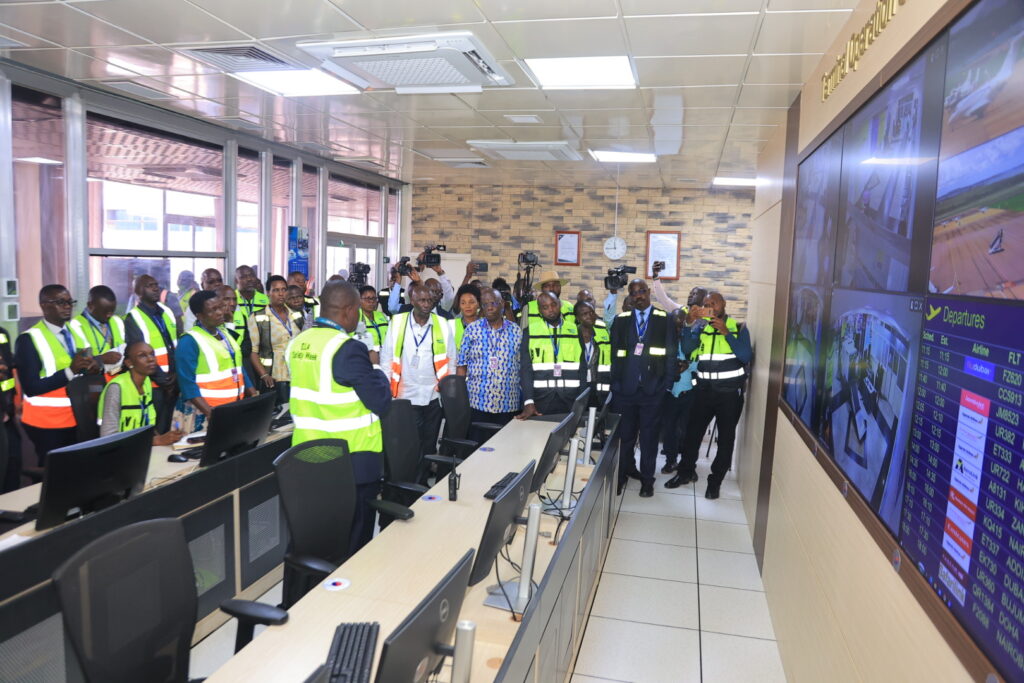
Physical Infrastructure Committee MPs Tour Entebbe International Airport Facilities Ahead Of Today’s Engagement With UCAA

By Barbara Nansiimbi 

The Uganda Civil Aviation Authority (UCAA) has held a fruitful stakeholders engagement activity with Members of Parliament sitting on the Committee of Physical Infrastructure.

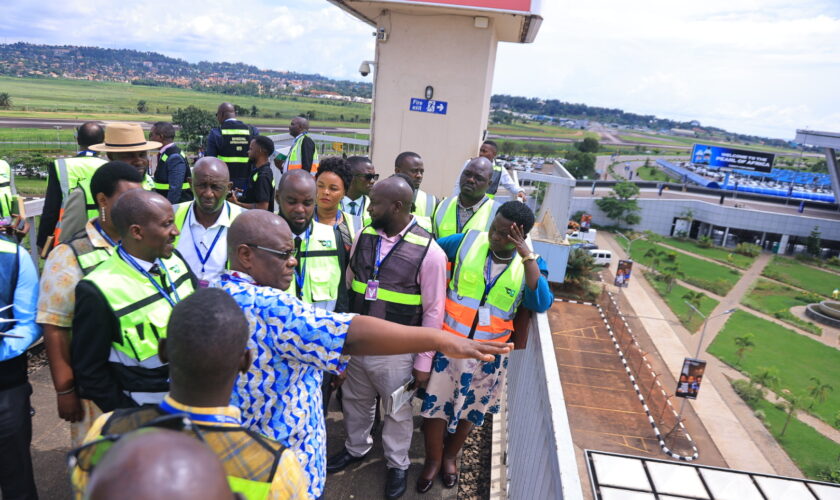
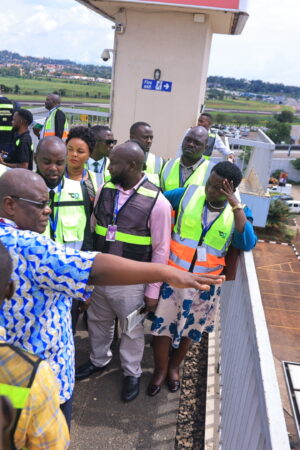
The familiarisation tour preceding today’s (Thursday November 19, 2026) workshop with UCAA, enabled Members appreciate developments at the airport, challenges and their mitigation measures.

The members were taken on a guided tour of the Entebbe International Airport (EIA).

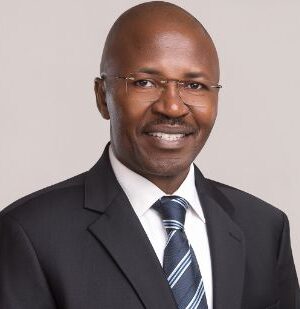
During the interaction, UCAA Director General, Fred K. Bamwesigye reminded the MPs that the Authority regulates the aviation industry, provides air navigation services and operates aerodromes, and to this end a lot had been done at Entebbe International Airport, which the MPs needed to witness and appreciate.

He then took them on a guided tour of the Emergency Operations Centre, The terminal Operations Control Centre, the Business Class Lounge (Karibuni Lounge), the new terminal building facilities and the Airport Rescue and Fire Fighting services where they witnessed a demonstration showcasing the capability of the new modern firefighting fleet. 

The high-level specifications for the fire – trucks were enumerated to the members before they proceeded to the Cargo Centre.

The MPs also visited the Air Traffic Control Tower, and were exposed to the modern equipment used in the Aerodrome Control Tower, Area Control Centre, Approach Control Unit, Communication, Navigation and Surveillance equipment room and Approach Radar, among others, to gain insights into the critical operations that support safe and efficient aircraft movement at the airport.

read more
FEATUREDNEWS

MPs Poke Holes in Balaam’s Anti-Corruption Tours, Decry rushed Arrests

Members of Parliament have raised concerns over the methods being employed by Local Government Minister Hon. Balaam Barugahara, in his ongoing anti-corruption tours, warning that procedural irregularities, rushed arrests and disruptions to service delivery could undermine the campaign.
While several legislators welcomed the minister’s efforts to expose corruption in local governments, they questioned the manner in which suspects were being apprehended, the handling of allegations during public barazas and the apparent lack of follow-up investigations and prosecutions.
The concerns emerged during Wednesday’s parliamentary debate on the minister’s Expose the Corrupt campaign, following complaints from sections of the public that some officials had been publicly accused and condemned without being given adequate opportunity to defend themselves. Some critics have also questioned the minister’s approach of ordering arrests before allegations are exhaustively investigated, warning that it risks subjecting accused officials to mob-like justice.
One of the contentious issues was the minister’s campaign against headteachers who collect Parents and Teachers Association (PTA) contributions to support the running of government schools.
Speaking as a former teacher, Isingiro District Woman MP Lillian Ruteraho argued that many government schools continue to face serious staffing shortages, making PTA contributions necessary to bridge operational gaps.
She explained that such contributions often help schools meet essential needs that government funding and staffing have not fully addressed.
Lamwo District Woman MP Nancy Acora supported her position, arguing that PTA contributions should be maintained until government is in a position to fully take over the responsibility of meeting schools’ operational needs.
Their submissions echoed earlier concerns raised by the Katikkiro of Buganda, Charles Peter Mayiga, who cautioned parents against supporting Balaam’s reported move to arrest headteachers over money collected to provide meals for learners.
Mayiga argued that parents should not abandon their responsibilities by opposing school feeding arrangements, observing that children cannot effectively concentrate on their studies when they are hungry.

Questions over the methods
Beyond the school funding controversy, legislators also questioned the minister’s approach to dealing with suspected corruption. Kigulu North MP Samuel Kungu acknowledged that Balaam’s anti-corruption campaign was well-intentioned but said its methods needed reconsideration, particularly the manner in which suspects were being arrested.
He described the forceful arrest of suspects as inhumane, arguing that investigations should be conducted professionally and within the confines of the law.
His concerns resonate with the controversy surrounding the arrest of Lyantonde Deputy Resident District Commissioner (RDC) Vanasio Bagatireyo, on Balaam’s orders, following allegations by a widow that the commissioner had demolished her house.
In a video that went viral on social media, the deputy RDC was seen pleading for an opportunity to respond to the allegations but the minister denied him the chance to do so before ordering the police to arrest him. However, it later emerged that the accusations were false, which led to widespread protest by locals who were privy to the standoff regarding the said property. They explained that the said house had partly been sold by the widow’s husband before he died and that it hadn’t been demolished at all.
The incident has raised questions about the criteria used to determine when an official should be arrested and whether adequate investigations are conducted before enforcement action is taken.
Similar complaints involving other RDCs have also fuelled public speculation about the treatment of district officials during the minister’s tours, with some questioning whether the campaign risks portraying local government leaders as generally corrupt and incompetent.
Wakiso District Woman MP Ethel Naluyima raised another concern, urging the minister to protect children during his inspections by prohibiting the filming of minors. She said that while she appreciated the anti-corruption drive, the rights and dignity of children must not be compromised in the process of exposing suspected wrongdoing.
Kagoma County MP Moses Walyomu, meanwhile, called for tangible action against those implicated in corruption, including prosecution in courts of law and recovery of misappropriated public funds.
Tororo South MP Fredrick Angura warned that the arrests and interdictions of district officials were beginning to affect service delivery. He cited disruptions in the implementation of key government programmes, including the Parish Development Model (PDM), and questioned how such interruptions would be addressed.

MPs demand prosecutions and accountability
Leader of the Opposition Joel Ssenyonyi challenged government to demonstrate that the anti-corruption campaign was producing concrete results rather than merely generating public attention.
“If government is serious about the corruption fight, can we see serious investigations leading to prosecution? Otherwise, it will be viewed as political mobilisation,” Ssenyonyi said.
Agago County MP Edward Makmot called on Balaam to work closely with the Director of Public Prosecutions (DPP) to ensure that corruption-related files are properly investigated, handled and sanctioned for prosecution. He also questioned the arrangements for maintaining continuity in service delivery where district officials are arrested or interdicted.
“What plans do you have to ensure continuity in service delivery?” he asked.
The legislators’ concerns suggest that, beyond exposing suspected corruption, the campaign must demonstrate that allegations are supported by evidence, investigations are properly conducted and those found culpable are subjected to the appropriate legal processes.

Arrest the big fish
In his submission, Kazo County MP Dan Kimosho challenged Balaam to extend his accountability drive to senior government officials, arguing that the campaign should not concentrate solely on district-level officers. Kimosho cited a stalled water project which, according to him, had remained unimplemented despite assurances given to President Yoweri Kaguta Museveni in January 2024 that the project required approximately Shs5 billion and would be completed.
He told Parliament that the Permanent Secretary and Secretary to the Treasury (PSST), together with the Minister of State for Water, had assured the President that the required funding would facilitate the project.
However, Kimosho said nothing had been done despite the matter having remained unresolved for about eight years.
“If Honourable Balaam wants to arrest, he should start with his minister and the PSST,” Kimosho said, challenging the minister to apply the same accountability standards to senior officials responsible for government projects.
His remarks added another dimension to the debate, with legislators questioning whether the anti-corruption campaign was sufficiently broad to hold senior decision-makers accountable for stalled government programmes and failures in public service delivery.
Some MPs credit the tours with results
Despite the criticism, some legislators acknowledged that Balaam’s tours had produced positive results, particularly in the local government works sector.
During Wednesday’s plenary sitting, Kilak South MP Gilbert Olanya told Parliament that district road equipment which had previously been lying idle was now operational following the minister’s visits.
Olanya, who previously chaired the Public Accounts Committee (Local Government), said that during his tenure, approximately 90 per cent of the equipment in question was not functioning.
He credited Balaam’s district inspections with prompting action to repair the machinery, although he questioned where the resources for the repairs were suddenly coming from.
“You wonder where the money is coming from to repair those road equipment,” he remarked.
Speaking during the debate on the Expose the Corrupt campaign in Ankole, Olanya said he supported the minister’s determination to confront corruption, particularly where politically connected individuals allegedly intimidate public officials and discourage them from taking action.
“Personally, I support someone who will stand straight and say no to corruption,” he said.
The debate has therefore exposed two sides of the campaign: legislators who acknowledge its potential to improve accountability and service delivery, and those who insist that its methods must respect due process, protect individual rights and avoid disrupting essential government programmes.
Ultimately, MPs want the minister’s tours to move beyond public accusations and dramatic arrests to produce properly investigated cases, successful prosecutions, recovery of public resources and improved service delivery across local governments.

read more
FEATUREDNEWS

Sam Mugumya Resurfaces a Day After Minister Kiyonga Calls for Debate on Security Abductions

Ugandan opposition activist Sam Mugumya has resurfaced after 499 days in disappearance. Mugumya abruptly appeared before the General Court Martial in Kampala on Wednesday, where he was formally charged with treachery and other security-related offences.

His appearance comes barely a day after Second Deputy Prime Minister and Deputy Leader of Government Business, Dr. Crispus Kiyonga, called for an urgent parliamentary debate on reported human rights violations, including alleged abductions, unlawful arrests and incommunicado detentions.

Mugumya’s reappearance brings an end to more than a year of uncertainty surrounding his whereabouts following his reported abduction by armed men in Mbarara City on August 26, 2025. His disappearance had attracted public attention, particularly after his elderly mother, Edinansi Katungwesi, repeatedly appealed to government institutions and human rights organisations to help establish his whereabouts.

On Tuesday, November 17, 2026, Kiyonga backed calls by Leader of the Opposition Joel Ssenyonyi for Parliament to hold an urgent general debate on human rights concerns. He said the proposed debate would provide legislators with an opportunity to examine the underlying causes of alleged violations and openly address the concerns.

Kiyonga acknowledged that although the National Resistance Movement (NRM) was founded on the principles of human rights, some individuals within government or the ruling party could act wrongly. He maintained that anyone who operates outside the law, regardless of their position or political affiliation, should be held accountable through established legal processes.

He also reaffirmed government’s earlier commitment against detaining suspects incommunicado.
The debate followed concerns raised by opposition legislators over missing persons and alleged unlawful detentions. During the same sitting, State Minister for Internal Affairs Juma Witonze Kisekka informed Parliament that the National Security Council Secretariat was preparing a comprehensive response following a meeting chaired by President Yoweri Kaguta Museveni.

A mother’s temporal relief
Mugumya’s appearance before the General Court Martial has consequently brought renewed attention to the wider debate on alleged abductions and the treatment of suspects in security-related cases.
For his mother, however, the development marks the end of an agonising search for answers that lasted more than a year.

Katungwesi had petitioned both the Uganda Human Rights Commission and the Uganda Law Society, seeking their intervention to establish her son’s whereabouts and secure his release. She repeatedly expressed frustration over what she described as the government’s failure to provide information about his disappearance.

In August 2026, she directly blamed state authorities for her son’s disappearance, expressing anger at what she considered a betrayal of the government’s responsibility to protect citizens.
“It is the government that took my son and I am so angry at them. The government is meant to protect us and has turned against us, and worse of all against my son,” she said.

Her anguish intensified after a video allegedly showing Mugumya in a severely emaciated condition circulated online in late July 2026. In the footage, he appeared struggling to walk with the assistance of a frame.

After identifying him in the video, Katungwesi told journalists that seeing her son in such a condition was devastating, although the footage gave her hope that he was still alive.
In a petition dated August 3, 2026, to the Uganda Law Society, she described the footage as evidence that gave her “hope that he is still alive” after months without any communication about his fate.

She explained that Mugumya had been travelling to visit her when he disappeared. She said she immediately reported the matter to police in Kampala but received neither meaningful assistance nor official communication about his whereabouts.

Activists who visited Katungwesi at her home in Rukungiri District described her as deeply distressed by the prolonged separation. She had reportedly feared that she could die without seeing her son again.
Her fears were compounded by Mugumya’s previous eight-year detention in the Democratic Republic of Congo (DRC), from which he was released in 2022.

Mugumya, a mobiliser for the People’s Front for Freedom (PFF) and former aide to opposition figure Dr. Kizza Besigye, appeared before the General Court Martial alongside two Uganda People’s Defence Forces soldiers, Lance Corporal Gift Mukundane and Lance Corporal Isaac Ochom.

His formal appearance in court now provides an opportunity for the legal process to establish the circumstances surrounding the charges against him, while also raising questions about the prolonged period during which his whereabouts remained unknown.

Coming just a day after Kiyonga’s call for parliamentary debate on human rights, Mugumya’s reappearance is likely to intensify scrutiny of the government’s handling of reported disappearances, the accountability of security agencies and the constitutional rights of persons held on security-related charges.

read more
FEATUREDNEWS

High Stakes! Electoral Commission Publishes List Of Villages To Face Fresh Elections Come October 19, 2026

By Barbara Nansiimbi 

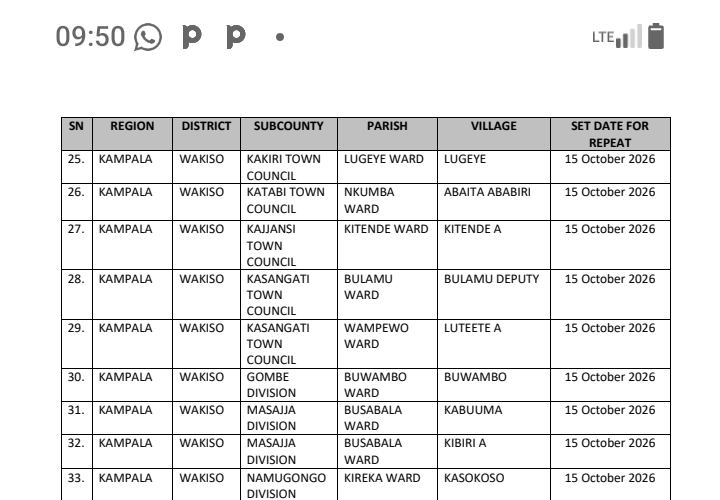
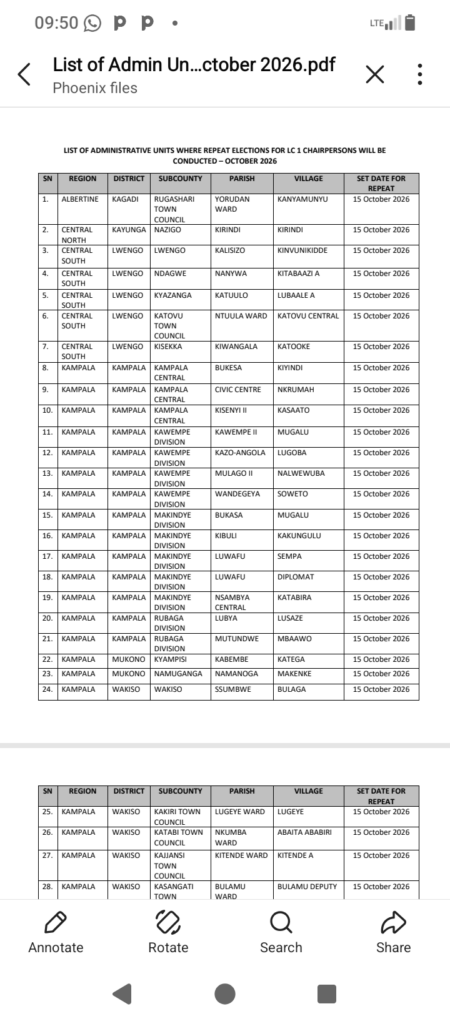
Voters in 17 villages across the country should prepare themselves for a fresh set of election after the Electoral Commission announced plans to redo those polls.

The affected villages are located in the districts of Wakiso, Iganga, Jinja City, Mayuge and Isingiro.

According to the Commission, the said elections will take place on Monday October 19, 2026 in all the affected villages.

These villages are facing fresh polls because according to the EC, whereas they participated in the July 28, 2026 polls, their results could not be ascertained by the EC. As a result, the Commission received numerous complaints forcing the electoral body to conduct fresh polls.

In issuing the list, the Commission urged all stakeholders, including candidates, voters and other interested parties in the affected villages, comply with the applicable electoral laws and guidelines.

Hereunder is the full list

read more
FEATUREDNEWS

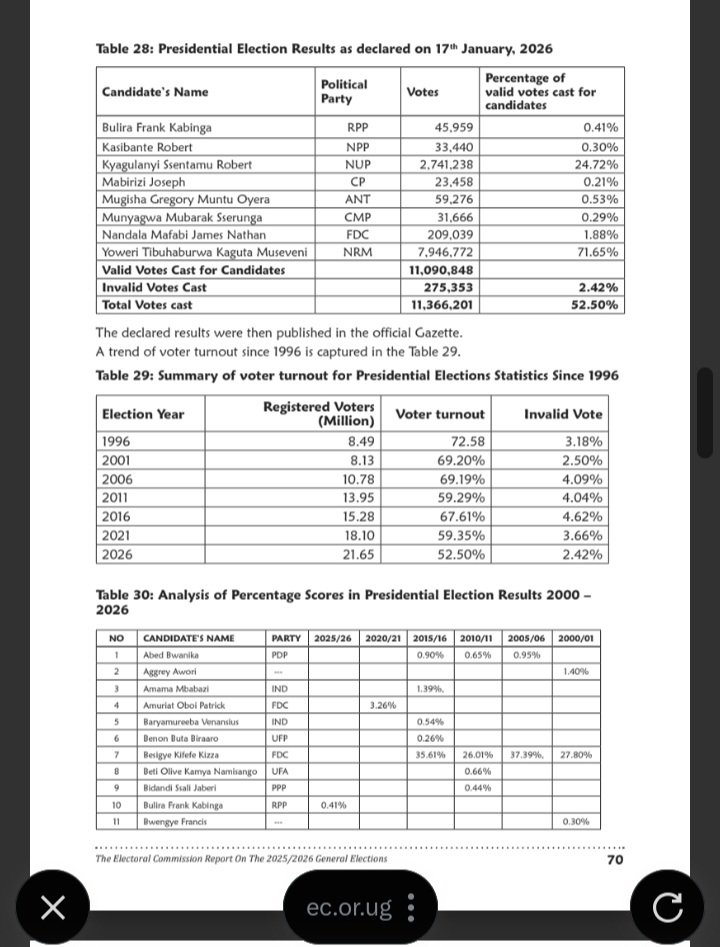
It’s Now Available! EC Releases 2025/6 General Elections Report

By Barbara Nansiimbi 

The Electoral Commission headed by Justice Simon Byabakama has released the official results of the 2025/26 General Elections.

In a report released today, the Commission urged all interested individuals to access the report either online or downloading it.

“The report is now available. Access of download the full report” said the EC on its official communication handles.

The report comes amid persistent agitations for its release by especially the opposition activists.

Upon release however, the report generated divided opinions from social media users especially on X with opposition activists suggesting that the EC needed to release Declaration Forms in respect of the Presidential election.

“We need DR forms not report” said a one Marks 

Another user said ‘This is cooked up information. What about DR forms?” 

However, while most people were interested in the DR forms, others welcomed the report describing it as timely.

“This ends all the negatives speculations. Kudos EC” said a one Johnson.

The report marks an end to allegations of electoral engineering especially those peddled by some sections of the opposition.

read more
1 2 3 … 348
Page 1 of 348