By Richard Kintu
Public servants in the various government Ministries, Departments and Agencies (MDAs) across the country have been urged to exercise undivided loyalty in implementing the NRM Manifesto 2021-26.

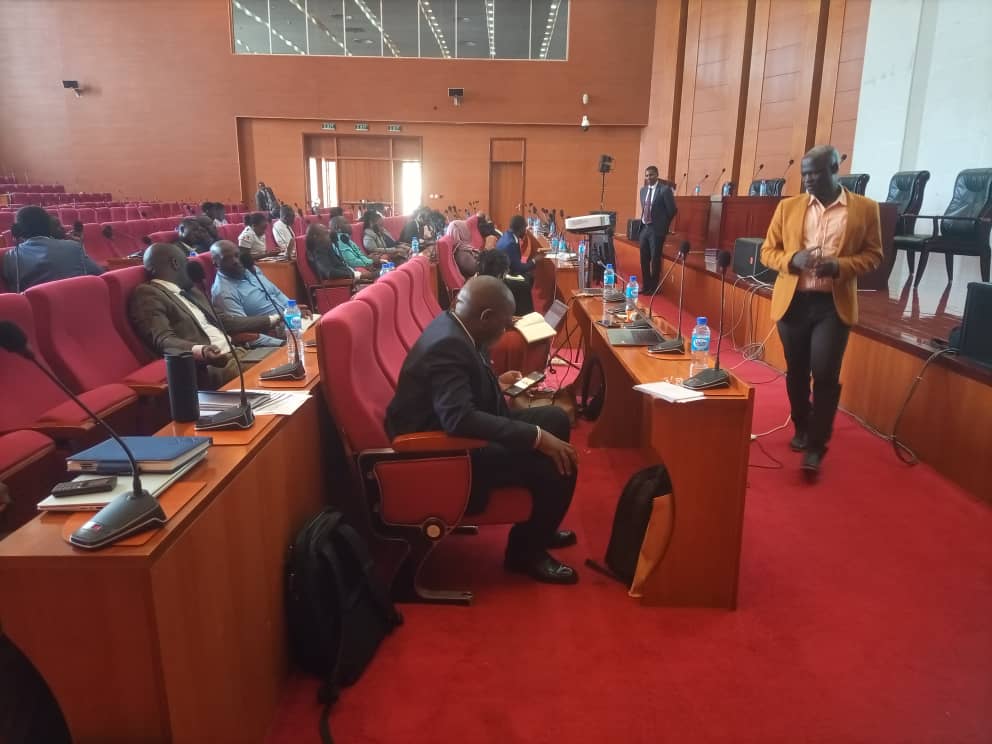
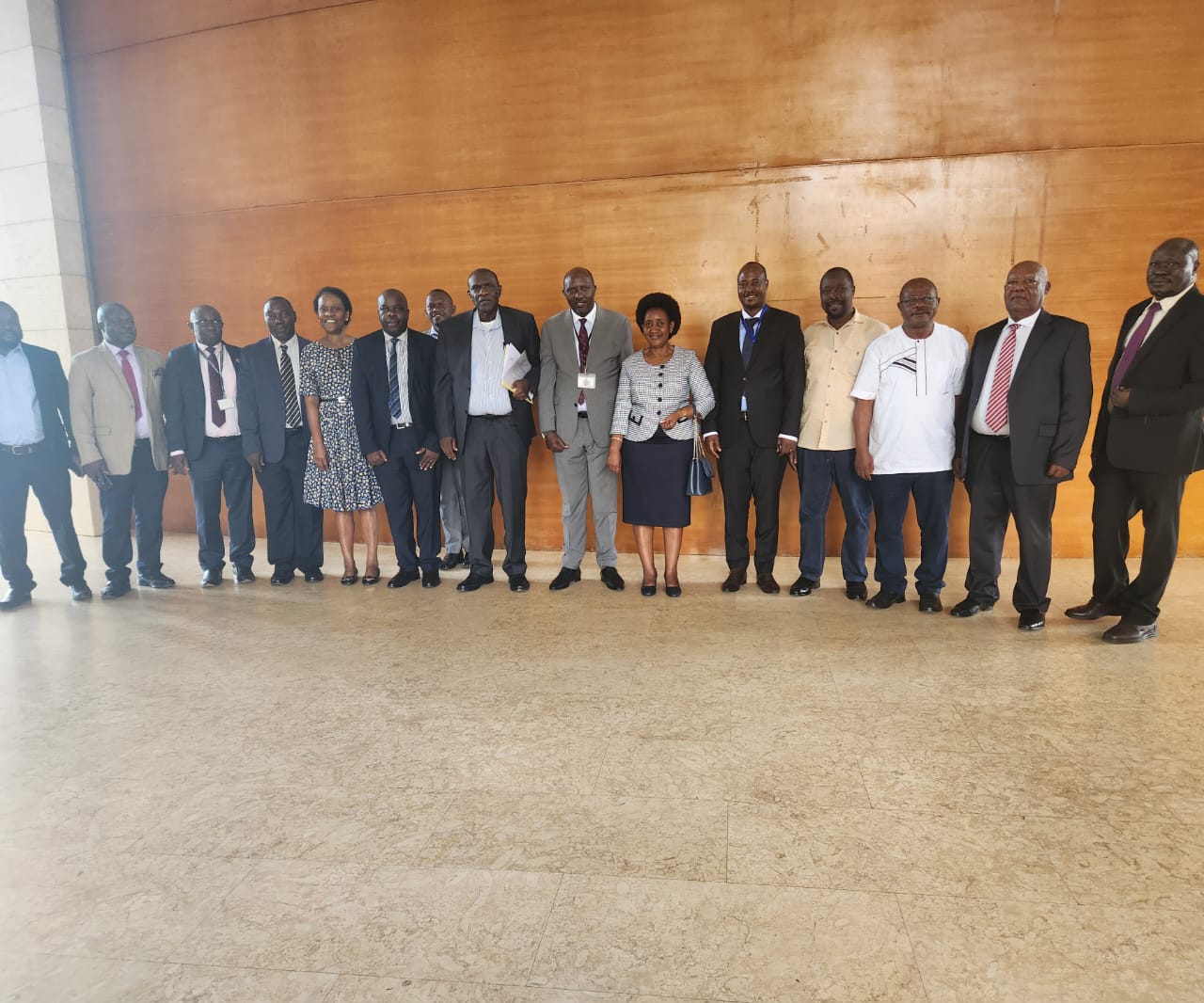
The call was made Monday by Jane K. Mwesiga, the Deputy Head of Public Service – Performance and Service Delivery during a two-day training of manifesto focal point officers on the manifesto reporting framework which was designed by the Manifesto Implementation Unit (MIU) of the Office of the President.
While officiating at the training which took place at the Office of the President Conference Hall in Kampala, Mwesiga underscored the importance of evry citizen fulfilling their mandate in the manifesto implementation as a way of helping the country achieve its socioeconomic development agenda as enshrined in Vision 2040. In a special message to public servants, Mwesiga reminded them of the legal requirement to be loyal to the government of the day while discharging their service delivery mandate to the citizenry.
Mwesiga noted that while the manifesto was designed by the ruling political party, public servants must diligently implement it in a non-partisan manner.
“As stipulated in the Uganda Public Service Standing Orders, while public officers must remain non-partisan, they have a duty to be loyal to the government of the day and to ensure the successful implementation of the manifesto,” Mwesigwa said. She explained that the manifesto is the government’s social contract with the citizens of Uganda, and hence its commitment to their socioeconomic transformation, prosperity and inclusive development.
Hailing the presidency through the Manifesto Implementation Unit (MIU) for organizing the training on manifesto reporting, Mwesiga noted that tracking the progress of the manifesto and reporting on it is the surest way of strengthening accountability, enhancing service delivery to the citizens and promoting data-driven decision-making.
“This, however, requires a well-structured framework for tracking this progress, identifying challenges, and ensuring alignment between the NRM Manifesto commitments and our national goals,” he said. She thus hailed the manifesto focal persons who attended the training, saying their work in manifesto monitoring and reporting is crucial since they are the linchpins in the process of documenting progress, reporting on implementation and providing critical insights that shape the much-desired data-driven decision-making by the government.
Hajji Kakande Hails Manifesto Focal Persons
The training was also presided over by Hajji Yunus Kakande, the Secretary to the Presidency. In his remarks, Hajji Kakande hailed the manifesto focal persons for the work they play in populating the manifesto reporting tool in their capacity as its data managers.
“You play a pivotal role in capturing, validating, and submitting data, as well as conducting basic data analysis. The data you capture will serve as the foundation for assessing the Manifesto’s performance,” Kakande said.
He urged the manifesto focal persons to ensure that they populate the tool with manifesto projects progress data on a quarterly basis, noting that by the end of the ongoing training, the system will be updated with the manifesto performance data for the second quarter of FY 2024/25.

He added that the data uploaded into the manifesto reporting system is what forms the basis of the manifesto progress reports, such as last year’s Manifesto Week report which put the progress of implementation at 84%; with 35% (281 commitments) achieved and 49% (395 commitments) still ongoing, out of the total 809 commitments.
Hajji Kakande spared special praise for the MIU headed by Mr. Willis Bashaasha, which— in collaboration with the National Planning Authority (NPA), Office of the Prime Minister (OPM), National Information Technology Authority- Uganda (NITA-U), and the Health Information Systems Program- Uganda (HISP Uganda) — developed this results-based framework for assessing the implementation of the NRM Manifesto (2021-2026).
MIU’s Bashaasha Optimistic
Mr. Willis Bashaasha, the Director Manifesto Implementation Unit revealed that the MRF tool which was launched on March 5, 2024 by the Presidency Minister was designed to enforce harmony and synchronized reporting on government commitments which are lined up in the NRM Manifesto 2021-26.
He noted that major objectives of this tool are: strengthening government’s monitoring and evaluation capacity across the different government institutions, enhancing transparency and accuracy of reporting government projects, harmonizing the different data sources of government, and delivering timely information for evidence-based policy decision making.
Bashaasha expressed optimism that the tool will help solve some of the challenges in government reporting, hence enforcing public trust in the government through accurately showcasing the tangible achievements made toward the country’s growth and development goals.
“It is our core mandate (as MIU) is to monitor the implementation of the manifesto and to disseminate its progress to the public. This is why we came up with this reporting framework (tool) with a view to mitigate some of the challenges in the reporting of government projects; most especially late reporting, inaccuracies in reported data and lack of cohesion and uniformity in reported data,” Bashaasha said.
About the Manifesto Reporting System
The manifesto reporting system is an integrated application dashboard whose primary role is to track, display and visualize performance of priority outputs, and outcome indicators provided for in the NRM Manifesto 2021 – 2025.
It runs from within the NDPIII M&E Web-based system to utilize quarterly and annual performance data reported against targets by MDAs on the NDPIII programmes (20) at both central and local government level.
It is comprised of components including; Overall Performance by theme; Progress on Presidential directives; Overall Programme Performance, and an entry screen for scoring commitments based on entities.
To access the Manifesto dashboard, you need to login to the Integrated NDPIII web-based M&E system. Access credentials are provided by the OPM and NPA system administrators
Bashaasha noted that while the tool was aligned with the NDP III as well as the 5 thematic areas of the NRM Manifesto 2021-26, it is a living tool which can/will be accordingly adjusted to align with relevant development plans as rolled out by government from time to time.