
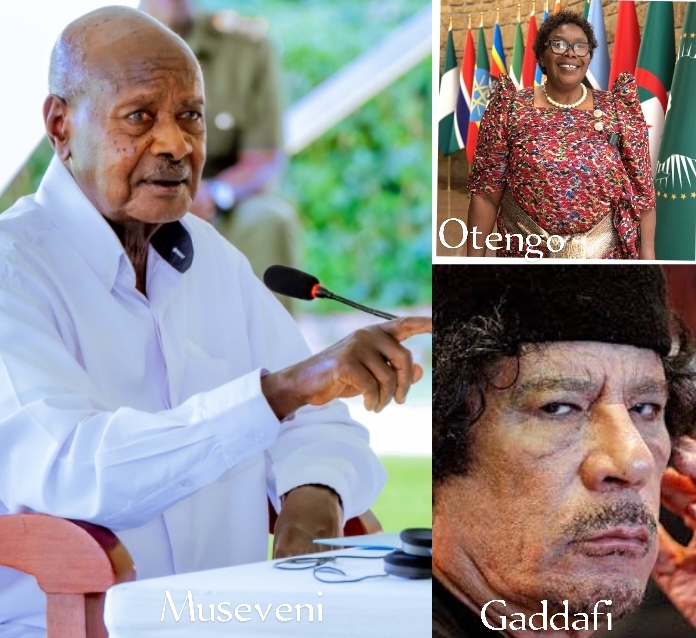
President Museveni is tomorrow Thursday expected to chair a virtual meeting with fellow Heads of State and Governments on the situation in Libya.
This has been announced by Uganda’s Ambassador to Ethiopia also Permanent Representative to the African Union H.E Amb. Rebecca Amuge Otengo.

She made the confirmation while closing the AU Peace and Security Council [AUPSC] open session on Rehabilitation and Reintegration of Children formerly associated with Armed Conflicts at the AU headquarters in Adis Ababa. Uganda, through Otengo has been the Chair of the AUPSC for the month of July and that a series of activities and meetings have been taking place with Otengo chairing.
According to Otengo’s communication, the President has already confirmed that he will chair a Virtual meeting with his fellow Heads of State and government tomorrow on the situation in the North African country.
“It is not surprising because H.E President Museveni has been one of the most outspoken African Presidents on the situation in Libya” she said when contacted for a comment.
She said the meeting of the Heads of State and Government is timely as Libya faces a situation that requires concerted efforts to be addressed.
ABOUT LIBYA
In 2011, Libya experienced an end to the 42-year-rule by Muammar Gaddafi following mass protests and bombardment by West forces under NATO. His fall was the 3rd to occur in North Africa following protests that rocked that region leading to the overthrow of Egyptian and Tunisian governments.
Although Gaddafi tried to resist and held onto power for some months, the intervention of NATO forces led by France led to his government’s downfall and his eventual embarrassing killing by protesters who had turned into insurgents.
Now 13 years counting, Libya has remained in total chaos and conflict with no functioning government. The fighting in that country has destroyed its infrastructure overshadowed its economy and turned the country into a safe haven for terrorists.
Gaddafi who assumed power in 1969 through a bloodless coup against his former master and Monarch Mohamad Edris, had been president for 42 years and had tried to unite the country giving it the best health and social services compared to any other country in Africa. He was however, very hostile towards any political dissent and always crashed any attempts to demand democracy.
Following his killing, in 2014, parliamentary polls were conducted giving the Liberals an upper hand against their rivals-the Islamists including Muslim brotherhood and Libyan Fajr group both of which rejected the results leading to a crisis of dual governance.

The country is now torn into various territorial governance with each part having its own government. In Tripoli for example, there is a government which the UN and the West recognize as the legitimate government of Libya. However, in the East-Toburuk, there is also a parallel government led by Khalifah Haftah who has his own army, parliament and government and doesn’t want to hear anything about Tripoli. In fact, he at one moment tried to attack Tripoli to repulse its government but failed. His government is backed by regional powers including Sudan, Jordan, Saudi Arabia, United Arab Emirates and Russia.
In Southern Libya is also another faction under the Tuareg tribes while in Gaddafi’s hometown of Sirte, the ISIS also formed their own government there. Such a situation now awaits Museveni’s guidance during tomorrow’s Virtual meeting with his peers. The Libyan crisis is now being taken as a major lesson by those who want to change governments through mass protests.