By Harriet Nakamya
The Electoral Commission has shipped in a total of 109,142 improved Biometric Voter Verification Kits (BVVK) to be deployed for the 2025/2026 General Elections, incorporating additional features. Many people including legislators have been posing questions wondering how the machines are going to work. In this expose, this website reveals key answers to some of the lingering questions as per the Electoral Commission’s explanation.

To begin with, the Biometric Voter Verification Kit (BVVK) is an electronic portable handheld device. It is used to confirm a voter’s identity by way of comparing one’s physical characteristics (biometrics) such as fingerprints and facial features to a pre-existing voter database.
According to the EC, the purpose of deploying the BVVK is to confirm that someone is an eligible voter. It is intended to ensure the One-Man/Woman-One Vote principle. This is not the first time the EC is using these kits!
In the 2016 general elections, the Commission (EC) deployed these very machines. The intention was to improve the integrity, accuracy, security, efficiency, and credibility of electoral services by verifying voter identity to ensure that only eligible voters actually vote.
This kit is so sophisticated that it is capable of fingerprint and facial recognition. It also validates casted ballot papers to identify stuffed or fake ballots. This therefore, means that each voter shall be verified through a biometric verification machine before being issued with a ballot paper at each polling station.
At the opening of the polling station, before the exercise is done, some steps shall have to be followed. Firstly, before opening of the polling station, a BVVK shall be assigned to the polling station. This is done by scanning the voters register Quick Response (QR) code. The details of the polling station will then appear on the machine.
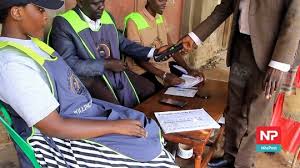
The BVVK Operator and Presiding Officer must each scan their National IDs or Voter Location Slips (VLS) and verify their fingerprints to be able to use the machine at the polling station. In case the fingerprints are not available or are of low quality then their faces will be verified.
According to the EC, the machine can only scan original National IDs and Voter Location Slips. However, in the absence of both items, the Voter Register at each polling station will be referenced and the corresponding QR code on the voter’s register shall be used.
Through the Ballot Assignment menu, the BVVK operator then scans each of the ballot paper booklets QR codes for the categories to be voted for at the polling station for the kit to be able to recognize them during the polling process. In doing this the kit will be able to recognize these ballot papers, and not any others say from another polling station.
3.0 OPENING OF THE POLLS
The law provides under S.141(5) of the LGA (as amended) that voting will not commence at any polling station unless there are at least ten (10) voters to witness the opening of the polls.
3.1 Verifying of Witnesses
Under Capture Witnesses Details, all ten witnesses must have their National IDs scanned and fingerprints or faces captured as was the case with the officials. You verify the voters one by one until all ten (10) witness slots are filled. This is in addition to marking their names with an asterisk on the voters register as of old. After this it will now be possible to open the polls.

4.0 VOTER VERIFICATION AND BALLOT ISSUING
Biometric verification is mandatory and therefore no voter will be allowed to vote without having thier fingerprints or faces verified.
4.1 Voter Verification
Starting with the National ID or VLS or the QR code on the voter’s register (as the case may be), the voter’s fingerprints or in their absence their face will then be verified to ascertain their eligibility to vote.
4.2.1 Ballot Paper Scanning
The BVVK Operator will at this stage select the ballot type on the screen of the kit, for example Scan Presidential Ballot. S/he will then scan the QR code of one ballot paper from the ballot paper booklet of that category, which will be carefully plucked out and then issued to the voter. S/he will later proceed to the other categories and follow the same procedure. A similar process will be undertaken for all rounds of elections.
4.2.2 Ballot Paper Issuing
Please note that all three ballot papers will be issued at the Presiding Officer’s table (Table 1). This is because it is at this table that the BVVK will be used to verify voters. But apart from the Presidential or Chairperson’s ballot (as the case may be) which will be issued openly to the voter, the other two ballots will be handed to them in a pouch to avoid voters casting them in the wrong transparent ballot boxes.
It should also be noted that the polling assistants who have previously been issuing ballot papers for Directly Elected MP (or Councilor) and then Woman MP (or Councilor) at the second and third table respectively, will now instead guide voters on which ballot paper to cast at those places and how to tick them.
4.2.3 Secrecy of the Ballot
Whereas every ballot paper is scanned just before being issued out to a voter, there is no connection between the voter and the ballot they cast. This is because the information on verified voters and that on scanned ballot papers is stored under different databases on the machine to ensure the Secrecy of the Vote as required by law. Therefore, voters should not have any worries that their choices at the polling station will be known by anyone.
4.3 Ballot Re-Issuing
In case a voter inadvertently spoils their ballot, the law under S.54 of the PEA (as amended) allows them to be issued with another ballot paper. However, in addition to the old procedure, the voter’s ID or VLS or their QR code on the register will be re-scanned and biometrics taken. The spoilt ballot paper will then be scanned for cancellation in the system
(kit) before a new one is scanned for replacement.
5.0 CLOSURE OF POLLS
When all voters who were in the queue by 4pm have cast their votes, the officials will then close the polls. The Presiding Officer and (or) BVVK Operator will select CLOSE POLLS and follow the prompts the way they did under section 2.2 to close the polling on the kit.
6.0 POST BALLOT VERIFICATION
After the closure of polls, all cast ballots will be verified by scanning each of their QR codes to ascertain that they were legitimately issued at that particular polling station (under the One-Man/Woman-One-Vote principle and therefore genuine before sorting and counting commences.
6.1 Procedure for Ballot Verification
The Presiding Officer will pour the contents (ballots) of a given transparent ballot box (one category at a go, viz; presidential, direct MP or woman MP or otherwise) onto the polythene sheet. Together with the BVVK operator and other polling assistants they will then scan each of the ballots to establish their authenticity. After scanning the first category, the ballots will first be returned to the box before counting so the other category(ies) is/are scanned.
Any unverifiable ballots that could find their way into the ballot box(es) will be put aside as they will be a product of ballot stuffing and (or) multiple voting. This will then be recorded in the Official Report Book (ORB) as part of the incidents at the polling station.
The ballot verification will be witnessed by the polling officials and candidates’ agents inside the polling station as well as the rest of the voters and observers outside the cordoning tape. On completion of this procedure, the officials will authenticate and exit. Counting of the votes will then commence following the usual procedures.
7.0 SCANNING OF DR FORMS & ACCOUNTABILITY OF BALLOT PAPERS
After the results have been filled into the Results Declaration (DR) forms and the latter have been authenticated, the officials shall then scan the forms and also take pictures of the same for submission on the BVVK. This will work as backup for the Returning Officers to validate through comparison with the results physically submitted to the tally centre especially in case some results are contested.
The completed Accountability of Ballot Papers (ABP) shall also be scanned and also take pictures of the same for submission on the BVVK.
8.0 CLOSURE OF ELECTION ROUND
At the end of all the foregoing, the Presiding Officer will officially close the election round. This will be done by the officials selecting CLOSE ELECTION on the BVVK and then authenticating their details the same way it was done under section 2.2. The election round will then be considered CLOSED. Additional information from The Independent!