By Charles Mugerwa
Kampala Capital City Authority (KCCA) Council has passed a resolution aimed at enhancing collaboration between the authority and competent local investors to develop, cover, and upgrade drainage channels across the city.

The move is aimed at tackling the challenge of floods which have been terrorizing the city for years whenever it rains.
The resolution, passed during a heated council session held on April 3, 2025, is however, in contrast with Lord Mayor Erias Lukwago’s recent accusations against businessman Dr. Hajji Hamis Kiggundu and former Acting Executive Director Frank Nyakana Rusa.
The Council emphasized that partnering with the private sector under close KCCA led by the Executive Director Sharifah Buzeki’s supervision, is the only viable path to ending the city’s chronic flood disasters.
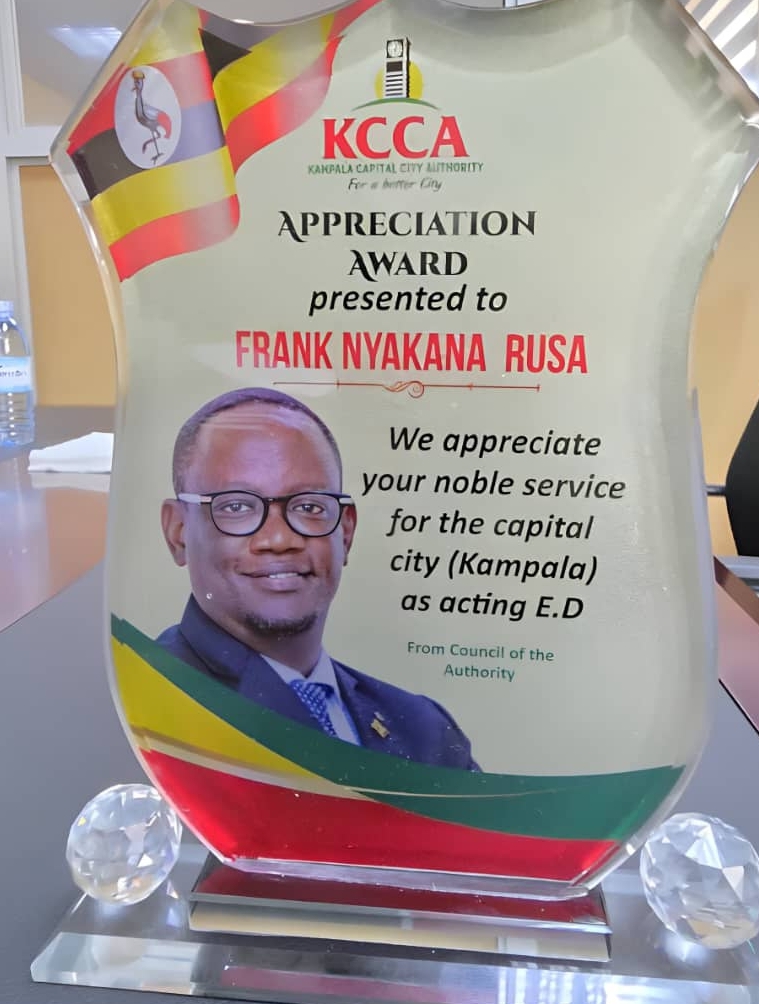
Councilors used the session to dismiss the Lord Mayor’s claims as being politically charged and legally unsound. They instead chose to recognize Rusa with an official commendation for what they called his exemplary leadership for the few months he sat in the chair as acting ED following the disgraceful knifing of Dorothy Kisaka.
Lukwago had an axe to grind with Dr. Kiggundu accusing him of illegally reconstructing the Jugula drainage channel near Nakivubo which he suggested caused the devastating floods that recently crippled Kampala.
He further implicated Frank Nyakana Rusa, demanding his interdiction from the office of Director of Legal Affairs, claiming that the man from Tooro backed the project while serving as Acting Executive Director between September and December 2024.
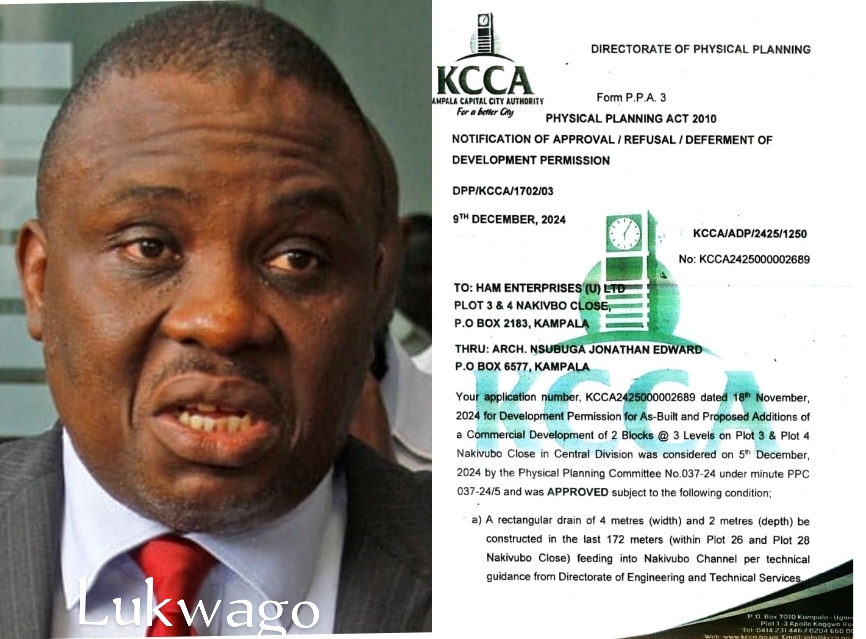
The council, however, couldn’t entertain his claims as members tabled official records showing that Ham Enterprises (U) Ltd., the company owned by Dr. Kiggundu, had submitted all construction plans to then KCCA leadership as required by law. The plans were reviewed and approved on December 9, 2024.
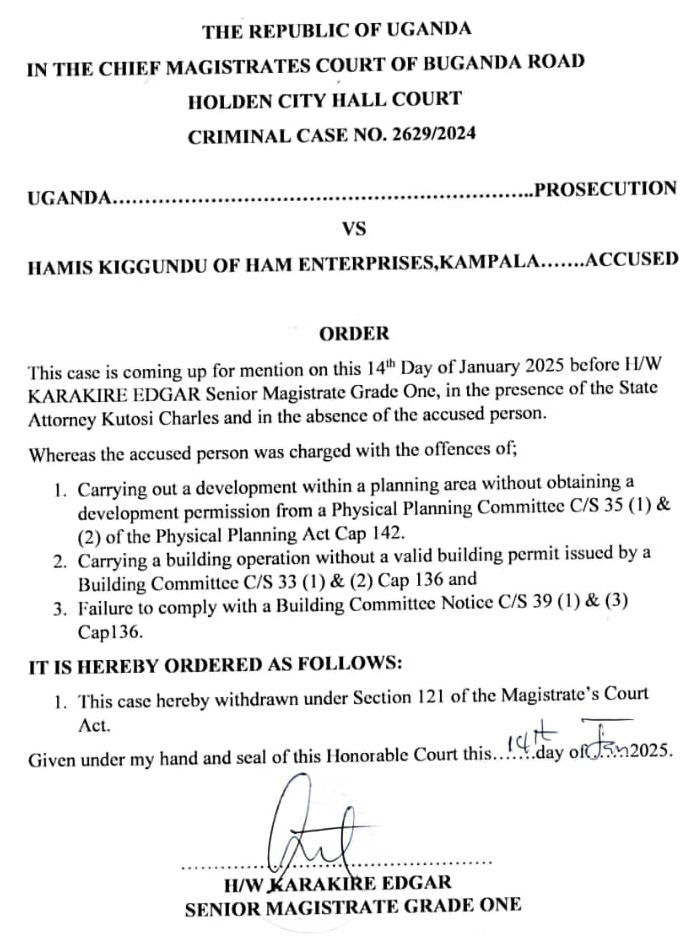
It was revealed in the session that the charges he cited had not only been dismissed by the KCCA magistrate court on January 14, 2025, but had also been wrongly filed against Dr. Kiggundu personally, rather than his company—violating the legal principle of limited liability.
The Councillors contended that following the court’s decision, these charges were malicious and biased and suspected that they contained personal vendetta as opposed to being development-oriented.
“The actual cause of floods across the city stem from years of neglect, poor solid waste disposal in open drainages, and the lack of modern infrastructure—not the efforts of developers like Ham Enterprises, who are working to fix these problems” the councilors stated.

The councilors cited a recent incident of city floods where most parts of Kampala flooded including Clock Tower, Kawempe, Natete, Kamwokya, Kinawataka, Forest Mall Nakawa, Zana, and parts of the Northern Bypass. They however, reasoned that this wasn’t the case with the areas around Nakivubo as according to them, weren’t affected. This, the council agreed, was evidence of the success of the Jugula channel works.
The council commended Rusa and presented him with a Certificate of Appreciation in recognition of his work while in acting capacity then.
The session marked a turning point in KCCA’s approach to flood management. Members resolved that the KCCA under the able leadership of Executive Director Sharifah Buzeki, needs to partner with credible local investors to develop and upgrade the city’s drainage systems, especially as funding from the Central Government remains insufficient and foreign aid continues to dwindle.
HOW OTHER CITIES ARE DEALING WITH SOLID WASTE CHALLENGE
Drawing comparisons with modern cities that have invested in underground drainage, the council emphasized the need to shift away from Kampala’s outdated open channels, which are prone to blockage by solid waste.
Members warned against politicizing development efforts and called for unity in advancing Kampala’s progress. They stressed that KCCA’s mandate is to serve all Ugandans holistically, not to be driven by personal emotions or political rivalries.
The council also issued a passionate call to government entities to support, rather than frustrate, local investors who can solve real urban challenges.
As Kampala looks to the future, the city may finally be turning a corner—one paved not with finger-pointing, but with partnership, progress, and homegrown leadership.
KCCA ED Sharifah Buzeki has come up with various strategies of managing solid waste, explaining that the flooding is mainly caused by blockage of drainage channels by rubbish thrown in by irresponsible people.