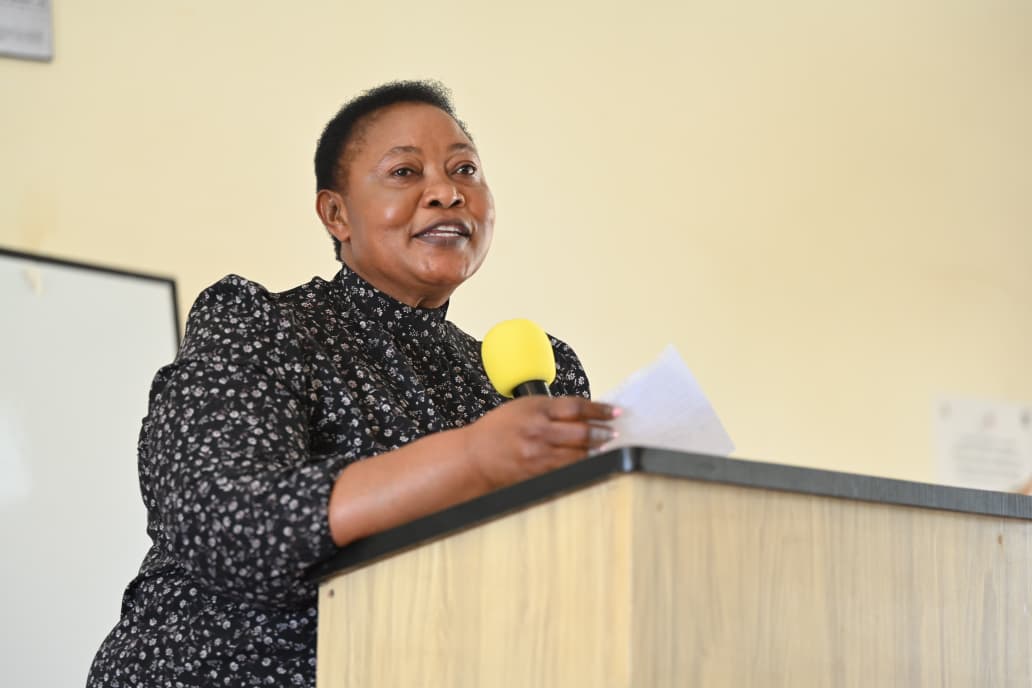
KAMPALA — Resident District Commissioners (RDCs) and Resident City Commissioners (RCCs) have been directed to cause the arrest of corrupt officials where credible evidence exists, instead of only writing reports, the Minister for the Presidency Milly Babirye Babalanda has said.
According to the minister, the new directive follows guidance from President Yoweri Kaguta Museveni last week.

Babalanda said President Museveni, as the architect of Uganda’s anti-corruption campaign, clarified that while the RDCs fight corruption through documenting and reporting it to the presidency, the strategy must shift from a largely report-based approach to a more proactive one.
“His message was clear: we cannot allow bureaucratic delays to become a shield for corruption,” she said.
The Minister explained that under the traditional system, once corruption is discovered, an RDC writes a report which is forwarded to relevant authorities for further action. During the lengthy process, suspects remain in office, creating room for evidence to disappear, records to be altered and witnesses to be compromised.
“This partly explains why corruption cases often take so long to conclude and why many do not result in convictions,” Babalanda noted.
New Orders to RDCs
As the minister responsible for supervising RDCs and RCCs, Babalanda said she is now directing all RDCs to follow the president’s new guidance by not letting their anti-corruption work end at reporting.
“Where credible evidence of corruption is established and there are lawful grounds for arrest, take timely action and hand the suspect over to the police and other competent authorities for investigation and prosecution,” she said.
She clarified that the directive does not make RDCs courts, nor does it transfer the constitutional mandate of the police, the Inspectorate of Government, prosecutors or the Judiciary.
“The purpose of an arrest is not to convict. It is to stop further wrongdoing, preserve evidence and allow competent institutions to conduct credible investigations,” she stated.
Babalanda highlighted the common corruption practices in local governments, including alleged sale of government jobs, manipulation of staffing figures to create ghost workers, inflation of school enrolment figures to create ghost pupils, creation of ghost beneficiaries, extortion of citizens under the Parish Development Model (PDM), and certification of shoddy or non-existent works for payment.

“Every shilling lost to corruption is a shilling that cannot build a classroom, stock a health centre, support a farmer or transform a household,” she said.
The Minister said the President’s guidance is a call for courage and responsibility, and urged the public to report wrongdoing and provide credible evidence.
She added that the President has provided political leadership, government has established institutions including the Inspectorate of Government, the Auditor General and the State House Anti-Corruption Unit, and the CDF Gen. Muhoozi Kainerugaba has reinforced the no-compromise stance on corruption.
She hence urged the RDCs to seize the new opportunity to stamp out corruption, which she says will enhance public confidence in the RDCs institution.