The Ministry for Agriculture, Animal Industry and Fisheries (MAAIF) through it’s flagship project called Uganda Climate Smart Agricultural Transformation Project (UCSATP) intends to procure initial four meat refrigerated trucks to be used in transporting meat products across the country.
The move is aimed at a gradual stoppage to transportation of cows from various districts to the city instead of finished meat products.

According to Dr. Kakungulu James, an Assistant Commissioner in charge of enforcement at MAAIF, the program seeks to address key issues including disease control, ensuring animal welfare, quality control and decongesting the City. In addition, he said the program seeks to ensure that those who stay in those districts where the cows come from, also benefit from the livestock value chain through jobs like slaughtering and skinning of those animals.
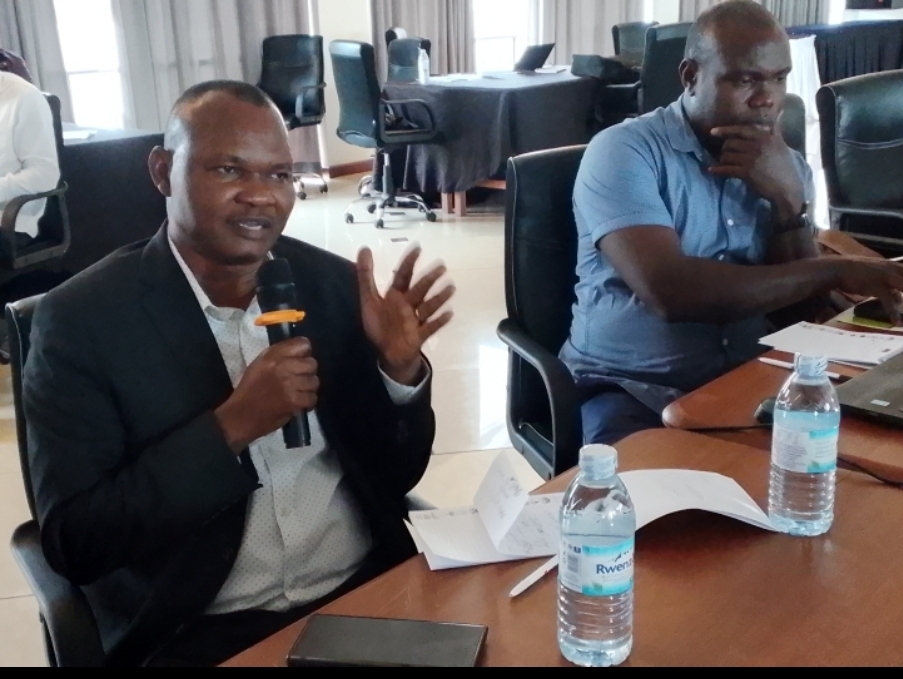
“You have seen how they move (mistreat) animals. This affects the quality of the meat. If you’re going to export, someone won’t buy that meat when they see the way we transport those animals. Secondly, we are looking at disease control. Last time we had FMD in Kampala” he said during a media training workshop on Unpacking and implementation of the Uganda Climate Smart Agricultural Transformation Project at Kampala Nile Resort Hotel-Namanve.
Kakungulu noted that it’s meaningless for cows to be transported from their districts of origin simply because they are going to be turned into meat in Kampala.
“Why do we transport cows from (say) Mbarara, Bukedea to Kampala just for slaughter? Slaughtering? Why do we have abattoirs in Kampala? Just because cows are going to become meat? We’re saying, we can slaughter them in Mbarara or Bukedea and transport finished product” he said.
He went on:
“Look at the waste you carry to Kampala. People even get scared when they see the way we handle our animals. Go to Kaleerwe and see how it is. If we delay, we shall take 100 years to catch up with the world”
He however, clarified that the existing abattoirs won’t be phased out immediately as this is still a pilot study program.
Kakungulu made the remarks as he took journalists through the intended key investment packages under the Livestock (dairy and beef) value chain. In total, UCSATP covers four value chains including Crops (coffee, cocoa, mango, citrus, hass avocado, cashew nuts, cassava, soybeans, sorghum and maize), Fisheries (fish capture and aquaculture), Beneficial insects (bees and black soldier fly larvae/maggots) and finally Livestock (beef and dairy).
He said that under the livestock value chain, 46 districts are being earmarked for dairy while 43 asked for beef. Each district according to Kakungulu will get a Lab, 3 inland quarantine centers, 5 animal holding grounds and 3 animal movement control centers. The project also intends to desilt 300 valley tanks/dams, setting up 4 multipurpose dams and 4 meat refrigerated trucks in addition to availing 45 milking machines per district.
He said the livestock value chain targets a total of 342000 households with 205000 involved in dairy and 136800 in beef production.

Meanwhile, Alex Asiimwe the deputy Project coordinator, revealed that as part of UCSATP’s component number one which talks of Strengthening Climate Smart Agricultural Research, Seed and Agro-Climatic Information Systems, there’s going to be investment in weather stations so that the Ministry gets reliable data to guide farmers.
“We’re going to install about 30 automatic weather stations in the 69 project area districts so that we get accurate information. We need to get predictions for a particular district, region and therefore, when doing forecasting, it becomes easier” he explained.
ABOUT UGANDA CLIMATE SMART AGRICULTURAL TRANSFORMATION PROJECT
This is a 6-year Project ending in 2028 and is to be implemented in 69 districts across the country with seven of them being refugee hosting districts.
Birthed in 2022, UCSATP was declared effective in June this year. The total funding is USD354.7m of which USD350m is external funding (World Bank) and USD4.7m government of Uganda counterpart funding. Of the USD350m, USD325m is a loan while USD25M is a grant.
Asiimwe said the project is late by one and a half years as much time was taken during approval process, but he is certain that the lost period will be recovered.
The project has both direct and indirect beneficiaries. The direct beneficiaries according to him are 3.9m while indirect beneficiaries are 9.5m among whom; 40% are women. It targets 620000 households, 80000 refugee host community households among others but making a total target of 760000 households.
The project emphasizes four value chains including Crops (10 enterprises), Livestock (beef and dairy), Fisheries and Beneficial insects (bees and black soldier fly larvae or maggots).
He said MAAIF is the lead implementation agency of this project supported by NARO, NAGRC&DB and the Department of Metrology.