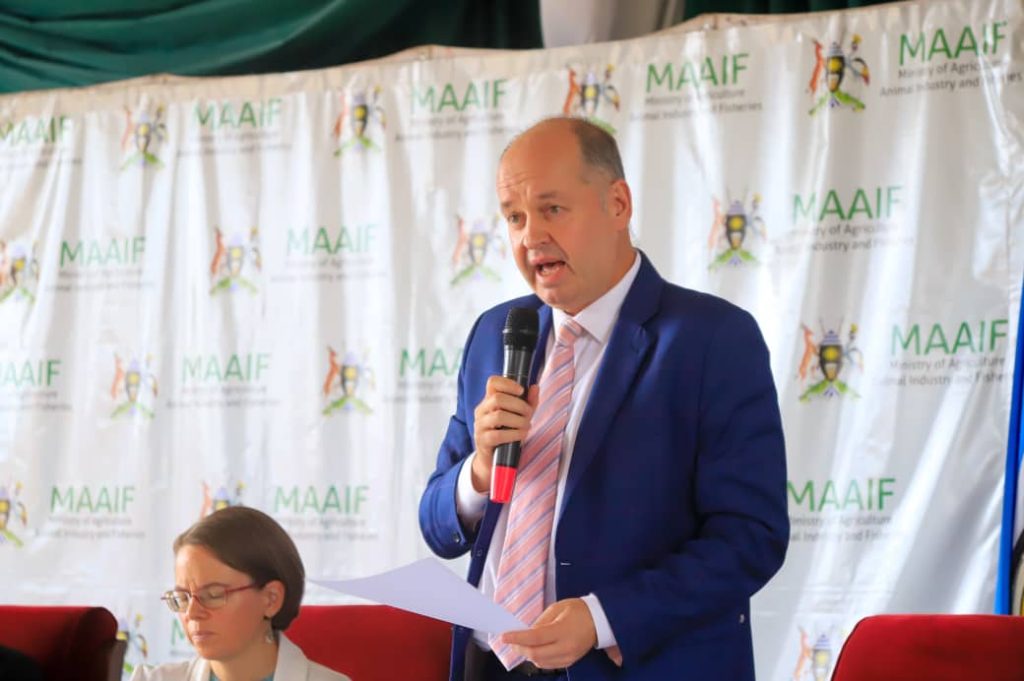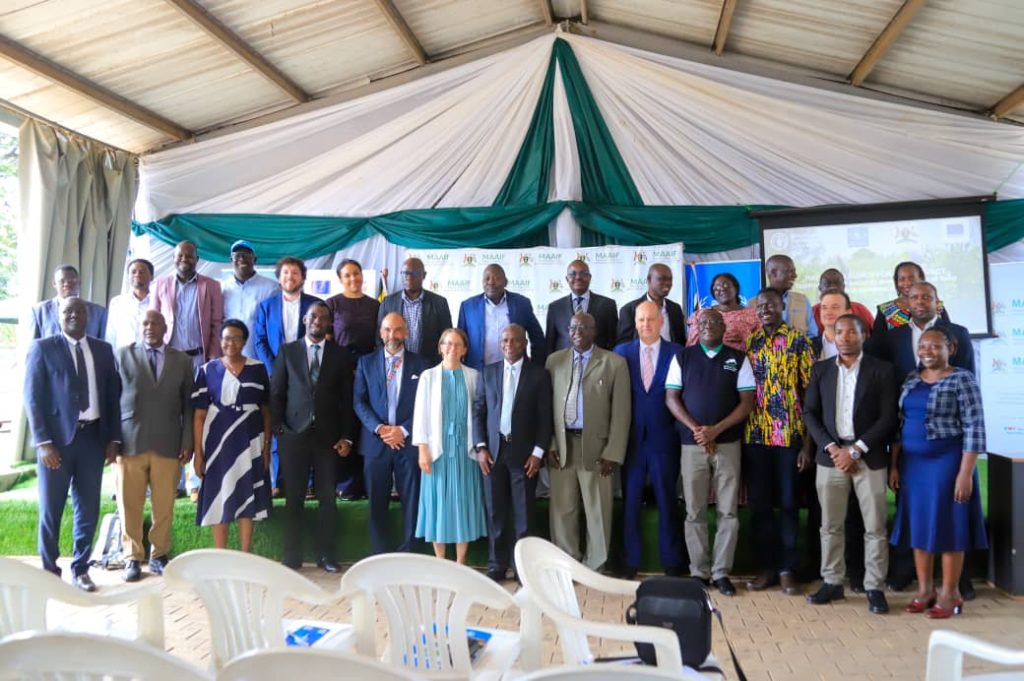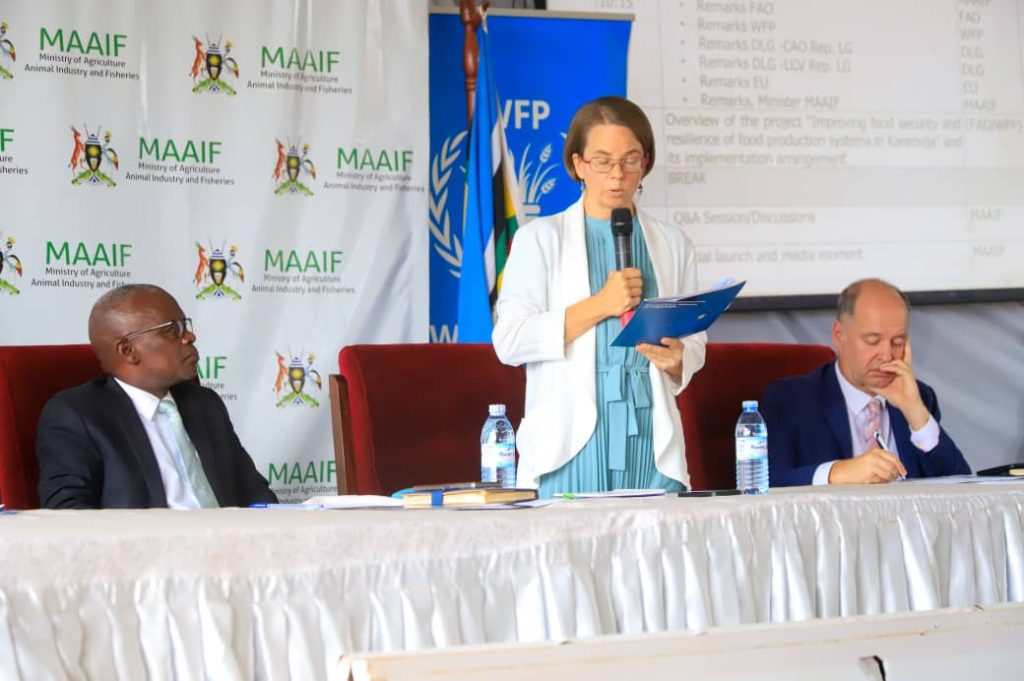

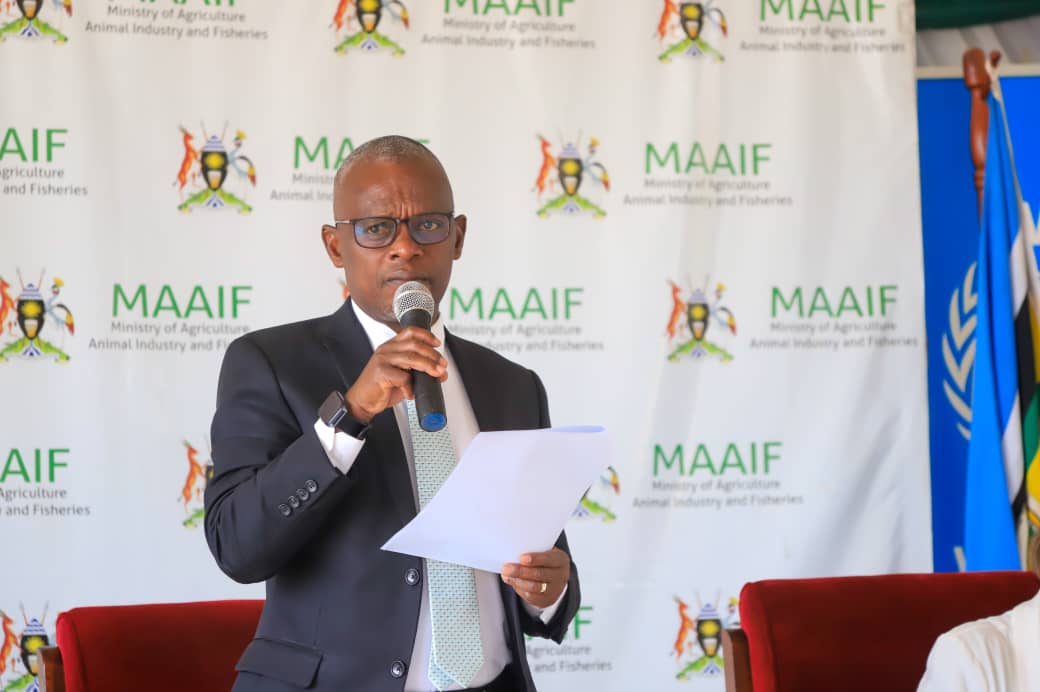
The Ministry for Agriculture, Animal Industry and Fisheries (MAAIF) has launched a three year project aimed at sustaining food production on large scale in Karamoja sub-region.
The project entitled “Improving food security and resilience of food production systems in Karamoja”, is funded by the European Union at a total budget of 5 million euros (Shs20bn).

In his remarks, the Permanent Secretary Maj. Gen. Kasura David who was represented by under secretary Segawa Ronald Gyagenda, emphasized the need to fast truck the implementation of this project since the Country has lost a significant amount of time from planned starting year 2023 to date.
“I implore all the various stake holders involved in the implementation of this project to put maximum attention and efforts in this project in order to benefit the intended beneficiaries”. He said.
Other development partners that graced the launch were: Food and Agriculture Organization (FAO), European Union (EU) represented by the European Commission and World Food Program (WFP).
The project focuses on addressing some of the barriers to improving food security and resilience of food production systems in Karamoja, where the population is already vulnerable to recurrent shocks resulting from combined pressures, including insecurity environmental degradation and climate change.
The project is being implemented in selected sub-counties and parishes across all the 9 districts of Karamoja sub-region including Abim, Amudat, Kaabong, Karenga, Kotido, Moroto, Nabilatuk, Nakapiripiriti and Napak.
It targets at least 16,000 households as direct beneficiaries and 80,000 people as indirect beneficiaries.
In Uganda, Karamoja is one of the most vulnerable regions to climate-related shocks and hazards which significantly contribute to persistent low levels of food and livestock production.
The 2023/24 crop production season yields were below average due to a series of prolonged dry spells which reduced availability of pastures for livestock and induced migration to the neighboring districts.