By John Okello Lapok
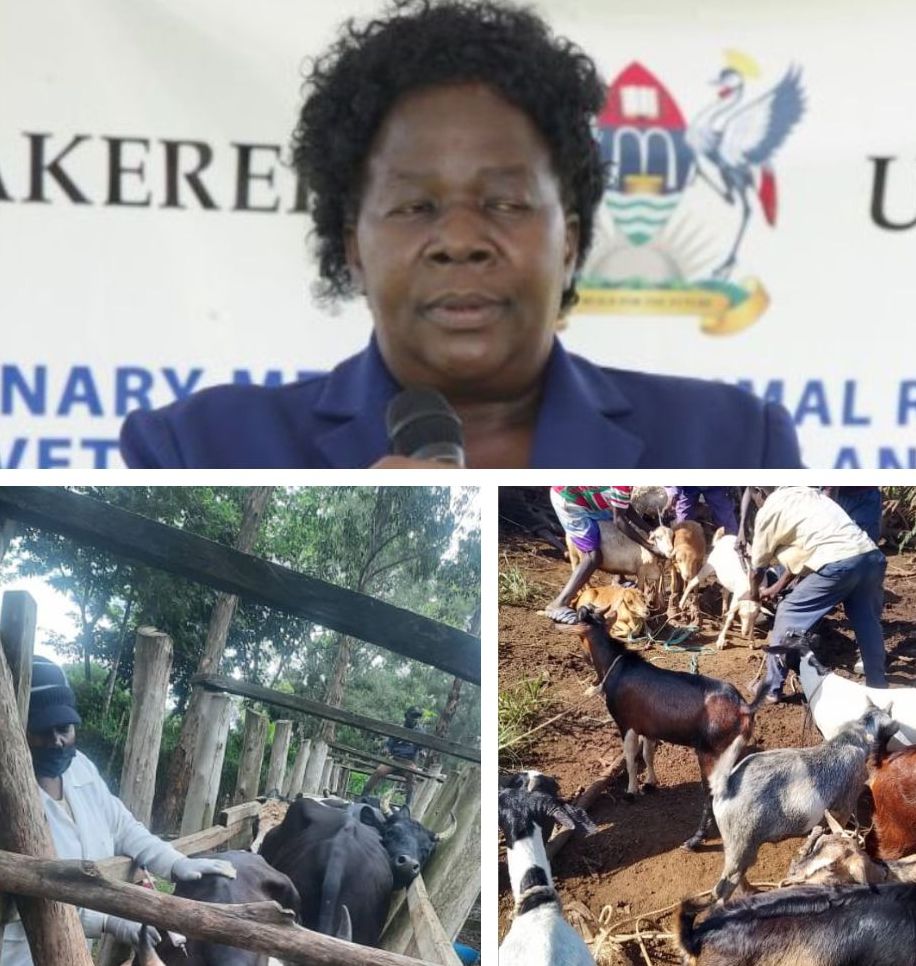
Foot and Mouth Disease (FMD) remains a big threat to the livestock sector in the country. The Ministry of Agriculture, Animal Industry and Fisheries (MAAIF) is therefore, intensifying efforts aimed at kicking the disease out of Uganda, with emphasis on regular vaccination of animals and control of the movement of animals. Dr. Anna Rose Okurut Ademun, the Commissioner Animal Production and Health (MAAIF) shared with The Inspector, key tips regarding this subject of FMD vaccination and the ministry’s efforts. Excerpts.

Qn. Briefly tell us about FMD and how it affects animals.
Dr. Ademun Anna: Foot and Mouth Disease, commonly known as FMD, is one of the most feared livestock diseases because of the damage it causes to animals, farmers, traders, processors, and the national economy. It affects cloven-hoofed animals, including cattle, goats, sheep and pigs. It can also affect some wild animals such as buffaloes and antelopes.
Qn. Why should Uganda prioritize the livestock sector?
Dr. Ademun Anna: According to the MAAIF/UBOS livestock census 2021, Uganda has 14.66 million cattle, 17.48 million goats, 4.38 million sheep and 7.11 million pigs. The livestock subsector grew by 8.8 percent in FY2024/25, contributed 4.5 percent to GDP, and its value addition increased to UGX 10,078 billion from UGX 8,522 billion in FY2023/24.
Uganda’s livestock sector is too important to be left exposed to repeated FMD outbreaks.
Qn. How dangerous is FMD to a farmer?
Dr. Ademun Anna: When FMD enters a farm or herd, the effects are quickly felt.
Affected animals may develop painful wounds in the mouth, causing them to drool saliva and fail to feed properly. They may also develop wounds between and around the hooves, leading to limping. In milking animals, wounds may appear on the teats, which affects milk production and can make milking difficult.
Because sick animals cannot feed well, they lose weight, become weak, produce less milk, develop a rough coat, and lose market value. Young animals, especially calves, are at higher risk of death, while even adult animals can suffer serious losses. For farmers, FMD is not only an animal health problem. It is also an income problem.
When an outbreak occurs, quarantine restrictions are imposed to stop the disease from spreading. This means animals cannot be moved freely, livestock markets may be closed, slaughter may be restricted, and the sale of milk, meat, hides, skins and other animal products may be disrupted. A farmer who depends on daily milk sales or livestock trade can suddenly lose income. This affects school fees, medical care, household needs, loan repayment and other family responsibilities.

Qn. Does FMD have an impact on the country’s regional and international livestock market accessibility?
Dr. Ademun Anna: Countries that have controlled or eliminated FMD are very cautious about importing animals and animal products from countries where the disease is still present. This limits Uganda’s ability to access better-paying regional and international markets.
For instance, milk production increased from 2.7 billion litres in 2020 to 5.4 billion litres in 2024. Milk and milk product exports increased from USD 264.5 million in 2023 to USD 285.4 million in 2024.
Beef production also increased to 276,892 metric tonnes in 2024, while beef export earnings rose from USD 0.56 million in FY2023/24 to USD 1.30 million in FY2024/25. These figures are not just statistics.
They represent farmers supplying milk to collection centres, young people working in transport and processing, traders buying animals, processors adding value and so many industry players.
Therefore, for Uganda to benefit more from livestock exports, FMD must be controlled in line with international animal health standards.
Qn. Why should farmers take vaccination of animals very important?
Dr. Ademun Anna: FMD spreads very easily. It is often described as a herd disease because once one animal in a herd shows signs, other animals may already have been exposed. The disease spreads through close contact between animals, movement of infected animals, contaminated equipment, vehicles, people, markets, grazing areas and watering points.
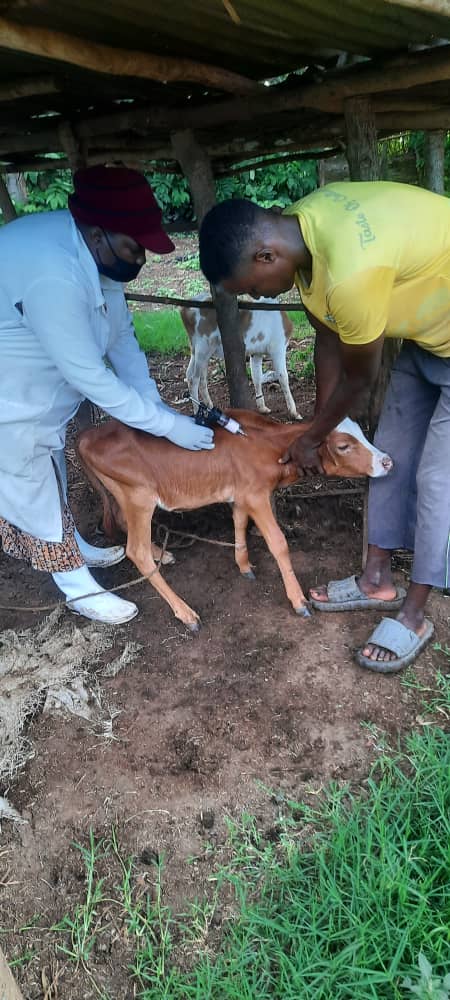
Vaccination therefore, is one of the most important ways of preventing FMD outbreaks. It protects animals before they get infected and reduces the risk of widespread disease.
Qn. Is vaccination a one-off exercise or it is continuous?
Dr. Ademun Anna: Vaccination must be done properly and consistently. FMD has different viral types, known as serotypes (O, A, C, SAT1, SAT2, SAT3 and Asia1). The vaccine used must match the types circulating in the country or region. This is why government veterinary authorities guide vaccine procurement, storage, distribution and administration.
Qn. Does it mean farmers who have vaccinated are free to move their livestock anyhow?
Dr. Ademun Anna: Vaccination alone is not enough. It must be combined with animal movement control, quarantine measures during outbreaks, disease surveillance, proper reporting, and cooperation between farmers, veterinary officers, local leaders and livestock traders.
When farmers vaccinate their animals and also follow movement control guidelines, the whole community benefits.
Qn. Some farmers think vaccination is only for cows and not goats, sheep or pigs. Why all?
Dr. Ademun Anna: For cattle farmers, vaccination protects milk production, beef value, breeding stock and market access. For goat and sheep farmers, vaccination protects animals that are often sold for household income, ceremonies, meat and breeding. For pig farmers, vaccination protects a fast-growing enterprise that supports many households, especially smallholder farmers and youth.
Qn. Some farmers have got big herds and others are smallholders. Is FMD vaccination only meant for commercial farmers or even those with a few numbers?
Dr. Ademun Anna: FMD vaccination is not only for large commercial farmers. It is equally important for smallholder farmers. Farmers should vaccinate their livestock because prevention is cheaper than loss. The cost of vaccination is small compared to the losses caused by an outbreak.
During FMD outbreaks, farmers may fail to sell animals, milk may lose market access, livestock prices may fall, animals may lose weight, and some animals may die.
Traders and processors also lose business, while districts lose revenue from livestock markets and related activities. Vaccination therefore, helps protect household income.
A vaccinated herd is more likely to remain productive, with better milk output, better weight gains and better market value. When many farmers vaccinate, the wider livestock sector becomes stronger. This creates confidence among buyers, processors and export markets.
That’s why we strongly encourage our farmers to Pay for the FMD vaccine today, protect their animals, safeguard their income, and open the door to better livestock markets tomorrow.
Qn. How is MAAIF working with farmers to ensure FMD vaccination becomes a regular exercise?
Dr. Ademun Anna: The Government of Uganda has introduced a Cost Recovery Scheme to support regular FMD vaccination. Under this arrangement, farmers contribute to the cost of the vaccine, while government continues to meet other important costs such as importation logistics, cold chain storage, vaccine distribution, supervision, surveillance, vaccination equipment, and veterinary support.
The compulsory vaccination campaign will run from June to August 2026 and will be repeated after six months. District Veterinary Officers, local governments, farmer leaders, banking partners and veterinary field teams will guide farmers on registration, payment procedures, vaccination schedules and certification. The current payment is UGX 8,000 per dose for each cow or pig and UGX 4,000 per dose for each goat or sheep. Vaccination is expected to be conducted twice a year, with one cycle around January and February and another around July and August.
Qn. How significant is this scheme to a farmer who has always battled with FMD?
Dr. Ademun Anna: This scheme is important because FMD control requires regular vaccination, not one-time vaccination. If vaccines are provided free but government funds are not enough to replenish stock, shortages occur and outbreaks continue.
When farmers contribute to the vaccine cost, the money goes into a system that helps procure more vaccines for future rounds. This makes the programme more sustainable. Farmers should therefore, understand that the payment is not meant to punish them. It is meant to protect their animals, protect their income, and ensure that vaccines are available when needed.
A reliable vaccination system benefits everyone in the livestock value chain, including farmers, traders, milk processors, meat processors, transporters, exporters and consumers.
Qn. Why should farmers embrace this scheme?
Dr. Ademun Anna: The Cost Recovery Scheme should be welcomed because it supports continuity. FMD cannot be controlled through irregular vaccination. If some farmers vaccinate and others do not, the disease can continue circulating and affect everyone. For the programme to work, a large proportion of susceptible animals must be vaccinated.The scheme also improves accountability. Since farmers are paying for the vaccine, they have a right to demand proper service delivery, timely vaccination, clear information, safe vaccine handling, and official payment systems.
Qn. Usually, government’s initiatives targeting the local people are prone to infiltration by conmen. How shall farmers be protected against this vice?
Dr. Ademun Anna: Farmers should pay only through official channels and keep proof of payment.
Veterinary officers and local leaders should also ensure that farmers are informed in advance about vaccination dates, payment procedures, and the importance of vaccinating all eligible animals.
When FMD is controlled, farmers benefit through fewer outbreaks, fewer quarantine restrictions, better animal health, better productivity, improved market confidence and stronger opportunities for trade.
Uganda also benefits through increased livestock sector growth, better export potential, improved food security and higher contribution to national development.
Qn. What should farmers do?
Dr. Ademun Anna: Farmers should register their animals with the relevant veterinary authorities and prepare for vaccination during the scheduled cycles. They should vaccinate all eligible cattle, goats, sheep and pigs, not only selected animals. They should avoid moving animals during outbreaks and should report suspected FMD cases immediately to veterinary officers. Farmers should also avoid buying animals from unknown sources during outbreaks and should follow quarantine guidelines when they are issued.
Livestock traders, transporters and market managers should cooperate with veterinary authorities because uncontrolled movement of animals is one of the fastest ways FMD spreads.
Qn. What final message do you have for the farmers regarding this subject of FMD vaccination?
Dr. Ademun Anna: FMD vaccination is an investment, not an expense. The small amount paid for vaccination can protect farmers from much bigger losses caused by disease, quarantine, falling prices, milk losses, animal deaths and lost market opportunities.
By supporting the Cost Recovery Scheme, farmers are helping to build a reliable vaccination system that protects their animals, strengthens the livestock sector, and opens the door to better markets.
The message to every farmer is clear: vaccinate your cattle, goats, sheep and pigs against FMD. Protect your animals, protect your income, and contribute to a stronger livestock economy for Uganda.