
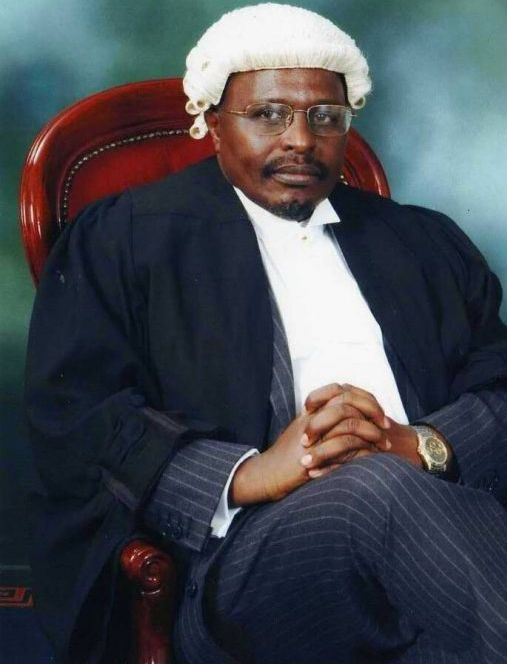
By Barrister Peter Magomu Mashate
The United Kingdom and the United States have a formal, active extradition agreement governed by the UK-US Extradition Treaty of 2003, which was ratified by the U.S. Senate and implemented in the UK by the Extradition Act 2003.

The treaty facilitates the reciprocal surrender of individuals wanted for prosecution or sentencing for serious crimes. While the framework applies to citizens of both countries, the U.S. and UK extradition processes have sometimes faced scrutiny over perceived imbalances, particularly because the U.S. is not required to establish a prima facie (evidence-based) case to request extradition from the UK.
Yet the US extradition requested of Ugandan Lt Katungi amounts to US no obligation extradition request as no Prima faciei case seems to have been established. This raises fundamental question of the Sovereignty. But even if the US extradition request was enshrined in law (which seems not) US extradition request made to Uganda clearly has constitutional exceptions as will be set out herein below with landmark cases of former late Chilean President Gen Augustino Pinochet and indeed that of the US Wikleaks head Julian Assange.
As a matter of record unlike UK, Uganda has no extradition treaty with the US. Both do not have a formal, bilateral United States extradition treaty in place.
Because there is no formal treaty, legal and political debate often arises in Uganda over the specific legal frameworks relied upon when Washington requests the extradition of an individual.
For example, high-profile extradition cases (such as the United States’ request for the rendition of a Ugandan citizen Lt Katungi) have triggered significant scrutiny regarding whether local courts have the proper statutory foundation to proceed without a signed, domesticated bilateral agreement.
Indeed, the only legally binding non-surrender agreement the two nations share is an Article 98 treaty signed in 2003, which mutually prevents Uganda and the U.S. from surrendering each other’s citizens to the International Criminal Court (ICC) without the other’s consent. On the facts, it goes without saying that the upper “big-boy” here is the US because while Uganda is a signitory to the ICC, US is not & has unequivocally refused to sign the ICC treaty.
Uganda does not have a formal prisoner exchange or transfer treaty with the United States. While Uganda has enacted the Transfer of Convicted Offenders Act to permit repatriating prisoners, it has not established this framework bilaterally with the U.S. Instead, Uganda maintains these specific statutory swaps with countries like the United Kingdom, China, Turkey, and South Korea.
Although the two countries do not have a prisoner swap treaty, Uganda and the U.S. do share a bilateral arrangement regarding immigration, under which Uganda receives deported asylum-seekers and migrants from the US.
The late Mayor of Kampala His Lordship Nasser Ntege Sebagala was jailed in the US and served all his sentence there because US does not have prisoner exchange treaty with Uganda. Hence, were Lt Katungi or any other person citizens of Uganda to be extradited to the US that would be it. This is clearly an imbalanced relationship of Justice.
EXAMPLES IN INTERNATIONAL LAW & FORMER CHILEAN PRESIDENT GEN AUGUSTINO PINOCHET EXTRADITION IN UK

The Pinochet case in international law established the landmark precedent that former heads of state do not have absolute immunity from prosecution for egregious human rights violations, such as torture and crimes against humanity, and reinforced the application of universal jurisdiction.
In October 1998, Spanish Judge Baltasar Garzón issued an international arrest warrant for former Chilean dictator Augusto Pinochet while he was receiving medical treatment in London.
Spain sought to extradite him to face trial for systemic human rights abuses, including torture and murder, committed during his regime.The defining legal battle centered on whether Pinochet could claim sovereign immunity as a former Head of State. Ultimately, the United Kingdom House of Lords ruled that while former heads of state are immune for official governmental acts, international crimes like torture do not constitute lawful official functions. Therefore, Pinochet was not entitled to immunity.
This historic ruling broke the barrier of impunity for international crimes. It established that individuals responsible for “jus cogens” crimes can be held accountable by foreign domestic courts, even if they occurred in another nation. Although Pinochet was eventually released to return to Chile on health grounds and died before facing a verdict, the case fundamentally shifted international criminal law.
Further, the Pinochet trial opened the door for other victims around the world to seek justice in foreign courts, and cemented the importance of human rights violation as a fundamental EXCEPTION OR VARIATION to diplomatic & sovereign immunity.
However, this is not the only exception enshrined in international law as a precedent by the House of Lords in the UK jurisdiction. Uganda has its own exception which they should not shy away from invoking.
Uganda & citizen Sovereignty
Article 1 of Uganda’s Supreme constitution stipulates that Power belongs to the people and that shall be excercised in accordance with the wishes of the people.
This includes the fact that where the people through their elected leaders have not provided a waiver of their Sovereignty then they stand supreme and courts must take coginisance of this material fact.
Its true that in Uganda, ordinary citizens do not have sovereign immunity in extradition proceedings arguably only where there are clear and transperent extradition treaties. Sovereign immunity and diplomatic immunities only apply to high-ranking state officials (e.g., Heads of State or Diplomats) who are acting in an official capacity on behalf of a government but even these are subject to exception s.
But for an ordinary citizen, extradition is a standard criminal procedure. Understanding how your citizenship and legal rights work in extradition involves several key distinctions:
Nationality Exceptions:
While ordinary citizens lack sovereign immunity, many countries have a nationality exception. This means a state’s constitution or domestic laws may explicitly prohibit or restrict the extradition of its own citizens. If this applies to you, your home country may choose to try you locally instead of handing you over to a foreign state.
No Immunity for Private Crimes:
Sovereign immunity exists to protect the sovereignty of nations, not to shield regular individuals from criminal prosecution for their personal actions. If you commit a crime that is considered extraditable under applicable treaties/laws, your status as a private citizen provides no legal shield. But its again most respectfully submitted that no extradition treaty exist with the US requesting for extradition of a Ugandan citizen Lt Katungi. Moreover, United State’s own judicial standard of derogation of duty of presenting a Prima faciei case as a minimum for requesting for extradition of a Ugandan citizen cannot be ignored by the Ugandan courts seized of the extradition proceedings. In any event, they are bound by the clearly valid exception of Nationality because Lt Katungi is a Ugandan national and the US has no formal extradition treaty with uganda and the US on its own determination is not obliged to present a prima facie case and indeed hasnt. Therefore the correct and lawful course of action is for the US to present prima facie case to be first tested in ugandan jurisdiction as a preliminary stage before rushing to seal the fate of a Ugandan citizen to foreign jurisdiction whose own citizens regardless of the crime cannot even be tried in the ICC where Ugandan takes a contrary position and is a signitory.
Political Offense Exceptions:
Most extradition treaties and international laws allow requested states to refuse extradition if the crime is deemed to be of a political nature (such as treason or politically motivated civil unrest). This exception was vigorously argued in the Julian Assange Wikleaks extradition in the UK proceedings to Sweden and subsequently to the US when he took refugee in the Embassy of Ecuador in London for a year. The merits of Assange’s case are not the issue but the principle and process of the extradition request. Here there was an extradition treaty but none exists with uganda.
Human Rights Protections:
Extradition can be blocked if there are well-founded concerns that the requesting country will violate fundamental human rights, subject the individual to the death penalty, or use torture.
Without going into the merits of Lt Katungi’s case the US has a Death Penalty on the Statute books. The allegations are multinational and full facts and intentions of the third countries may never properly inform the courts seized of the matter in the US and if the ultimate sentence is that on the US statute books it would be a step too far by the Ugandan courts to surrender its citizen and perhaps a miscarriage of justice and arguably a consititutional abdication. In the circumstances, proceeding with caution and striking a proper balance is necessary and desireable.
THE WRITER IS A CONSITITUTIONAL & HUMAN RIGHTS BARRISTER-AT-LAW OF THE HONOURABLE SOCIETY OF LINCOLN’S INN OF COURT LONDON, and are his personal views not those of the publisher-Editor.