
By Juma Nsubuga
The Uganda Civil Aviation Authority (UCAA), has revealed that while the terrestrial facilities are also still available; with the new technology, emphasis is on the procedures being designed based on the Global Navigation Satellite System (GNSS).

According to UCAA publicist Vianney Mpuugu Luggya, most modern aircraft are compliant with this technology which is already in use at Entebbe International Airport.
He adds that the Uganda’s aviation industry has also adopted direct routing as opposed to flying overhead navigation aids which saves time and fuel and is more efficient.
“Direct Routing involves flying direct from departure point to destination using the shortest route without having to follow established routes” he said adding that an example of Point-to-point flying involved an aircraft flying from Nairobi to London having to first go overhead Entebbe before connecting to London, which is no longer the case.
Luggya explained that with the direct routing technology, the aircraft hits one point at the border with Kenya and flies straight to a point at the border with DRC and continues.
He says that the new air traffic control systems and procedures have also come with efficiency in landing and take-off.
” Aircraft can now fly smoothly to the preferred altitude without disruption by the Air Traffic Controller in a bid to separate them from other traffic, and the same applies when an aircraft is descending. This is not only efficient but has reduced the workload for the pilot and Air Traffic Controller” he said adding that, the technology has also reduced on noise, carbon emissions and makes the flight more comfortable for the passenger.
He revealed that situations calling for controller interventions are now fewer as such procedures are designed in a way that they do not conflict Performance Based Navigation (PBN) and also makes it easier for aircraft to fly precise routes based on the equipage of the aircraft.
“This means the aircraft that are best equipped are given priority to use PBN routes over those with poor PBN equipage” he said.
Luggya made the remarks during the Maendeleo dialogue on status of Uganda’s transport sector in relation to modern trends in the aviation industry.
He said Uganda’s Air Navigation Services in addition to the voice communication, now uses data communication exchange of digital information between aircraft and air traffic control which deemed more reliable when communicating to aircraft in continental or oceanic areas.

“The voice/radio communication is less reliable in such areas due to limited coverage and interference among others. The Authority has also transited from only using terrestrial navigation facilities to include using satellite-based navigation in Approach, Departure, and En route phases of flights” he said.
He also confirmed in the dialogue that traditional terrestrial technology is fully reliant on the navigation facilities like the Distance Measuring Equipment, Doppler VHF Omnidirectional Range-DVOR among others being physically placed at various locations and airports.
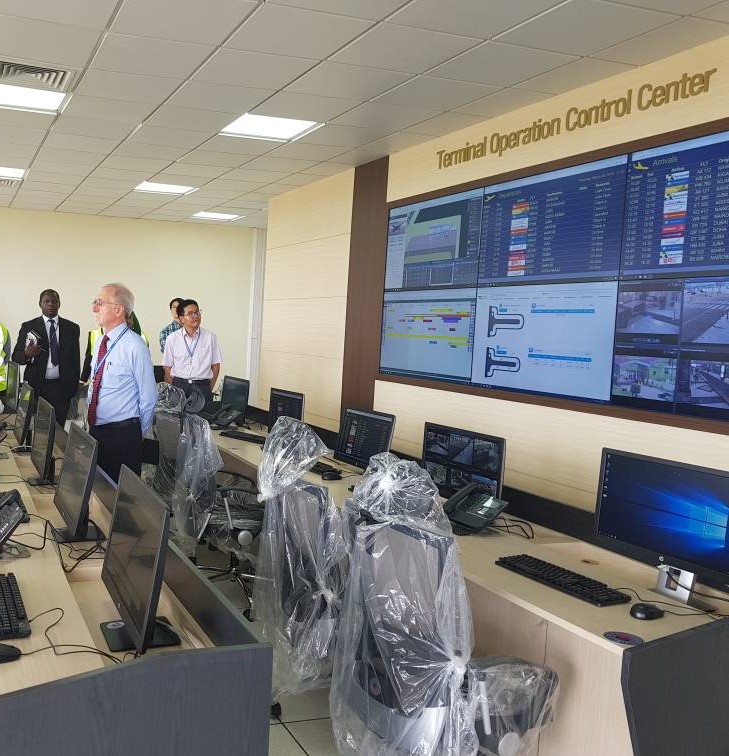
In addition, he said as a result of automation, there is a centralized monitoring system at Entebbe International Airport, which facilitates maintenance.
” If one of the connected systems at any of the aerodromes, such as Soroti, Gulu, or Arua, fails, the maintenance team can see it in Entebbe using the centralized monitoring system. Technology has also enhanced coordination with all the teams” he said.
Luggya added that Information communicated by an in-coming aircraft to air traffic control can be easily disseminated through the Terminal Operations Control Centre (TOCC) in an instant to all concerned stakeholders, including Immigration, Airport Operations, Briefing, Security and all that need to know once the controller enters the information in the system.