By John Okello Lapok
Livestock farmers in Masaka District have welcomed Government’s Foot-and-Mouth Disease (FMD) Cost Recovery Scheme, describing it as a sustainable approach that will enable farmers to take a more active role in controlling the disease, protect their livestock investments and improve productivity and household incomes.

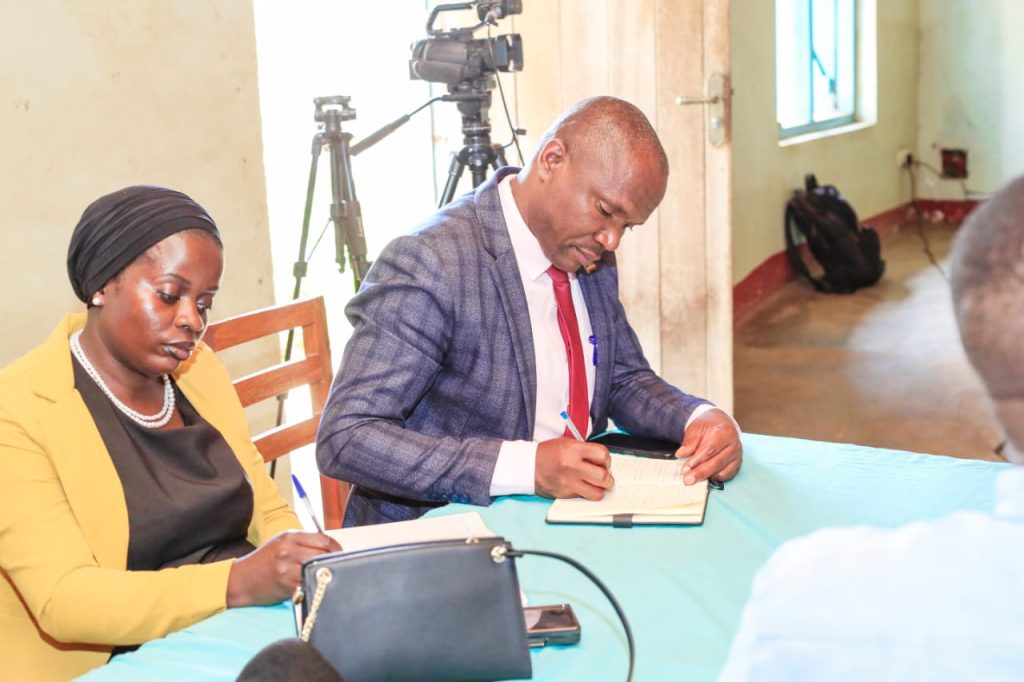
The farmers expressed their support during a sensitisation and stakeholder engagement meeting held at Kijjabwemi Rehabilitation Centre in Masaka on Wednesday.
The engagement brought together livestock farmers, district leaders, veterinary personnel and other stakeholders as part of the Ministry of Agriculture, Animal Industry and Fisheries’ ongoing national sensitisation drive.
Addressing the meeting, the National FMD Focal Person, Dr Ben Ssenkeera, explained that Uganda has a large livestock population susceptible to FMD, estimated at over 43 million animals, comprising approximately 14.5 million cattle, 17.3 million goats, 4.4 million sheep and 7.1 million pigs.
Protecting such a large population, he noted, requires a predictable and sustainable vaccination programme rather than relying mainly on emergency interventions whenever outbreaks occur.
Under the Cost Recovery Scheme, farmers contribute UGX 8,000 per cattle or pig and UGX 4,000 per goat or sheep vaccinated per cycle, with the resources supporting replenishment of vaccines for subsequent vaccination cycles.
Dr Ssenkeera urged farmers to consider this contribution against the considerably greater economic losses associated with an FMD outbreak.
Ugandan research has shown that milk production in infected cattle can decline by about 42 percent during an outbreak, while actors at the processing level experienced a 23 percent reduction in monthly income.
More recent research among smallholder cattle farmers in eastern Uganda estimated the average economic loss from an FMD outbreak at approximately US$323 per affected household, arising from mortality, treatment costs, reduced milk production, loss of animal draft power and reproductive losses.
The disease also carries wider economic consequences beyond individual farms. FMD outbreaks can trigger restrictions on livestock movement, disrupt livestock markets and trade, reduce animal values and affect traders, transporters, processors and other businesses that depend on the livestock value chain.
“Vaccination should therefore not simply be viewed as another cost to the farmer. It is an investment in protecting the animal, maintaining production and safeguarding the farmer’s income. Preventing the disease is far less costly than dealing with the consequences of an outbreak,” Dr Ssenkeera said.

He further clarified that cost recovery does not mean Government has withdrawn from FMD control. Government continues to shoulder the broader costs of the programme, including vaccine procurement arrangements, cold-chain infrastructure, storage and distribution, disease surveillance, regulation, technical supervision and coordination.
The farmer contribution is principally intended to support replacement of vaccines used, creating a revolving mechanism that makes vaccines available for subsequent vaccination cycles.
Farmers appreciated the policy, noting that predictable access to vaccines would enable them to protect their animals before outbreaks occur, rather than waiting for emergency interventions after productivity and income have already been affected.
They observed that better FMD control would translate into healthier and more productive animals, sustained milk and meat production, fewer disruptions to livestock movement and markets, improved market access and ultimately higher household incomes.
Participants also called for continued farmer sensitisation, transparency and accountability in the management of their contributions, reliable availability of quality vaccines and strict action against counterfeit vaccines and unauthorised dealers.
The Ministry encouraged livestock keepers to work closely with district veterinary personnel, present eligible animals for vaccination, retain their vaccination records and promptly report suspected FMD cases.
The Masaka engagement underscored the central message of the new policy: sustainable FMD control is a partnership between Government and livestock farmers.
By investing in routine vaccination today, farmers are protecting their animals, safeguarding their incomes and contributing to a more productive and resilient livestock industry.