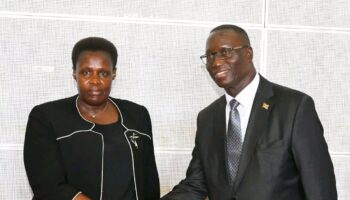
President Yoweri Museveni has launched and praised a new program by the Ministry for Health and it’s partners aimed at expanding HIV testing services across the country.
The program according to Museveni will mainly help those in remote areas where conventional testing services are inaccessible.

Baptized as the Novel Check Now HIV Self-Testing Program, Museveni says, one of it’s key advantages is the speed of the testing process, with results coming out in as little time as 15-20 minutes.
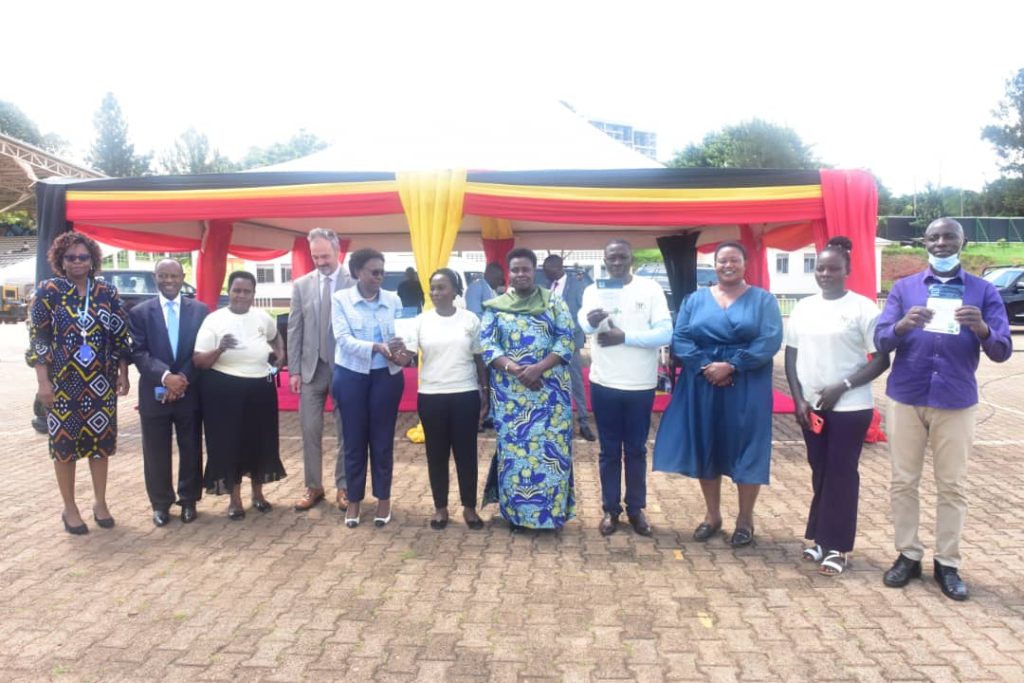
Through the workholic Vice President Maj. Jessica Alupo who represented him at the launch of the National Rollout of Novel Check Now Kit program at Kololo, the president described this as a significant improvement over the long wait associated with traditional testing methods.
“Additionally, the risk of errors is significantly lower compared to oral-based HIV tests, providing users with greater confidence in the accuracy of their results” Jjajja Museveni said as he explained why people must embrace the new program.
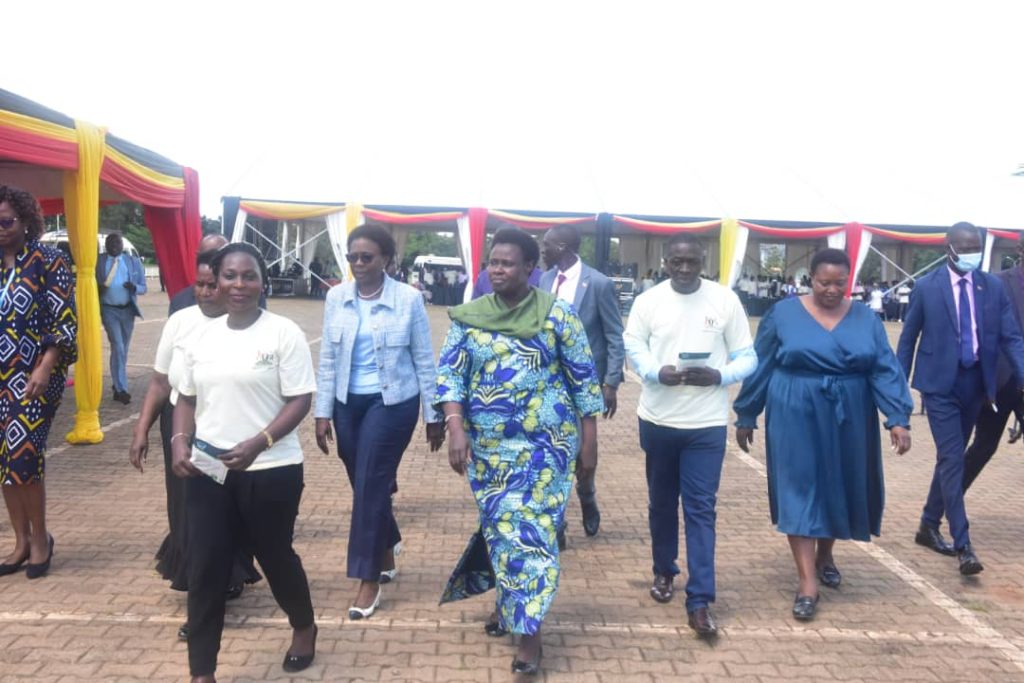
He said that the launch of the Check NOW HIV Self-Test kit is part of a broader effort by the government to put to history the HIV/AIDS epidemic in the country.
The Head of State noted that by making testing more accessible and reducing the stigma associated with it, more people will be encouraged to know their status. Museveni said when people know their status, they will be able to take the necessary steps to protect their health and the health of their communities.
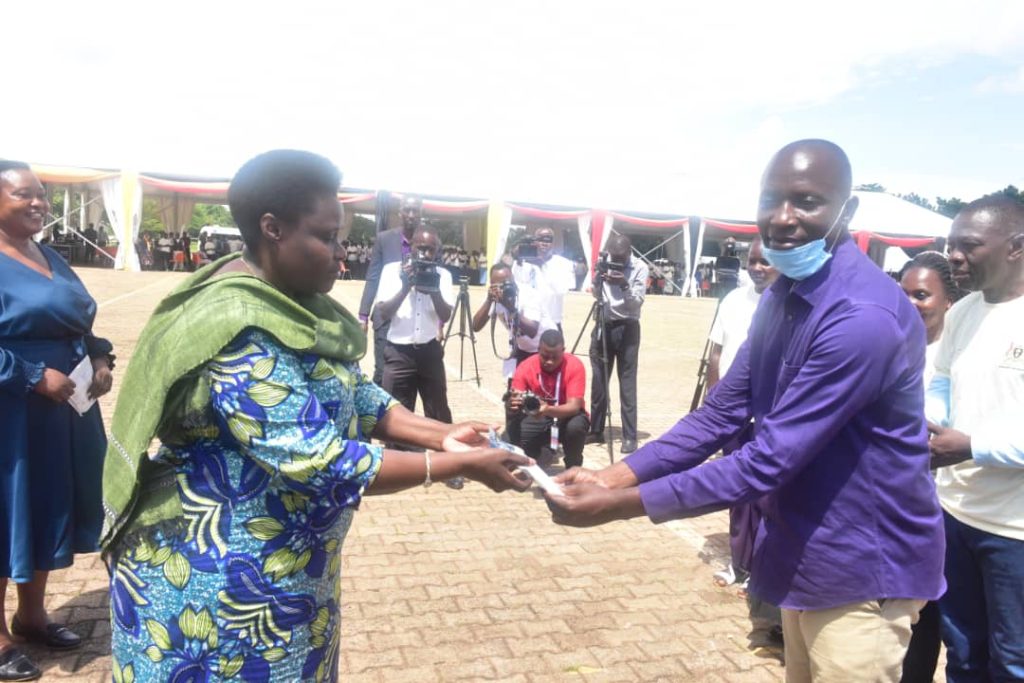
“I am glad that this program will be implemented by Village Health Teams (VHTs) and will focus on communities where access to conventional HIV testing remains limited” he explained.
The president commended the health ministry together with its partners Abott and others, for this innovation which he says would help minimize on the chance of defaulting on the country’s 2025 targets (the 95: 95: targets) of ending HIV/AIDS in Uganda.
He said currently, there are 1.4million Ugandans carrying this deadly disease of which 1.3million are adults aged between 15 years plus and the rest are kids aged between 0-14years.
“This translates to a proportion of adults living with HIV of about 5%.
This is a better position than we were, in 2017 when we launched the fast-track initiative to end AIDS as a public health threat by 2030. It is even a much better position than where we were in the 1990s, when the proportion of all people living with HIV in the country was estimated at 18%” he said.

The president said that attaining the 2025 target will reassure government that its on track to achieve our 2030 targets of ending AIDS as a public health threat.
“I therefore, call upon all countrymen and women to recommit to contributing whatever they can as individuals, families and communities to ensure we attain our national goal of ending AIDS as a public Health threat by 2030” he appealed before declaring the National Rollout of the Novel Check Now HIV Self-Testing Program in Uganda launched.
The president said this program aims to expand HIV testing services with a target of reaching 5,087,148 people.
ABOUT HIV PREVALENCE IN UGANDA
The first case of AIDS was reported in Kasensero in 1982. However, according to Museveni, when NRM came into power, it worked with scientists like Dr. Sam Okware in finding out how to prevent HIV and end the suffering of the people. He said the health workers in Kalisizo hospital, led by Dr. Lwegaba, helped in identifying the first cases from Kasensero on the shores of Lake Victoria in current Kyotera district. He says the information these health workers provided was a catalyst in the successful fight against HIV and AIDS.
“The NRM took the issue of HIV/AIDS as a serious problem and we still stand by that. That is why we emphasized the use of a harmonized language, we sounded an alarm about it and, we carried it to political rallies without being ashamed” he explained.
Museveni before summing up his speech reminded Ugandans that the address for HIV is the human sexual organ.
“It is important to emphasize that the main mode of HIV/AIDS virus transmission is through sexual contact with the affected person.
Our message has been ABC: Abstain, Be faithful and as a last resort, use a Condom” he reminded the wanainchi.