

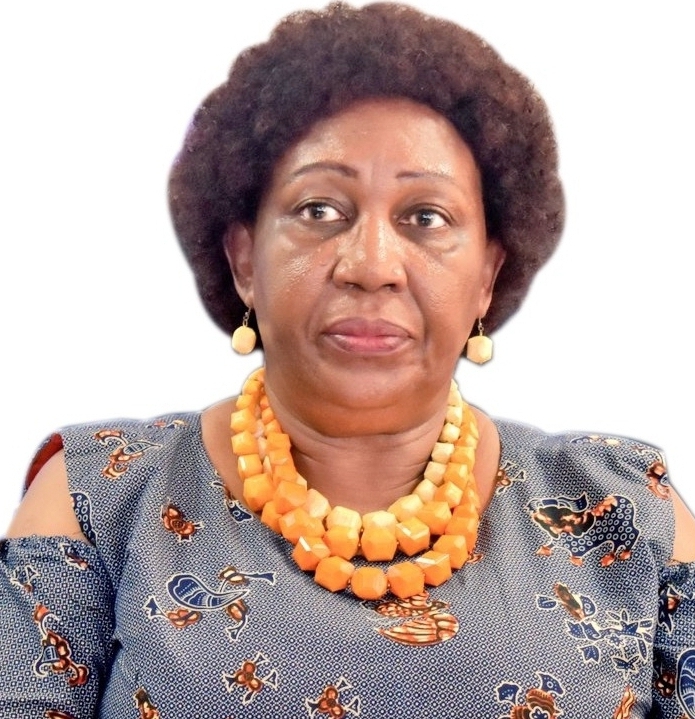
The chairperson Uganda Human Rights Commission (UHRC) Mariam Wangadya has challenged law enforcement agencies to ensure that all legal instruments are enforced to curb the alarming cases of child marriages, teenage pregnancies and Female Genital Mutilation in the country.
According to Wangadya, records from Save the Children, indicate that almost 40% of girls in Uganda are turned into wives before they turn 18 years of age.

She adds that in some rural areas, this figure is as high as 60%.
Wangadya cited Karamoja sub-region where girls as young as 12 are married off by their parents to older men in exchange for dowry.
“These are dreams shattered, education abandoned and childhood sacrificed. Many young girls’ lives are mapped out by the traditional practices of their communities” she said while launching a report into Teenage Pregnancy, Child Marriages and FGM in Uganda at Onomo hotel-Nakasero.
The human rights head in the country noted that whereas the legal age for marriage in Uganda is 18, the enforcement of this law remains a big challenge.
“In fact, families continue to see early marriage as a way to protect their daughters, secure financial stability, or maintain family honor” she reported.
Wangadya however, described this as a false form of protection noting that Child marriage deprives girls of their right to education, exposes them to physical and sexual abuse, and significantly increases their chances of early pregnancy and maternal death.
The lady from Bulambuli district challenged those concerned with the enforcement of the law to take this report seriously as it is not only about
exposing these harmful practices, but about holding everyone concerned accountable.
“The legal frameworks are in place, but they are not always implemented effectively. We must ask ourselves: why is it that in some communities, marrying off a young girl is seen as a rite of passage, when in fact it is a violation of her human rights?” She asked.
Wangadya added that statistics from the UNFPA, indicate that globally, 16,000 girls under the age of 18 give birth every day. She added that in Uganda, the situation is equally alarming with many teenage mothers forced to drop out of school, face stigmatization, while some even lose their lives during childbirth due to poor healthcare.

She noted that worse still, these young girls are often invisible in policy makers’ conversations about sexual and reproductive rights.
“They’re often blamed, shamed, and forgotten, despite the fact that the systems around them failed to protect them in the first place. If we are truly committed to advancing the rights of children, then we must not only provide education about sexual and reproductive health, but also create environments where girls are free from the threat of violence, coercion, and neglect” she advised adding that nearly 25% of young girls aged 15-19 have already begun childbearing.
Wangadya noted that failure to protect girls from early pregnancies, denies them the opportunity to grow, learn, and aspire to something greater than the circumstances they were born into.
“When it comes to child marriages, the situation is even more tragic. Here we see how culture, poverty, and gender inequality intersect to rob children of their future. Child marriage remains deeply entrenched in some parts of Uganda, despite the legal framework that prohibits it” she said.
FEMALE GENITAL MUTILATION
Wangadya noted that this practice, which is deeply rooted in cultural traditions, continues to affect thousands of girls particularly in the northeastern Uganda.
To prove how serious it is, the lady from Bulambuli district in Bugisu subregion said 1 girl or woman in every 10 females in Uganda has undergone FGM!
“FGM is a violation of a girl’s right to bodily integrity, health, and freedom from violence. The consequences of this procedure are lifelong, ranging from severe physical pain, infections, and complications during childbirth, to psychological trauma” she lectured.
She said much as government passed the Prohibition of Female Genital Mutilation Act in 2010, criminalizing the practice, like many other laws, this has become a mere flower as enforcement remains inconsistent especially in remote areas where the practice is deeply entrenched in local customs.
“So, what do we do next? First, we acknowledge that these practices are not just ‘cultural traditions’—they are human rights violations. It is time for all of us to take a stand” she said .
Wangadya said that protecting the rights of children and women is not just the responsibility of the government or the Uganda Human Rights Commission alone but everyone’s responsibility.
“It’s time to do more, and to do better. We must ensure that every girl and woman in Uganda can live a life free from violence, inequality, and exploitation.
Let this report be the spark that ignites that change” she urged.





I truly love your site.. Excellent colors & theme.
Did you build this site yourself? Please reply back as I’m attempting to create my very own site and want to learn where you got this from or what the theme is named.
Thanks!