By John Okello Lapok
KAMPALA-The Ministry for Agriculture, Animal Industry and Fisheries (MAAIF) has advised district leaders to prioritise identification of problems affecting farmers in their localities as opposed to focusing on pushing for additional resources.

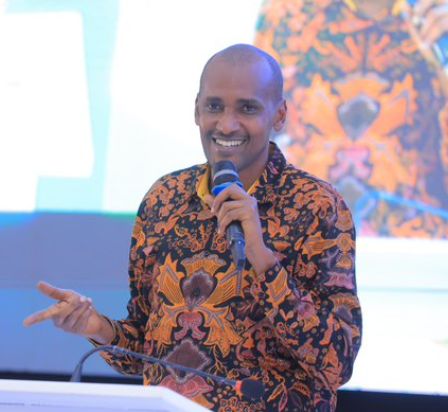
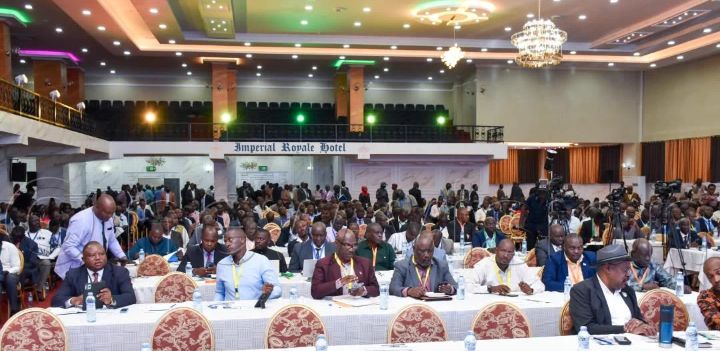
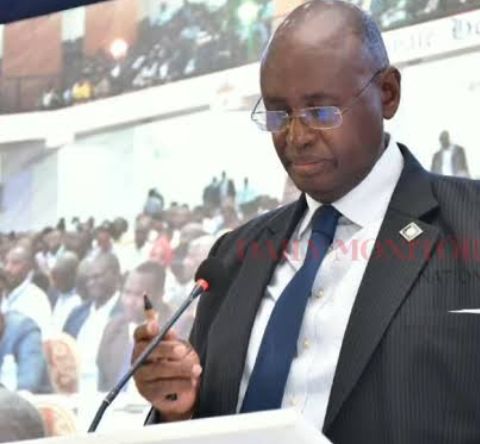
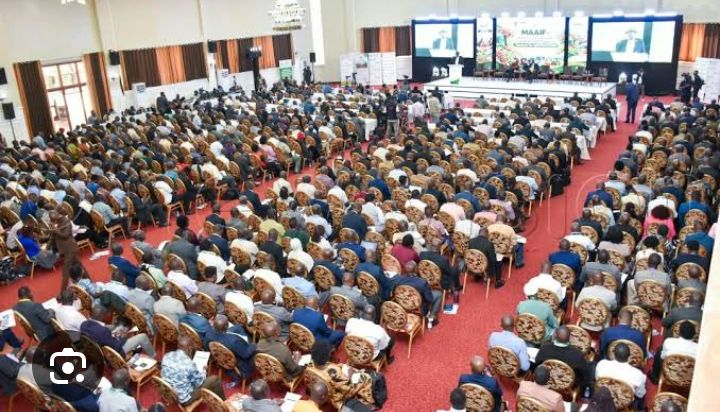
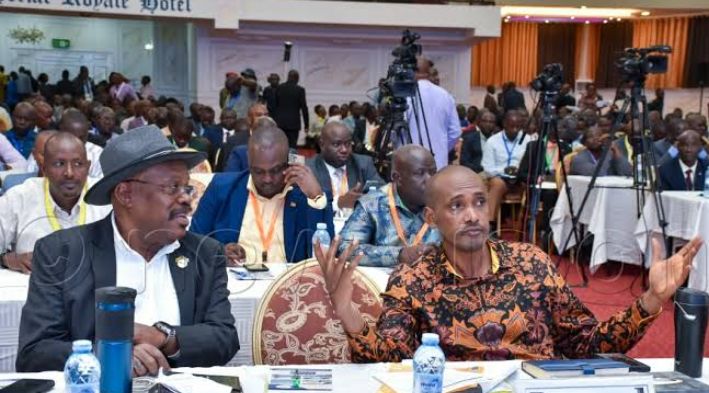
The call was made by the Permanent Secretary (MAAIF) Maj. Gen. David Kasura-Kyomukama while addressing participants at a two-day consultative conference bringing together agricultural practitioners, technical officers and district leaders from all the 146 districts and Cities. The conference focused on harsh weather and drought, irrigation and water coverage, mechanisation and market access, and Disease control for agricultural transformation.
The meeting was addressed by the sector Ministers and technical officers.
The conference which closed today Thursday running from Wednesday (October 7-8, 2026) at Imperial Royale hotel in Kampala, aimed to understanding the challenges affecting farmers, in addition to laying strategies of how districts can better implement the national agricultural priorities.
Maj. Gen. Kasura-Kyomukama explained that as a Ministry, MAAIF wants the farmer to be at the centre of the desired agricultural revolution aimed at transforming the sector into a more productive and commercial oriented one.
“Farmers must have access to improved livestock genetics, post harvest handling, irrigation, value addition, mechanisation, quality assurance, quality seed and planting materials, and markets” he said, adding that with the available resources, local governments need to scale up farmer education, coordination and agricultural extension.
The workholic PS informed the district leaders and participants that Uganda’s transition from a subsistence to commercial and market-driven agriculture is hinged on leaders critically knowing the farmers’ needs. He added that the local governments must ensure that government interventions result in better incomes, improved access to markets and higher output.
“This is why we say that the farmer is the most important person in the whole agricultural system. Our interventions must therefore, translate into practical benefits at the community level” Gen. Kasura-Kyomukama said, attracting applause from the audience.
GIVE US ACCURATE DATA
Meanwhile, the Minister for Agriculture, Animal Industry and Fisheries, Frank Tumwebaze Kagyigi, revealed that the changing weather patterns have necessitated the Ministry to come up with an irrigation strategy/project to ensure uninterrupted water supply to farmers.
He said the project concept which is in its final stages before submission to the Ministry of Finance, Planning and Economic Development, is premised on the fact that weather patterns are becoming increasingly unpredictable, making Uganda’s dependence on rainfall for agricultural production unsustainable.

“I call upon districts to provide us with verified information on existing irrigation facilities and last-mile water connectivity. The accurate and verified agricultural data will guide the Government planning, particularly the proposed National Irrigation Development Project” he emphasized, noting that less than 2% of Uganda’s agricultural land is currently under irrigation.
He said that this percentage is far below that of the Sub-Saharan Africa (4%) and 28% in Northern Africa.
According to Minister Tumwebaze, the project will cover aspects like on-farm water conveyance (where reliable water sources already exist), rehabilitation of non-functional irrigation schemes, irrigation systems around seasonal rivers and streams, and bulk water systems for water-stressed communities, among others.
“Districts must also address existing gaps in the agricultural extension services. We must fill the staffing, mobility and facilitation gaps. These must be addressed to ensure that extension workers ably reach the farmers” he urged, noting that government has been fully giving such support to the districts but farmers continue to complain of limited access to extension services.
The tough talking Minister ordered the Ministry’s Department in charge of extension update his earlier circular on extension roles, making it a comprehensive extension services handbook. He also observed the need for the use of mainly the radio and other communication platforms, stronger supervision, and regular farm visits so as to promote good agricultural practices.
ENTER FOOT & MOUTH DISEASE
The State Minister for Animal Industry, Col. Bright Rwamirama, called for concerted efforts among stakeholders including the district leaders, farmers and veterinary officers and the Ministry to combat the problem Foot and Mouth Disease (FMD).
“FMD threatens livestock production, farmer incomes and access to better-paying markets. It affects pigs, sheep,goats and cattle. That’s why the government has shifted to a cost-recovery approach for FMD vaccination” he said, explaining that the farmers will contribute UGX 8,000 for each pig and or pig while those with sheep or goat will pay UGX 4,000 for each and the the Government covers other vaccination costs.
The Minister said vaccination against FMD will be carried out twice a year, covering the periods January-February and July-August.
He urged farmers and local leaders to embrace the programme, explaining that the government has also procured 44 million doses of FMD vaccine and strengthened the vaccine cold chain across the districts.
Rwamirama noted that controlling FMD would enable Uganda’s ambition to generate more revenue from lucrative markets capable of bringing in UGX 60000 per kilogramme of meat, compared to the local market which buys at UGX 17000.
“Therefore, disease control is not simply an animal-health issue but also an economic concern. Disease restrictions can prevent farmers from selling their animals and limit access to lucrative markets. Our farmers should therefore regard vaccination as an investment in their livestock businesses” he explained.
The Minister also had no kind words for veterinary officers involved illegal sale and diversion of government vaccines, saying the long arm of the law awaits them.