
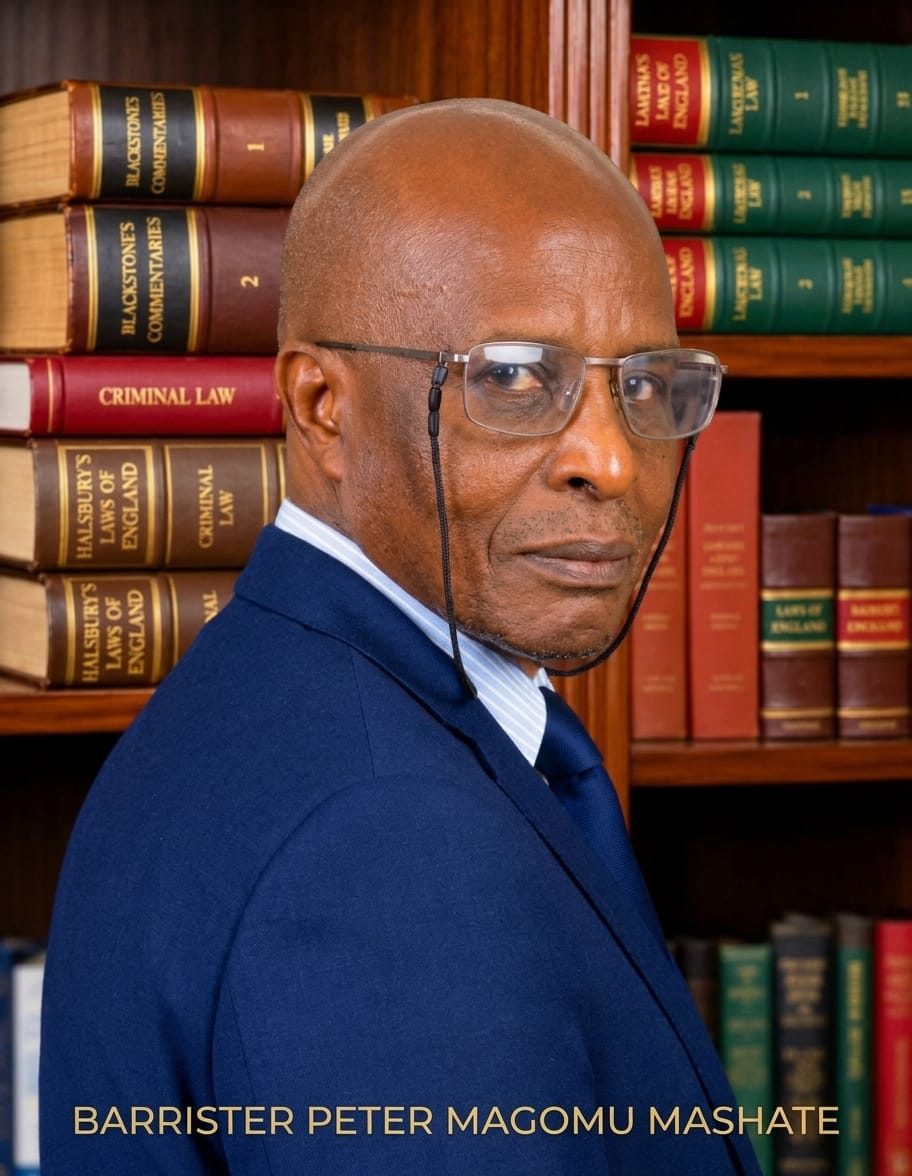
BY BARRISTER PETER MAGOMU MASHATE
OPINION-Today the Ugandan shilling remains humbled by the International financial waves @one dollar ($1) to 4,104.02 Ugandan shillings. This raises concern as the British turbulent financial crush in the financial doldrums of the then European Exchange Rate Mechanism (ERM) rudely reminds us of the dire financial crisis of 1992 ironically christened the *”BLACK WEDNESDAY”*. I will herein endeavour to contextualise how it happened then 1992 and why it matters for the Uganda Shilling today 2026.

On September 16, 1992 Prime minister John Major and Norman Lamont Chacellor of the Exchequer were in charge of the UK —a day permanently etched into macroeconomic history as “Black Wednesday”—the United Kingdom, one of the world’s financial superpowers, was brought to its knees by the raw power of global markets.
As the Bank of England desperately burned through billions in foreign reserves and jacked up interest rates to a staggering 15%, it became clear that no sovereign wall is high enough to defend an unsustainable economic illusion.
Britain crashed out of the European Exchange Rate Mechanism (ERM) because it chose political pride over mathematical reality.
The chief architect of this collapse was the legendary billionaire investor George Soros, who famously became known as the man who “broke the Bank of England.” Recognizing that the British pound was unsustainably overvalued within the ERM, Soros used his Quantum Fund to build a massive $10 billion short position against the currency.
As he and other speculators flooded the market, dumping pounds, the Bank of England was forced to exhaust its foreign reserves buying up its own currency to maintain the artificial peg. Realizing the defense was futile, the UK government threw in the towel and crashed out of the mechanism, while Soros walked away with an estimated $1 billion in profit in a single afternoon.
Alas! as a legal scholar and an avid economic observer of global financial systems, I conscientiously believe and submit that this historical collapse is not just a British cautionary tale or a story of speculative greed.
It is a vital textbook for African and developing nations currently navigating volatile currencies, heavy debt, and global economic shocks.
If a financial titan like London could see its defense collapsed by market speculators in a single day, our developing economies must urgently internalize these lessons to cushion ourselves from similar catastrophes.
Looking closely at our local landscape in Kampala, the Ugandan Shilling faces its own real-world headwinds, sliding from roughly Shs 3,604 per US dollar in early 2026 to around Shs 4,500. Indeed, this 25% depreciation is a vivid reminder that global financial volatility spares no one.
However, by tracking Uganda’s current vulnerabilities against the strategic cushions required to survive a speculative crisis, we can see exactly how our economic managers are weaponizing history to protect our financial future.
First, we must escape the trap of artificial currency pegs. The primary catalyst for Britain’s 1992 downfall was forcing the pound into an overvalued peg against the German Deutschmark, giving Soros an obvious target. Today, many developing nations remain deeply tempted to artificially prop up their currencies to mask inflation or appease voters.
Defending an overvalued currency acts as a massive subsidy for imports while destroying local manufacturing and exports.
Fortunately, Uganda long ago abandoned the traps of fixed exchange rates. The Ministry of Finance recently reiterated Uganda’s absolute commitment to a market-determined exchange rate.
When import costs for petroleum spiked and global shipping costs rose, the Shilling was allowed to find its true value. Instead of burning reserves to fight a market trend, the Bank of Uganda intervenes only to smooth out excessive, short-term volatility.
It lets the currency adjust to true economic fundamentals rather than creating an artificial illusion.
Second, we must avoid outsourcing monetary policy.
During the ERM crisis, Britain effectively outsourced its monetary policy to the German Bundesbank, which was raising rates to handle its own post-reunification inflation.
Britain needed lower rates to fight a domestic recession, but its hands were tied. Developing nations frequently find themselves at the mercy of the US Federal Reserve or the European Central Bank.
When global powers raise interest rates, capital flees developing markets. Central banks across Africa must maintain absolute focus on domestic indicators—like local supply chains and food security inflation—rather than blindly copying Western monetary tightening.
In Uganda, our currency pressure isn’t just about global capital flight; it is heavily tied to regional and project-specific realities.
Net foreign exchange demand from our energy sector nearly doubled—surging from $360 million to $620 million—partly driven by capital imports for upcoming oil production.
In a decisive move to curb inflationary pressures, the Bank of Uganda raised the Central Bank Rate (CBR) to 12% and increased commercial banks’ cash reserve requirements to 13.5%. This aggressive response targets local liquidity, ensuring our policy is driven by local supply shocks and energy costs rather than waiting for cues from Washington or Frankfurt.
Third, a country must aggressively build and diversify foreign reserves. Britain found out the hard way that a few billion dollars in ammunition is nothing against speculators turning over trillions. When currency traders saw the Bank of England’s reserves dwindling, they smelled blood in the water.
Many developing nations operate on razor-thin import cover, leaving them defenseless against sudden commodity price drops or capital flight.
To survive, we must aggressively diversify our reserve assets because relying solely on the US dollar or the Euro leaves us exposed.
On this front, Uganda has built a significant buffer. Our foreign exchange reserves surged by 56% to $6.7 billion in the 12 months leading into mid-2026.
More importantly, Uganda has actively weaponized asset diversification.
Cabinet and Parliament recently approved a domestic gold purchase program. By incorporating tangible assets like gold to support national reserves and utilizing regional trade settlements, Uganda is constructing a critical shield that minimizes exposure to foreign fiat currency shocks.
Finally, we must establish an institutional separation of powers.
The chaotic, panic-induced interest rate hikes delivered by British politicians on “Black Wednesday” shattered market credibility.
It proved that when politicians control the printing press and the interest rate lever, policy becomes erratic.
In many developing states, central banks operate as ATM machines for the ruling government, funding fiscal deficits through money creation.
Long-term economic stability requires legally protected, highly transparent central bank independence.
The ultimate test for Uganda lies in matching our monetary tightening with strict fiscal discipline. While Governor Michael Atingi-Ego adjusts interest rates to rein in demand, the Ministry of Finance has had to release trillions of Shillings for maturing debt obligations, civil service wages, and critical infrastructure. If the government relies too heavily on central bank financing to cover fiscal deficits, our interest rate hikes will lose their effectiveness.
When the market trusts that a country’s monetary policy committee is making decisions based on data rather than an upcoming election cycle, speculative risks decrease and market stability increases.
The bottom line is that British “Black Wednesday” proved that market forces will always overpower sovereign arrogance or over confidence.
For Uganda and the wider developing world, the ultimate takeaway is clear: structural economic flexibility beats rigid financial pride every single time.
By maintaining a flexible exchange rate, aggressively expanding and diversifying reserves into gold, and protecting domestic production over cheap imports, we can construct a reliable shield against the volatile winds of global finance. Is it not?
THE WRITER IS: AN ADMINISTRATIVE, CONSTITUTIONAL & HUMAN RIGHTS BARRISTER-AT-LAW, UNITED KINGDOM
NB: These are personal views and not necessarily those of the publisher-Editor