By Barbara Nansiimbi
Within the broader Agro-Industrialisation Programme, the Department of Coffee Development has played a pivotal role in transforming Uganda’s coffee sub-sector. Comprising two specialized divisions—Coffee Production and Coffee Quality Analysis & Control—the department has advanced national objectives in production, productivity, post-harvest management, quality assurance, and export competitiveness. The achievements recorded under NDP IV reflect its critical contribution to positioning Uganda as a global coffee powerhouse.

ACHIEVEMENTS OF THE COFFEE PRODUCTION DIVISION
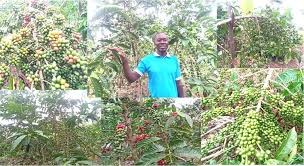
The Coffee Production Division made remarkable strides in expanding national coffee output, strengthening farmer support systems, and improving productivity. A key milestone was the inspection and certification of 85 coffee nursery operators, ensuring that farmers accessed high-quality, disease-free planting materials. This intervention was central to sustaining production growth and mitigating pest and disease challenges, including coffee wilt disease.
To safeguard genetic diversity and long-term productivity, the division assessed 14 existing coffee mother gardens and certified an additional 65 gardens nationwide. These mother gardens serve as primary sources of elite planting materials, supporting the proliferation of resilient and high-yielding coffee varieties. Such efforts are foundational for Uganda’s long-term target of increasing coffee production to 20 million 60-kg bags annually.
Knowledge transfer to farmers was another critical area of achievement. During the plan period, the division trained 120 coffee farmers and 20 extension workers in good agricultural practices (GAPs). Training focused on climate-smart farming, pruning, soil fertility management, pest and disease control, and the rehabilitation of aging coffee trees. These capacity-building efforts strengthened smallholder coffee management systems, which form the backbone of Uganda’s coffee industry.
The division’s interventions translated into tangible economic outcomes. In the reference period, Uganda exported 5.27 million 60-kg bags of coffee, generating USD 873.5 million in export earnings. This performance significantly contributed to national agricultural export revenues and demonstrated the impact of improved production systems and increased access to certified planting materials. Moreover, these efforts enhanced productivity at the farm level and supported population growth of coffee trees in major growing regions.
COFFEE QUALITY & ANALYSIS CONTROL DIVISION MILESTONES
Quality assurance is central to Uganda’s competitiveness in regional and global coffee markets. The Coffee Quality Analysis & Control Division strengthened quality management frameworks through multiple interventions. Compliance inspections were conducted on 21 coffee processors, ensuring adherence to standards for post-harvest handling, processing, and storage. These inspections were critical in reducing losses, improving cup quality, and safeguarding Uganda’s image as a premium Arabica and Robusta coffee producer.
The division also trained 60 coffee processors in modern processing techniques, including moisture control, grading, fermentation standards, and hygienic handling practices. By equipping processors with these skills, the division improved consistency in product quality and enhanced the marketability of Ugandan coffee internationally.
To institutionalize quality oversight, the division developed an inspection checklist and data capture tool for both Robusta and Arabica coffee. This standardized approach improved regulatory monitoring and allowed for accurate data collection on quality parameters across all coffee-growing regions, strengthening the value chain’s governance.
Investments in analytical infrastructure further enhanced the division’s capacity. Laboratory equipment for coffee quality testing was procured, enabling precise moisture testing, grading, defect analysis, and sensory (cupping) evaluations. These tools allowed Uganda to validate quality claims and certify export consignments according to international standards, reinforcing trust in Ugandan coffee on global markets.

Finally, the division processed 63 applications for coffee export registration, ensuring that exporters met Uganda Coffee Development Authority (UCDA) standards. This regulatory oversight maintained orderly market operations and protected the reputation of Ugandan coffee internationally, reinforcing the country’s position as a reliable supplier of high-quality coffee.
INTEGRATION WITH NDP IV & AGRO-INDUSTRIALIZATION GOALS
The Department of Coffee Development’s achievements under NDP IV exemplify the Ministry’s broader goals of productivity enhancement, commercialization, and value addition. By combining improved planting material access, farmer training, quality management, and regulatory oversight, the department has strengthened Uganda’s coffee value chain from farm to export. These interventions contribute not only to increased production and incomes for smallholder farmers but also to national export revenues and the country’s global coffee competitiveness.
The department’s successes also illustrate the alignment of NDP IV priorities with the Agro-Industrialisation Programme’s objectives. Emphasis on research-backed practices, climate-smart interventions, and post-harvest quality control ensures that Uganda’s coffee sector continues to grow sustainably, resiliently, and profitably. Collectively, these achievements reinforce the strategic importance of coffee as a driver of rural livelihoods, national revenue, and agro-industrial transformation.
Happy 40th NRM Liberation Day!