As the 2026 Presidential campaigns kickoff today, the Uganda Human Rights Commission has cautioned all political leaders against using inflammatory rhetoric saying this has a potential to cause chaos in the electoral process.
The commission headed by Adv. Mariam Fauzat Wangadya, has also asked security agencies to act professionally while the voters also must be peaceful and tolerant.

Wangadya has however, assured the country that the commission will continue to monitor the human rights situation before, during, and after 2026 elections.
She pledged that the commission will provide independent recommendations to enhance credibility, inclusivity, and public trust in the process.
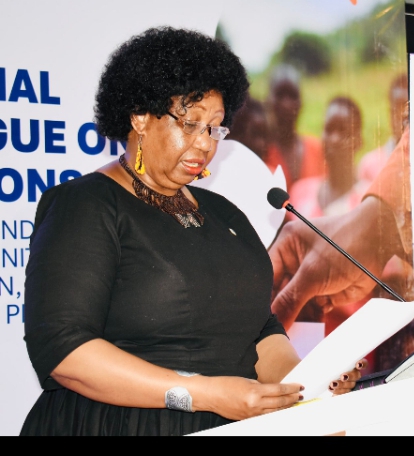
“Let us remember: elections are not an end in themselves. They are a means to achieve good governance, social justice, and sustainable development. They should not divide us, but unite us in choosing leaders who serve the people faithfully” the UHRC Chairperson said during a National Dialogue on Elections at Esella country hotel.
She explained that free elections require that every Ugandan, regardless of gender, age, political affiliation, or background, can participate without fear.
“Fair elections demand equal rules for all, impartial institutions, and respect for the will of the people. As we approach the 2026 General Elections, we must renew our commitment to peace, fairness, and freedom. Peaceful elections are a shared responsibility” she urged.
She hailed the dialogue as timely as it allowed stakeholders who included the media, CSOs, religious leaders, citizens, development partners among others to come together and deliberate on such a national matter under the banner of unity, participation, and democratic progress.
Wangadya described their participation in the dialogue as demonstration of a collective commitment to building a peaceful, inclusive, and democratic Uganda.
She lectured that the right to take part in public affairs lies at the heart of democracy and guaranteed under Article 59 of our Constitution and affirmed in Article 21 of the Universal Declaration of Human Rights, as well as in other regional and international instruments.
“The right to vote is not just a legal entitlement. It is the lifeblood of democracy. Voting is not a mere procedure. It is a profound expression of sovereignty and collective will” Wangadya said noting that through the ballot, citizens shape the direction of the nation, give legitimacy to leadership, hold duty bearers accountable, and influence the choices that affect their daily lives.
She said that elections allow the people to express both their aspirations and their dissatisfaction, and to decide who should lead them.

“This dialogue is therefore, more than a meeting. It is a platform for reflection, understanding, and consensus. It brings together stakeholders across the political and social spectrum to engage in constructive, inclusive, and forward-looking discussions on how to strengthen our electoral processes” she said.
The UHRC Chairperson noted that dialogues foster trust, promote transparency, and build collaboration.
Wangadya said that although Uganda had made important progress in building democratic institutions, challenges also persist among which include voter apathy, intolerance, electoral violence, misinformation and distrust in the process.
“Dialogues address grievances before they escalate, open the door for reforms, and lay the foundation for national cohesion. I therefore urge each of you to take part in this dialogue with an open mind and a spirit of national interest. Let us listen to one another. Let us speak truthfully, respectfully, and boldly” she urged adding that Uganda’s future depends on people’s ability to work together.