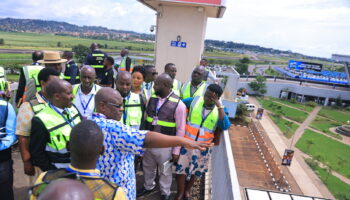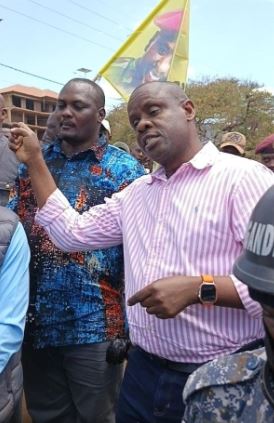
Members of Parliament have raised concerns over the methods being employed by Local Government Minister Hon. Balaam Barugahara, in his ongoing anti-corruption tours, warning that procedural irregularities, rushed arrests and disruptions to service delivery could undermine the campaign.
While several legislators welcomed the minister’s efforts to expose corruption in local governments, they questioned the manner in which suspects were being apprehended, the handling of allegations during public barazas and the apparent lack of follow-up investigations and prosecutions.
The concerns emerged during Wednesday’s parliamentary debate on the minister’s Expose the Corrupt campaign, following complaints from sections of the public that some officials had been publicly accused and condemned without being given adequate opportunity to defend themselves. Some critics have also questioned the minister’s approach of ordering arrests before allegations are exhaustively investigated, warning that it risks subjecting accused officials to mob-like justice.
One of the contentious issues was the minister’s campaign against headteachers who collect Parents and Teachers Association (PTA) contributions to support the running of government schools.
Speaking as a former teacher, Isingiro District Woman MP Lillian Ruteraho argued that many government schools continue to face serious staffing shortages, making PTA contributions necessary to bridge operational gaps.
She explained that such contributions often help schools meet essential needs that government funding and staffing have not fully addressed.
Lamwo District Woman MP Nancy Acora supported her position, arguing that PTA contributions should be maintained until government is in a position to fully take over the responsibility of meeting schools’ operational needs.
Their submissions echoed earlier concerns raised by the Katikkiro of Buganda, Charles Peter Mayiga, who cautioned parents against supporting Balaam’s reported move to arrest headteachers over money collected to provide meals for learners.
Mayiga argued that parents should not abandon their responsibilities by opposing school feeding arrangements, observing that children cannot effectively concentrate on their studies when they are hungry.
Questions over the methods
Beyond the school funding controversy, legislators also questioned the minister’s approach to dealing with suspected corruption. Kigulu North MP Samuel Kungu acknowledged that Balaam’s anti-corruption campaign was well-intentioned but said its methods needed reconsideration, particularly the manner in which suspects were being arrested.
He described the forceful arrest of suspects as inhumane, arguing that investigations should be conducted professionally and within the confines of the law.
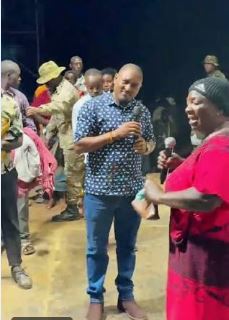
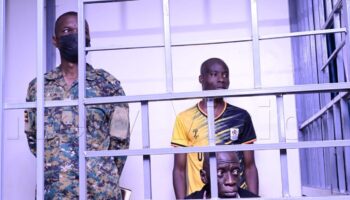
His concerns resonate with the controversy surrounding the arrest of Lyantonde Deputy Resident District Commissioner (RDC) Vanasio Bagatireyo, on Balaam’s orders, following allegations by a widow that the commissioner had demolished her house.
In a video that went viral on social media, the deputy RDC was seen pleading for an opportunity to respond to the allegations but the minister denied him the chance to do so before ordering the police to arrest him. However, it later emerged that the accusations were false, which led to widespread protest by locals who were privy to the standoff regarding the said property. They explained that the said house had partly been sold by the widow’s husband before he died and that it hadn’t been demolished at all.
The incident has raised questions about the criteria used to determine when an official should be arrested and whether adequate investigations are conducted before enforcement action is taken.
Similar complaints involving other RDCs have also fuelled public speculation about the treatment of district officials during the minister’s tours, with some questioning whether the campaign risks portraying local government leaders as generally corrupt and incompetent.
Wakiso District Woman MP Ethel Naluyima raised another concern, urging the minister to protect children during his inspections by prohibiting the filming of minors. She said that while she appreciated the anti-corruption drive, the rights and dignity of children must not be compromised in the process of exposing suspected wrongdoing.
Kagoma County MP Moses Walyomu, meanwhile, called for tangible action against those implicated in corruption, including prosecution in courts of law and recovery of misappropriated public funds.
Tororo South MP Fredrick Angura warned that the arrests and interdictions of district officials were beginning to affect service delivery. He cited disruptions in the implementation of key government programmes, including the Parish Development Model (PDM), and questioned how such interruptions would be addressed.

MPs demand prosecutions and accountability
Leader of the Opposition Joel Ssenyonyi challenged government to demonstrate that the anti-corruption campaign was producing concrete results rather than merely generating public attention.
“If government is serious about the corruption fight, can we see serious investigations leading to prosecution? Otherwise, it will be viewed as political mobilisation,” Ssenyonyi said.
Agago County MP Edward Makmot called on Balaam to work closely with the Director of Public Prosecutions (DPP) to ensure that corruption-related files are properly investigated, handled and sanctioned for prosecution. He also questioned the arrangements for maintaining continuity in service delivery where district officials are arrested or interdicted.
“What plans do you have to ensure continuity in service delivery?” he asked.
The legislators’ concerns suggest that, beyond exposing suspected corruption, the campaign must demonstrate that allegations are supported by evidence, investigations are properly conducted and those found culpable are subjected to the appropriate legal processes.
Arrest the big fish
In his submission, Kazo County MP Dan Kimosho challenged Balaam to extend his accountability drive to senior government officials, arguing that the campaign should not concentrate solely on district-level officers. Kimosho cited a stalled water project which, according to him, had remained unimplemented despite assurances given to President Yoweri Kaguta Museveni in January 2024 that the project required approximately Shs5 billion and would be completed.
He told Parliament that the Permanent Secretary and Secretary to the Treasury (PSST), together with the Minister of State for Water, had assured the President that the required funding would facilitate the project.
However, Kimosho said nothing had been done despite the matter having remained unresolved for about eight years.
“If Honourable Balaam wants to arrest, he should start with his minister and the PSST,” Kimosho said, challenging the minister to apply the same accountability standards to senior officials responsible for government projects.
His remarks added another dimension to the debate, with legislators questioning whether the anti-corruption campaign was sufficiently broad to hold senior decision-makers accountable for stalled government programmes and failures in public service delivery.
Some MPs credit the tours with results
Despite the criticism, some legislators acknowledged that Balaam’s tours had produced positive results, particularly in the local government works sector.
During Wednesday’s plenary sitting, Kilak South MP Gilbert Olanya told Parliament that district road equipment which had previously been lying idle was now operational following the minister’s visits.
Olanya, who previously chaired the Public Accounts Committee (Local Government), said that during his tenure, approximately 90 per cent of the equipment in question was not functioning.
He credited Balaam’s district inspections with prompting action to repair the machinery, although he questioned where the resources for the repairs were suddenly coming from.
“You wonder where the money is coming from to repair those road equipment,” he remarked.
Speaking during the debate on the Expose the Corrupt campaign in Ankole, Olanya said he supported the minister’s determination to confront corruption, particularly where politically connected individuals allegedly intimidate public officials and discourage them from taking action.
“Personally, I support someone who will stand straight and say no to corruption,” he said.
The debate has therefore exposed two sides of the campaign: legislators who acknowledge its potential to improve accountability and service delivery, and those who insist that its methods must respect due process, protect individual rights and avoid disrupting essential government programmes.
Ultimately, MPs want the minister’s tours to move beyond public accusations and dramatic arrests to produce properly investigated cases, successful prosecutions, recovery of public resources and improved service delivery across local governments.