By Sadique Bamwita
The management of Uganda Railways Corporation (URC) is in spotlight over Sha.20.8 billion meant for staff capacity building under the spanish-funded railway project.

Legislators on the parliament committee on physical infrastructure have questioned how this huge sum of money was spent on a few expatriates in pretext of staff capacity building.
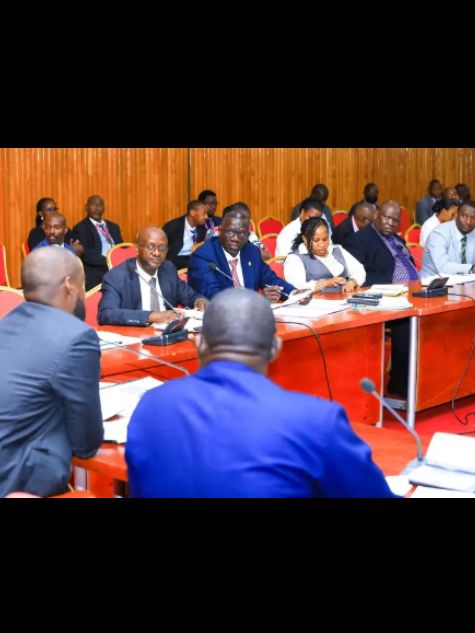
The audit queries emerged before the Parliament’s Committee on Physical Infrastructure, chaired by Mwine Mpaka, which is investigating how the railway corporation utilised funds from Spanish loan of about Shs125 billion.
Among the key issues under investigation is the capacity-building funds, which the railway corporation says was allocated about Shs20.84 billion.
Legislators were told that five expatriates allegedly received Shs.18.75 billion for capacity building in a three-year period. This implies that almost 90 percent of the capacity-building allocation was reportedly consumed by payments associated with just five expatriates.
The reported monthly rates ranged from Shs88 million to Shs140 million per month.Thes figures have left MPs demanding to know whether Uganda obtained value for money from a programme that was supposed to build sustainable local railway expertises.
Of the approximately Shs20.84 billion set aside for capacity building, about Shs18.75 billion was allegedly paid to five expatriates over three years. This leaves roughly Shs2.1 billion of the allocation for the other capacity-building activities.
The committee is now expected to scrutinise the contracts, payment schedules, qualifications, deliverables and evidence of skills transferred to Ugandan railway personnel.
The inquiry comes at the time when the corporation faces several questions over the management of the Spanish-funded railway programme.
The chairperson of the committee ,Mwine Mpaka, has questioned the rationale behind spending billions on capacity building for a relatively small number of railway employees, including training associated with train-driving programmes.The legislators are questioning whether the scale of their remuneration was justified by the results achieved.
At a reported maximum monthly rate of about Shs140 million, one expatriate could cost more than Shs1.6 billion a year. In three years, that would amount to almost Shs.5 billion for one person if maintained continuously at that rate.

Uganda has spent years trying to revive its ageing metre-gauge railway network after decades of underinvestment and deterioration.The Spanish-funded programme was therefore intended to address both physical infrastructure and human-resource weaknesses.
The Kampala–Mukono corridor was among the key railway sections targeted for rehabilitation, while the broader programme also included development of railway-related facilities and capacity-building interventions.
Audit queries
Recent parliamentary and audit inquiries have raised questions about payments and procurement under railway rehabilitation projects. The latest investigation has consequently placed the corporation officials under pressure to explain not only what was paid, but who authorised the payments, under which contracts, against what deliverables and with what measurable outcomes.
About the Spanish loan
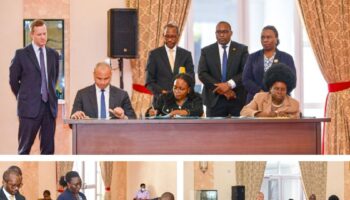
The whole project was financed through a Spanish loan of about Shs125 billion. The Government brought in Spanish companies Consultrans S.A.U and Imathia to implement components of the railway rehabilitation programme. The project included rehabilitation of the Kampala–Mukono railway corridor and other infrastructure interventions.
Consultrans also signed a memorandum of understanding with URC to handle the capacity-building component.
The arrangement was supposed to help equip railway corporation personnel with the skills required to operate and maintain an improved railway system.
However, the expenditure has now become one of the most contentious aspects of the Spanish-funded project.