
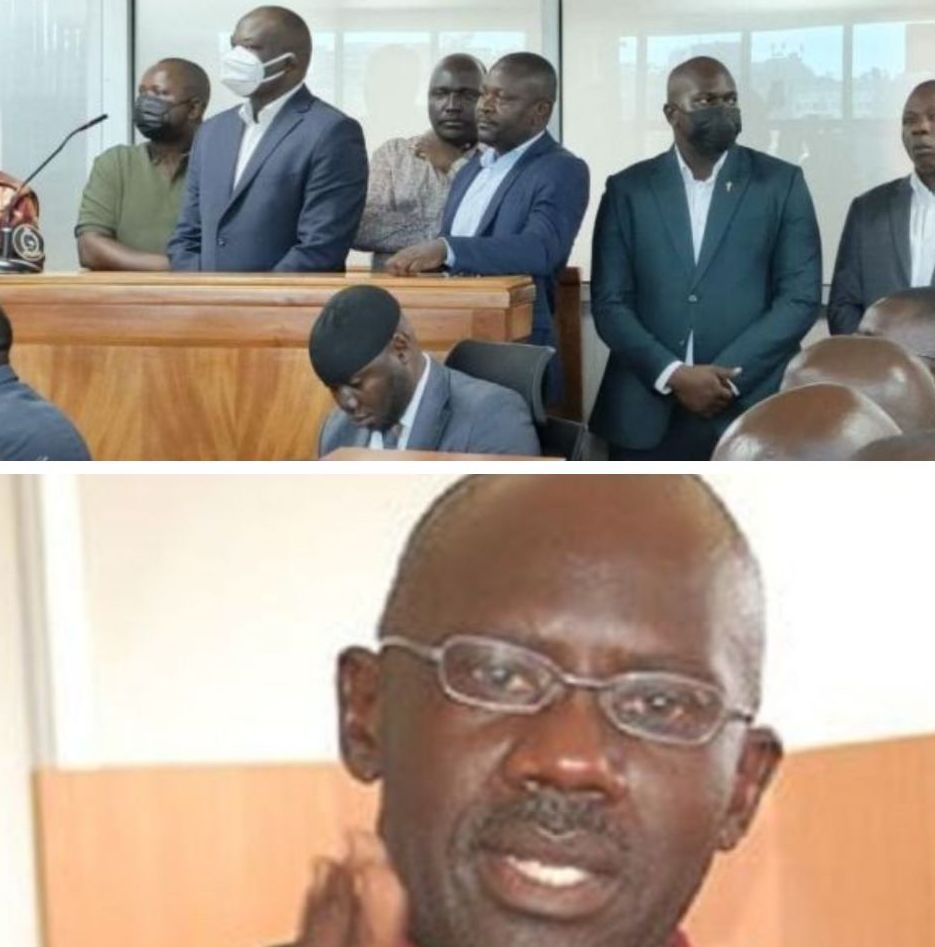
By Ishaa Otto Amiza
Corruption is no longer “misconduct.” It is economic and social treason against the people. If Ugandans are serious to save Uganda from corruption, we must move from lamentation to hard actions for deterrence.

We must also STOP using the fight against corruption for POLITICAL WITCH-HUNT against our political opponents.
While we know corruption is legally prohibited and condemned, in Uganda it is now syndicated and used as a mechanism/tool for control, building political coalitions, patronage governance and authority. It ultimately undermines formal institutions and degrades governance.
THE 8-POINT PIP STRATEGY
1. STRENGTHEN THE LAW: DEATH PENALTY FOR AGGRAVATED CORRUPTION
Amend the Anti-Corruption Act to make _Aggravated Corruption_ a capital offence.
Where a public official steals public funds meant for health, education, roads, security, judiciary or disaster relief, and that theft causes death or national damage — _upon conviction, the penalty shall be Death_. If we hang murderers of 1 person or stone suspected chicken thieves, why spare thieves who kill thousands through fake drugs, ghost schools, ghost soldiers and collapsed hospitals?
2. DENIAL OF BAIL FOR AGGRAVATED CORRUPTION SUSPECTS
Amend the Constitution and laws to provide for _Mandatory Remand Without Bail_ for suspects charged with Aggravated Corruption.
Let them answer from prison, not from Dubai, Kololo or Nakasero.
3. MANDATORY ASSET FORFEITURE / COMPULSORY CONFISCATION

Uganda must prioritize Non-Conviction Based Asset Forfeiture.
Upon arrest, _freeze and confiscate all property, bank accounts, and assets_ of suspected corrupt officials — including those registered in spouses’, children’s, and proxies’ names.
Legal Presumption: _“Unexplained wealth = Proceeds of Corruption”_ until proven otherwise.
This allows the state to seize and auction unexplained wealth through civil proceedings, even without a criminal conviction.
4. PUBLIC AUCTION OF CONVICTS’ PROPERTY
After conviction, all confiscated property — land, cars, houses, companies — _must be sold by public auction within 90 days_.
Proceeds to go directly to the _sector that was robbed_: e.g. money stolen from Ministry of Defence of Health build houses and equipments for the army.
5. NAME, SHAME, AND EXPOSE
Amend the Anti-Corruption Act to provide legal protection for exposure,to avoid legal pursuance for defamation even when evidence exists.
Establish a _National Corruption Offenders Register_.
Publish the _names, photos, positions, and crimes_ of all convicted corrupt officials on _National TV, Newspapers, Social Media, and Government Websites_ every quarter.
Ban them for life from public office and government contracts.
6. PROTECT AND REWARD WHISTLEBLOWERS + CITIZEN AUDIT
Enact a _Whistleblower Protection and Rewards Act_. Any citizen who exposes corruption leading to recovery gets _10% of recovered assets_, full anonymity, and state protection.
Institute _Quarterly Citizen Audits_: Empower LC1s, CSOs, and media to track every shilling from Treasury to the village.
7. VOLUNTARY DISCLOSURE & PLEA BARGAIN
Provide for a legal provision that allows individuals to self-report and return stolen public property in exchange for a reduced sentence.This will help to recover public funds fast and break the code of silence in syndicates.
8. END SELECTIVE PROSECUTION AND POLITICAL WITCH-HUNTS
The law must apply equally regardless of party, status, region, tribe, or religion.
Stop using anti-corruption agencies to target political opponents while protecting regime loyalists. Investigate all equally — from RDCs to Ministers to Speakers, and everyone regardless of status. For selective Justice is not justice. It is persecution.
CONCLUSION
Lamentations will not stop “mafuta mingi.” Only fear of consequence will.
If we implement these 8 points, corruption will move from a career path to a death sentence — politically, financially, and legally.
For God and My Country.
The writer is a former MP, Political Activist, and President, Peoples Independent Party (PIP).
NB: The views expressed here are personal and not necessarily those of the publisher-Editor.