By Sadique Bamwita
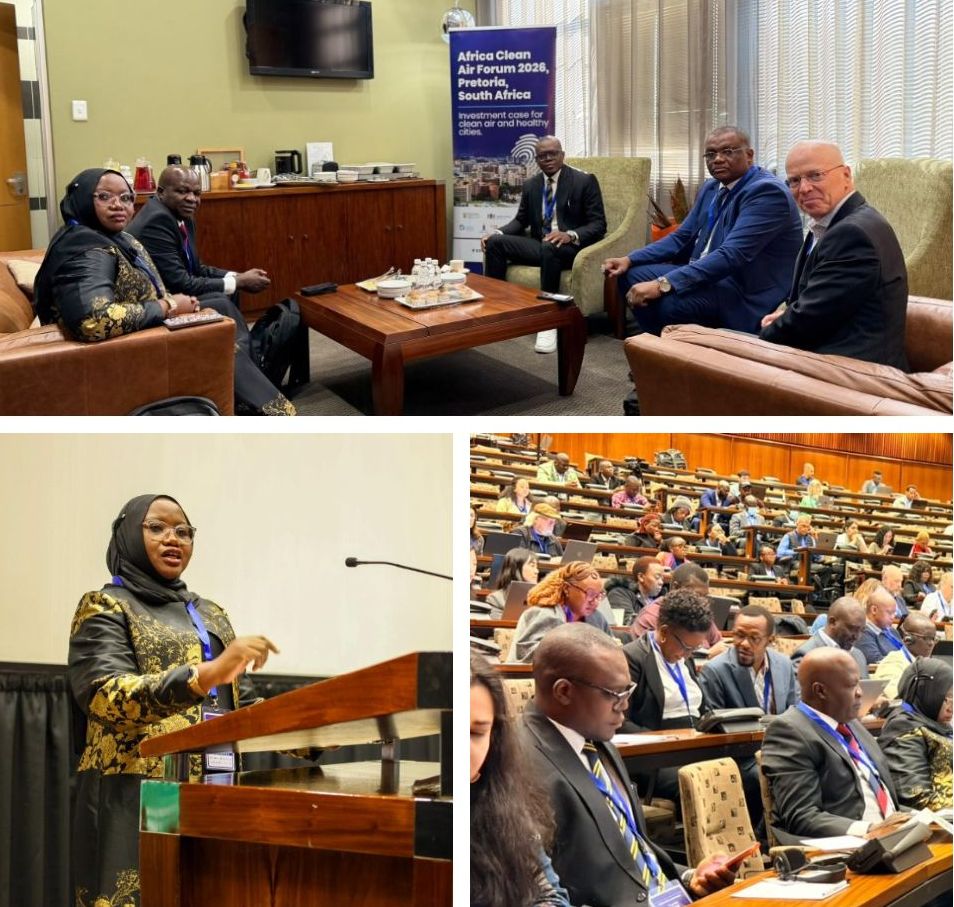
The Executive Director Kampala Capital City Authority ( KCCA), Hajat Sharifah Buzeki, has delivered an impressive speech on the quality of Air in Kampala.

She delivered her speech at the Africa Clean Air Forum 2026, held in Pretoria, South Africa.
This year’s Air Forum was officially opened by Hon. Bernice Swarts, the South Africa’s Deputy Minister of Forestry, Fisheries, and the Environment, who reminded delegates that clean air is not a luxury but a necessity for healthy cities.
Hajat Buzeki addressed the delegates and environmental activists in her presentation titled “The Kampala Experience” in which she painted a vivid portrait of a city rewriting its environmental story.
She informed the audience that Kampala started its journey for quality air way back in 2018 when the City installed its first air quality monitors, to today’s expansive network of 134 monitoring stations.
Buzeki explained that Kampala has hyperlocal sensors that stream real-time public data, making the City one of Africa’s most transparent cities in air quality reporting.
Hajat Buzeki says despite average pollution levels of 39 µg/m³, Kampala has set its sights on cutting this figure half way by 2030.
She noted that this ambition is backed by a strong legal framework like the National Environment and Public Health laws, the Kampala Clean Air Action Plan 2025–2030, and the soon‑to‑be‑enacted Kampala Air Quality Management Bill.
Hajat Buzeki added that what makes Kampala’s story compelling is not just technology, but people, saying clean air has become a civic movement.
“Residents lead weekend clean-ups, journalists are trained as “clean air champions,” and Village Health Teams weave monitoring into their daily routines. This grassroots energy has ensured that clean air is not seen as a government directive, but as a shared responsibility woven into everyday life, ” Hajat Buzeki explained.
She further said that Kampala’s clean air strategy is also reshaping the city’s physical landscape citing cycling lanes, pedestrian walkways, e-buses as well as tax incentives on electric cars and motor cycles which she says are redefining mobility.

Hajat Buzeki is optimistic that the new traffic control centre will oversee all signalized junctions, reducing congestion and emissions.
She asserts that these initiatives are not only about reducing pollution, but about building a culture of green mobility and healthier living.
Hajat Buzeki bragged how Kampala’s efforts have already drawn international acclaim.
“The city won the National Environment Sustainability Award in June 2026, was nominated for the Guangzhou International Award for Urban Innovation among 15 cities selected from over 265 worldwide, and became the first African city inducted into the International Network of Tree Cities, boasting an impressive 5,705 trees per square kilometre’ ” said Hajat Buzeki.
In her concluding remarks , Hajat Buzeki reminded delegates that air pollution is a trans-boundary challenge, urging African cities to embrace community involvement, real-time data, and integrated approaches.
Her recommendations resonated deeply with the forum’s theme of investment and collaboration.
Meanwhile, the Africa Clean Air Forum 2026 continues till July 16 at the University of Pretoria and CSIR Convention Centre, and has brought together leaders who are determined to make clean air not just an aspiration, but a continental reality.