By Dr. Anna Rose Okurut Ademun
For many Ugandan farming households, livestock is more than an animal in the kraal. A cow, goat, sheep or pig is school fees for a child, medicine for a sick family member, milk for daily income, manure for the garden, and security for tomorrow.

When Foot and Mouth Disease strikes, this entire household economy is shaken.
Foot and Mouth Disease, commonly known as FMD, is one of the most serious livestock diseases affecting Uganda. It is a highly contagious viral disease of cloven-hoofed animals, including cattle, goats, sheep, pigs and several wildlife species.
The World Organisation for Animal Health describes FMD as a disease with a major economic impact, as it reduces livestock productivity and disrupts regional and international trade in animals and animal products.
In affected animals, FMD may cause fever, mouth wounds, excessive salivation, lameness from wounds between the hooves, and wounds on the teats. A cow with mouth wounds cannot feed properly. A dairy animal may produce less milk. A pig, goat or sheep may lose weight and market value. Young animals are particularly vulnerable, and even when adult animals recover, they often remain weak and unproductive for some time.
For the farmer, the biggest loss is often not only the sick animal. It is the income that disappears when quarantine is imposed. During an outbreak, animals may not be moved freely, livestock markets may be closed, slaughter may be restricted, and milk collection and trade may be disrupted.
A farmer may have animals ready for sale but cannot sell them. A family may have milk but fail to access the usual market.
Traders, transporters, processors, local governments and consumers all feel the impact. Uganda’s livestock sector is too important to be left exposed to repeated FMD outbreaks.
LIVESTOCK STATISTICS & EARNINGS
According to the MAAIF Statistical Abstract 2024, Uganda has about 14.66 million cattle, 17.48 million goats, 4.38 million sheep and 7.11 million pigs. The livestock subsector grew by 8.8 percent in FY2024/25, contributed 4.5 percent to GDP, and its value addition increased to UGX 10,078 billion from UGX 8,522 billion in FY2023/24.
Dairy and beef industries show what Uganda can achieve when livestock production is protected and markets are functioning. Milk production increased from 2.7 billion litres in 2020 to 5.4 billion litres in 2024. Milk and milk product exports increased from USD 264.5 million in 2023 to USD 285.4 million in 2024. Beef production also increased to 276,892 metric tonnes in 2024, while beef export earnings rose from USD 0.56 million in FY2023/24 to USD 1.30 million in FY2024/25.

These figures are not just statistics. They represent farmers supplying milk to collection centres, young people working in transport and processing, traders buying animals, processors adding value, and Uganda earning foreign exchange. However, these opportunities can easily be undermined when FMD is not controlled.
FMD IMPACT ON TRADE
FMD is especially feared because of its effect on trade. Countries that have controlled or eradicated FMD are cautious about importing live animals and animal products from countries where the disease is circulating.
This means Uganda’s ability to access high-value livestock markets depends on effective disease control, reliable surveillance, vaccination, quarantine enforcement, and proper animal movement control.
According to the Food and Agriculture Organisation, FMD causes losses through reduced milk and meat production, reproductive inefficiencies, control costs, and loss of market access. Globally, visible production losses and vaccination costs in endemic regions alone have been estimated at up to USD 28 billion annually, and the full burden is even higher when trade losses are considered.
COMPLICATED SEROTYPES
FMD control is complicated because the virus has different serotypes. The seven known serotypes are O, A, C, SAT1, SAT2, SAT3 and Asia1. Each serotype requires a specific vaccine to provide protection, which means the vaccine used must match the circulating strains in the country or region. (WOAH)
This is why Uganda procures FMD vaccines based on the serotypes of concern and technical guidance from competent animal health authorities. Vaccination must therefore be planned, regular and broad enough to protect the national herd.
FMD is a herd disease; once one animal in a herd shows signs, other animals may already have been exposed. Vaccinating a few animals is therefore not enough. High coverage is needed to reduce outbreaks and protect communities.
CONTROL MEASURES
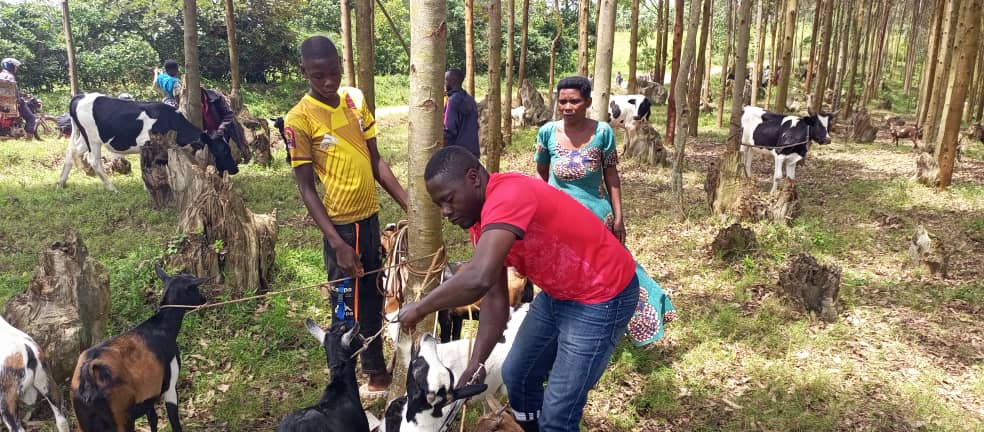
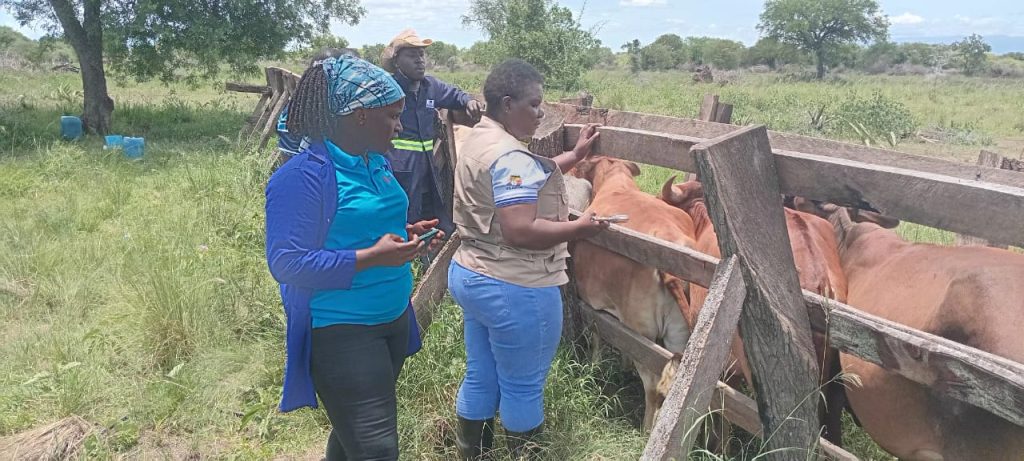
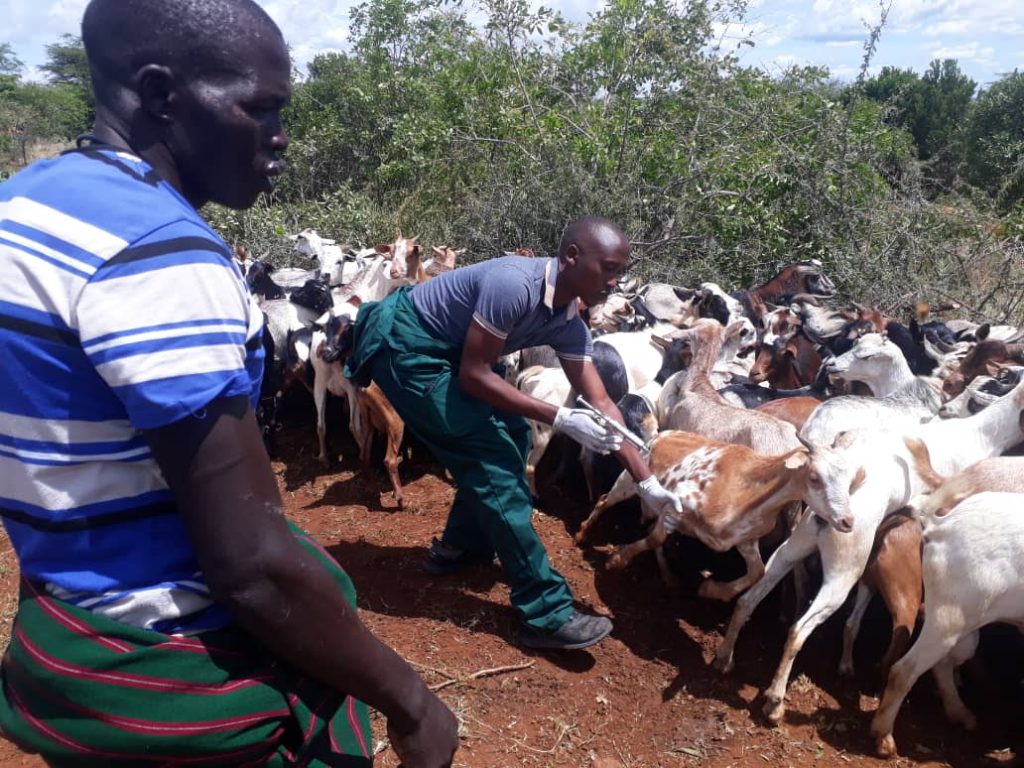
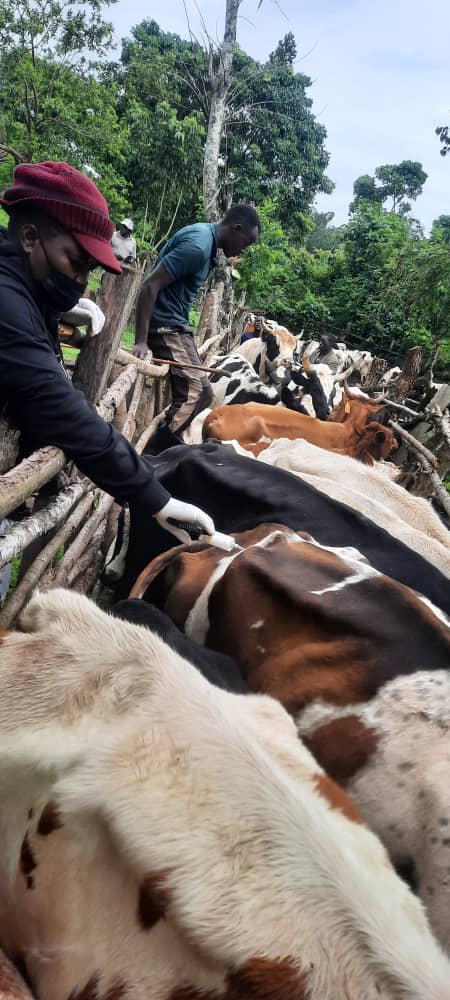
Effective FMD control requires several measures working together. These include early reporting of suspected cases, quarantine restrictions, surveillance, biosecurity, animal movement control and vaccination. Among these, vaccination is one of the most practical tools because it protects animals before they are exposed to the virus.
The economic case for vaccination is strong. Cattle, goats, sheep and pigs support households through the sale of live animals and products such as milk, meat, offals, hides, skins, horns and hooves.
When FMD occurs, the whole value chain is affected. The farmer loses income, the trader loses business, the processor loses supply, the district loses revenue, and the country loses market opportunities.
Uganda already exports dairy products, including casein, to markets such as the United States of America, Algeria, Bangladesh, the East African region, South Sudan and the Middle East.
With improved FMD control, Uganda can strengthen confidence in its livestock and animal products, protect existing markets and pursue higher value opportunities.
For this reason, vaccination should not be regarded as a burden on the farmer. It is an investment. The cost of vaccine is small compared to the losses caused by an outbreak.
A farmer who vaccinates protects the herd, preserves household income, reduces the risk of quarantine losses, and contributes to a stronger national livestock economy.
GOVT INTERVENTION
The Government of Uganda has therefore, adopted a more sustainable approach through the FMD Cost Recovery Scheme. Under this arrangement, farmers contribute only towards the cost of the vaccine, while Government continues to meet the major public costs of the programme. These include procurement processes, importation support, cold-chain storage, distribution, administration, technical oversight, surveillance and post-vaccination monitoring.
The approved contribution for farmers is UGX 8,000 per dose for cattle and pigs, and UGX 4,000 per dose for goats and sheep. Payments are to be executed through official channels at Housing Finance Bank and Pearl Bank, eventually credited into the designated Government system to ensure accountability and facilitate future vaccine procurement. Farmers are advised not to make cash payments directly to field teams.
SIGNIFICANCE
This cost-recovery approach is necessary because FMD control cannot be achieved through a single emergency campaign. It requires regular vaccination, proper planning, strong farmer participation and predictable vaccine availability. A revolving financing mechanism helps ensure that vaccines can be replenished and future vaccination rounds can be implemented without unnecessary delays.
The compulsory vaccination campaign will run from June to August 2026 and will be repeated after six months. District Veterinary Officers, local governments, farmer leaders, banking partners and veterinary field teams will guide farmers on registration, payment procedures, vaccination schedules and certification. Farmers are therefore encouraged to work closely with their District Veterinary Officers, register their animals, pay through approved channels, and present cattle, goats, sheep and pigs for vaccination when called upon. Vaccination will help reduce outbreaks, minimise prolonged quarantines, protect farmer earnings and support safe trade in livestock and livestock products.The choice is clear. The cost of vaccine is known and manageable. The cost of an FMD outbreak is painful, unpredictable and far higher. A vaccinated animal protects a household. A vaccinated herd protects a community. A vaccinated national herd protects Uganda’s livestock economy.The FMD Cost Recovery Scheme is therefore not simply about paying for a vaccine. It is about protecting livelihoods, sustaining milk and meat production, improving market access, supporting national exports and building a resilient livestock sector.
#PAY FOR THE FMD VACCINE. #VACCINATE YOUR ANIMALS. #PROTECT YOUR ANIMALS.
#PROTECT YOUR INCOME.
#PROTECT UGANDA’S LIVESTOCK TRADE.
#SUPPORT NATIONAL DEVELOPMENT!
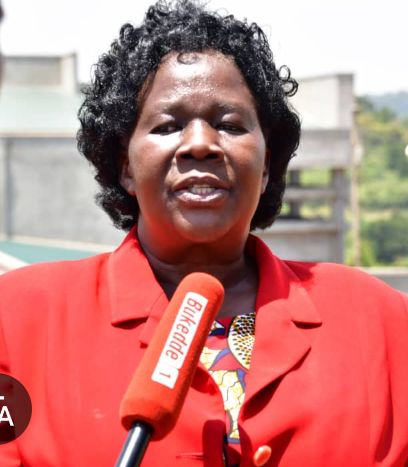
The author is the Commissioner Animal Production and Health-Ministry of Agriculture, Animal Industry and Fisheries (MAAIF)