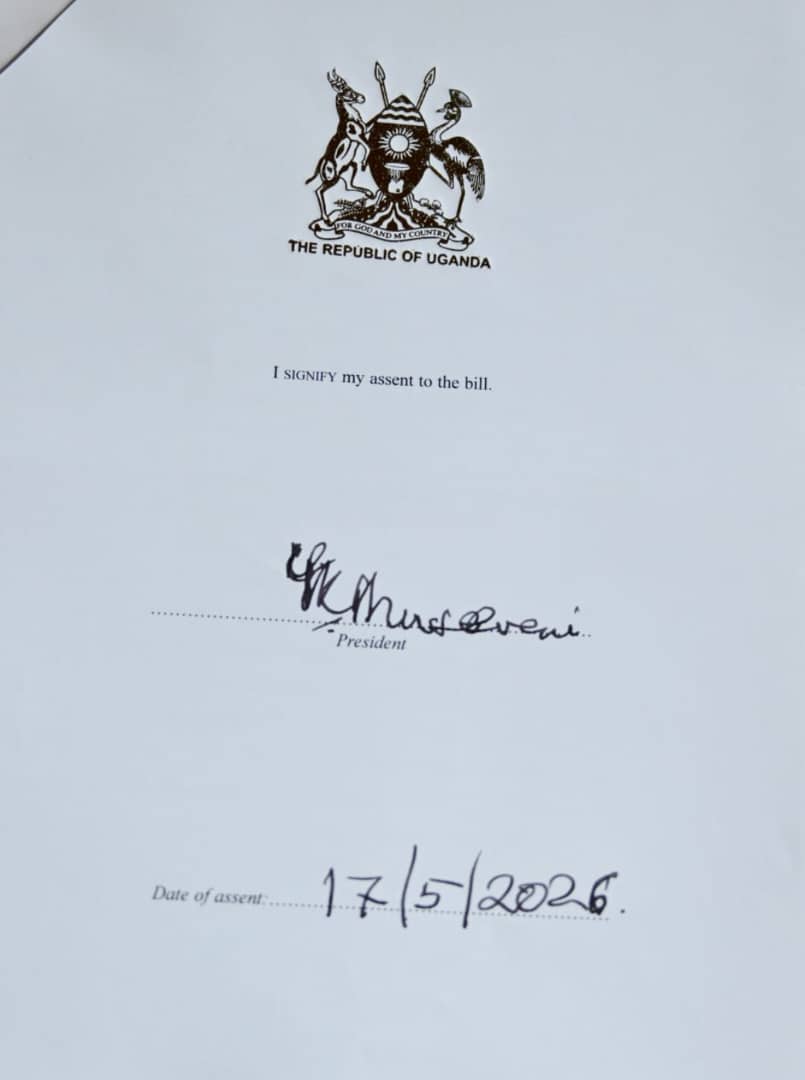
KAMPALA — President Yoweri Kaguta Museveni has signed the Protection of Sovereignty Act, 2026 into law, marking a significant development in Uganda’s governance and national security framework as government moves to tighten oversight on foreign-linked activities and funding within the country.
The announcement was made through a press release issued by the Presidential Press Unit on Sunday, confirming that the President had assented to the Bill, formally making it law.
According to the statement, the new legislation seeks to protect the sovereignty of Ugandans by establishing mechanisms for the regulation of agents of foreign entities, management of foreign assistance, and coordination of activities considered relevant to national peace, security, and governance.
“The Act is intended to provide for the protection of the sovereignty of the people of Uganda,” the statement noted, adding that it also provides for the registration and regulation of foreign agents and oversight of funding and assistance linked to such entities.

Under the law, the department responsible for peace and security under the Ministry of Internal Affairs will serve as the implementing authority.
Government officials view the legislation as a major step toward strengthening Uganda’s independence in national decision-making and reducing what authorities describe as undue external influence in domestic affairs.
The Presidential Press Unit said the law is expected to enhance institutional coordination, reinforce state authority, and promote accountability and stability in governance structures.
Officials further argue that the Act will help safeguard Uganda’s national interests as the country continues engaging with international partners, regional blocs, and foreign-funded institutions.
The law also arrives at a time when several African governments are increasingly prioritizing discussions around sovereignty, foreign influence, and national control over civic and political processes.
Supporters of the legislation say Uganda has long needed a stronger legal framework to monitor organizations and individuals acting on behalf of foreign interests, particularly in sensitive sectors involving governance, public policy, and national security.
However, the law has already sparked concern among civil society organizations, governance advocates, and opposition voices, some of whom fear it could be used to tighten restrictions on NGOs and organizations receiving external funding.
Critics argue that broad enforcement powers under the legislation may affect civic space, advocacy work, and independent organizations involved in democracy, accountability, and human rights activities.
Some observers also warn that the law could attract scrutiny from international partners and donor agencies concerned about operational freedoms and the future relationship between government and foreign-supported institutions.
Despite these concerns, government maintains that the legislation is not meant to block international cooperation or development partnerships, but rather to ensure that all foreign-linked activities operate transparently and within Uganda’s national legal framework.
Political analysts say attention will now shift to implementation of the Act, including the regulations and operational guidelines expected to be issued by the Ministry of Internal Affairs and related agencies.
The Protection of Sovereignty Act becomes one of the most politically significant laws enacted in Uganda in recent years, with analysts predicting that its impact will likely shape future debates on governance, national security, civil society operations, and Uganda’s international engagements.