By Barbara Nansiimbi
The Directorate of Agricultural Extension Services (DAES) strengthened Uganda’s national extension system by building public sector capacity, improving coordination between extension providers, and promoting private sector participation. Over 630 district agricultural officers, parish chiefs, and extension workers were trained in planning, reporting, digital data capture, climate-smart agriculture, and enterprise selection. DAES enhanced the functionality of the extension model across 146 districts and 10,500 parishes, improving alignment of extension messaging and enterprise prioritization under the Parish Development Model.

The directorate strengthened private extension services, coordinating NGOs, farmer organizations, and commodity associations to adopt national standards. Thousands of farmer training sessions, field demonstrations, and community learning platforms improved adoption of improved seeds, fertilizers, and climate-resilient technologies. Digital extension services, including the upgraded Agricultural Extension Management System (AEMS) and ICT tools, enhanced real-time tracking of outreach, planning, and reporting.
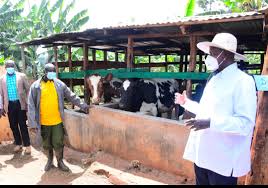
DAES also developed farmer institutions, mobilizing groups and cooperatives to improve access to inputs, collective marketing, and training. Supervisory visits to over 60 districts assessed extension performance and guided improvements in accountability and coordination. Partnerships with development partners enabled expansion of enterprise incubators, linking extension to practical enterprise training.
Additionally, DAES supported soil and land-use knowledge development, including five soil suitability maps and 90% completion of digitized crop-suitability maps, improving resource-use efficiency and productivity.
DIRECTORATE OF ANIMAL RESOURCES ACHIEVEMENTS
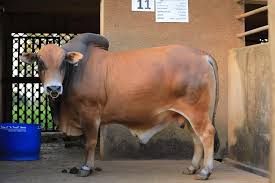
The Directorate of Animal Resources expanded livestock breeding and genetic improvement services nationwide. Government produced 375,298 doses of semen, complemented by 347,413 liters of liquid nitrogen, supporting over 227,329 high-yielding cattle through artificial insemination. Distribution of 1,975 AI kits created employment for technicians while increasing livestock productivity for more than 37,243 households.
Capacity-building efforts trained 1,382 para-veterinarians and 5,100 veterinary staff, surpassing targets and strengthening district-level livestock disease response. Infrastructure improvements included the operational Gwot Apwoyo Animal Disease Control Centre and progress on multiple other regional centers, decentralizing diagnostics and enhancing disease surveillance. Disease control measures included issuing 163,810 Animal Movement Permits, distributing 15,000 tsetse fly traps, 9,000 liters of deltamethrin, and pesticides for pest control. The directorate expanded animal movement regulation infrastructure and strengthened quality assurance systems, supporting export compliance and market access.
DIRECTORATE OF CROP RESOURCES GAINS
The Directorate of Crop Resources strengthened crop production, pest and disease management, and input quality assurance. Pest and disease interventions covered 96 districts, distributing over 773,571 pesticide units, 22,000 liters of Cypermethrin 5%, and thousands of sprayers. FAW monitoring and control efforts reduced incidences and severity nationwide.
Capacity-building trained 634 district staff, while 247 mobile plant clinics and 16 mini-laboratories enhanced field diagnostics. Pest Risk Assessors developed 10 Pest Risk Assessments to guide preventative measures. The directorate issued 45,000 sanitary and phytosanitary certificates for horticulture exports and oversaw infrastructure renovations including the National Seed Testing and Certification Laboratory at Kawanda. Input quality assurance included training 624 extension officers and licensing 1,295 input dealers.
ACHIEVEMENTS OF THE DIRECTORATE OF FISHERIES RESOURCES

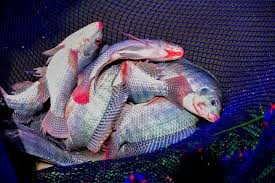
The Directorate of Fisheries Resources promoted sustainable fisheries management, aquaculture development, and market access. A total of 172 one-acre ponds were constructed and stocked, supported by formation of 177 youth and women groups. Aquaculture production increased from 120,000 MT to 122,000 MT, supported by distribution of over 1.6 million fingerlings and starter feeds.
Fisheries resource management included identifying 140 priority fish breeding areas, licensing 172,710 fishers, and improving post-harvest handling through 26 fish drying racks and solar tent dryers. Compliance and quality assurance ensured adherence to export standards, including passing the European Commission audit for fish exports. Uganda also signed a trade protocol with China, opening premium markets. Invasive aquatic weeds were cleared from 120 acres, improving navigation and ecosystem health. Research and innovation, in collaboration with NARO-NAFIRRI, produced the Lake Albert Biodiversity Atlas, improved larval survival of Ningu by 20%, and developed integrated fish-vegetable farming protocols.
Happy NRM Liberation Day!