By John Okello Lapok
The minister for finance, planning and economic development Matia Kasaija has called for strong collaboration, coordination and information sharing among Government agencies, the private sector, and international partners in the fight against Money Laundering and Terrorism Financing.

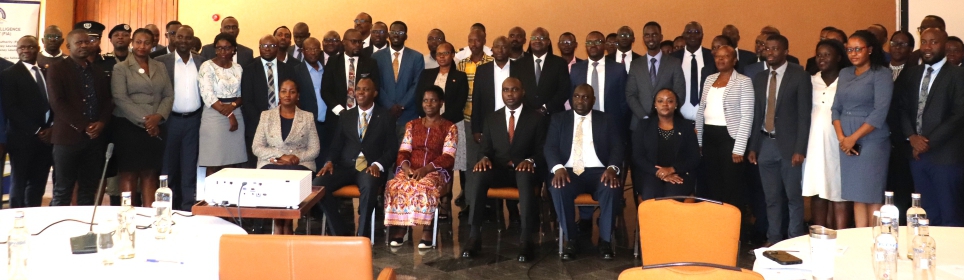
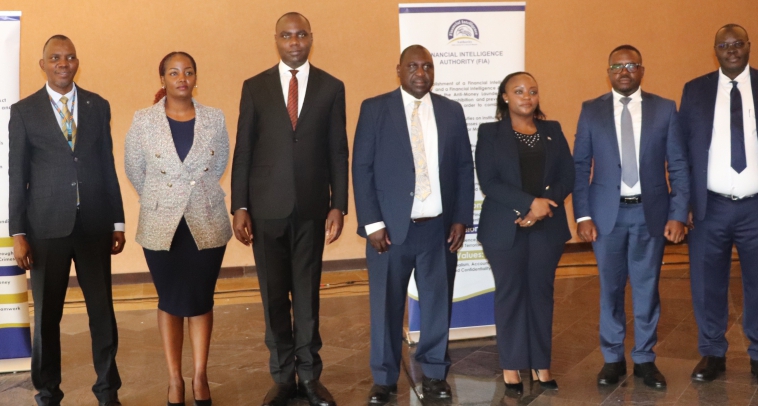
The minister made the remarks at Speke Resort-Munyonyo while officiating at the official launch of the activities to update the National Money Laundering and Terrorism Financing Risk Assessment for Uganda, noting that no single institution can fight both vices singlehandedly.
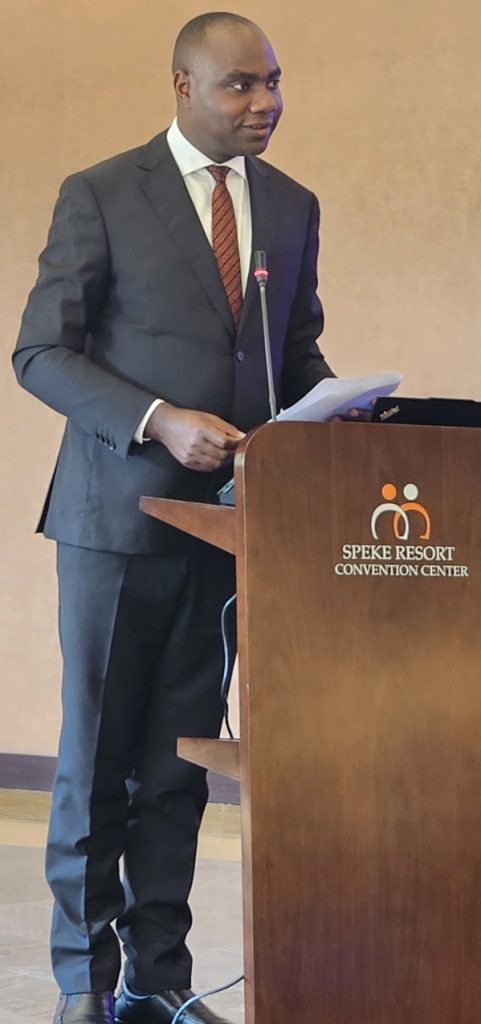
“As Government, we remain committed to supporting this exercise that leads to a robust Anti-Money Laundering and Countering the Financing of Terrorism framework so as to protect the financial system from abuse, uphold Uganda’s reputation, drive investment, and promote the financial inclusion agenda” Kasaija whose speech was read by state minister for finance Henry Musasizi who represented him said.
FIA DOING A GOOD JOB
Kasaija commended institutions including Law Enforcement Agencies, Regulators/Supervisors, Private Sector and Civil Society that have committed to contribute to this risk assessment exercise.
He saluted the Financial Intelligence Authority for successfully coordinating the previous Risk Assessments of 2017 and 2023; noting that the same institution has once again taken on this role as the overall coordinator for the assessment.
IMPORTANCE OF ASSESSMENT
The minister described the National Money Laundering and Terrorism Financing Risk Assessment as the backbone of Uganda’s Anti-Money Laundering and Countering the Financing of Terrorism framework.
“It enables Uganda to identify, assess, and understand the Money Laundering and Terrorism Financing risks we face as a country and thereafter, develop targeted, risk-based responses that ensure our resources are deployed where the risks are highest” he said.
He explained that this risk assessment will build on the assessments of 2017 and 2023, while incorporating new data, sectoral changes and emerging threats such as growth of digital payments, fintech, new technologies like virtual assets, cross-border trade systems, among others.
Kasaija said this will give government an up-to-date understanding of the risks faced by the country and informs the policies that are needed to strengthen the integrity of Uganda’s financial system.

He said that this assessment is timely as it comes ahead of the anticipated exercise of conducting a Mutual Evaluation of Uganda’s Anti-Money Laundering and Countering the Financing of Terrorism regime in 2028 by the Eastern and Southern Africa Anti-Money Laundering Group.
“The Mutual Evaluation will conduct technical compliance checks to establish the presence of the necessary legal and institutional frameworks; and the effectiveness of the measures and systems to achieve desired outcomes in combating financial crime” he said adding that this assessment is pivotal in demonstrating technical compliance especially with regard to Financial Action Task Force Recommendations.
The minister explained that by understanding the various sectoral risks through the assessment, Supervisors, Law Enforcement Agencies, Competent authorities and the private sector can implement appropriate mitigation measures that protect both the financial system and the economy as a whole.
He added that the assessment also assesses the major offences that generate illicit proceeds that criminals seek to conceal, disguise, or integrate into the formal economy.
Kasaija cited some of the offences including fraud and cyber crime, Tax evasion, Corruption, Wildlife and environmental crimes, including illegal logging, poaching, and trafficking of wildlife products, Smuggling and trade-based money laundering among others.
“Collectively, these predicate offences drain resources from the national economy, discourage investment, and impede sustainable growth. They also fuel inequality, as the burden of lost revenues and misallocated resources falls disproportionately on ordinary Ugandans” he said adding that by identifying and assessing Money Laundering and Terrorism Financing risks, the National Risk Assessment provides the country with a roadmap to disrupt criminal networks, strengthen revenue mobilization, protect natural resources, and build a fairer and more resilient economy.
He described the launch of this exercise as a milestone in Uganda’s fight against financial crime and therefore, urged stakeholders to prioritise this task, use it to strengthen the country’s policies, and ensure that all agencies align their work to mitigate the identified risks.
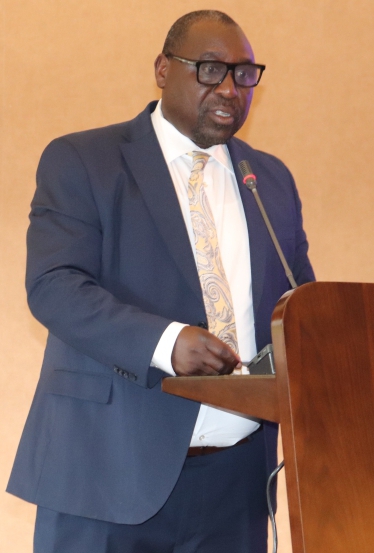
Meanwhile, FIA Executive Director, Samuel Wandera explained that this update goes beyond compliance to international obligations as it also seeks to strengthen Uganda’s resilience, protecting legitimate enterprises, and ensuring that the country’s financial system remains a trusted platform for investment and inclusive growth.
“The progress made since 2023 shows that when institutions take ownership of their responsibilities, meaningful change follows. The next phase is to consolidate those gains, close remaining gaps, and ensure that Uganda’s AML/CFT measures remain adaptive to global trends” he said.
He commended development partners such as the World Bank, UNODC, and GIZ SECFIN Africa Project for their continued support through technical guidance, financial assistance, and training.
Wandera called for renewed determination in approaching this exercise as each step taken brings Uganda closer to a safer, more transparent, and resilient financial system that supports national economic transformation.