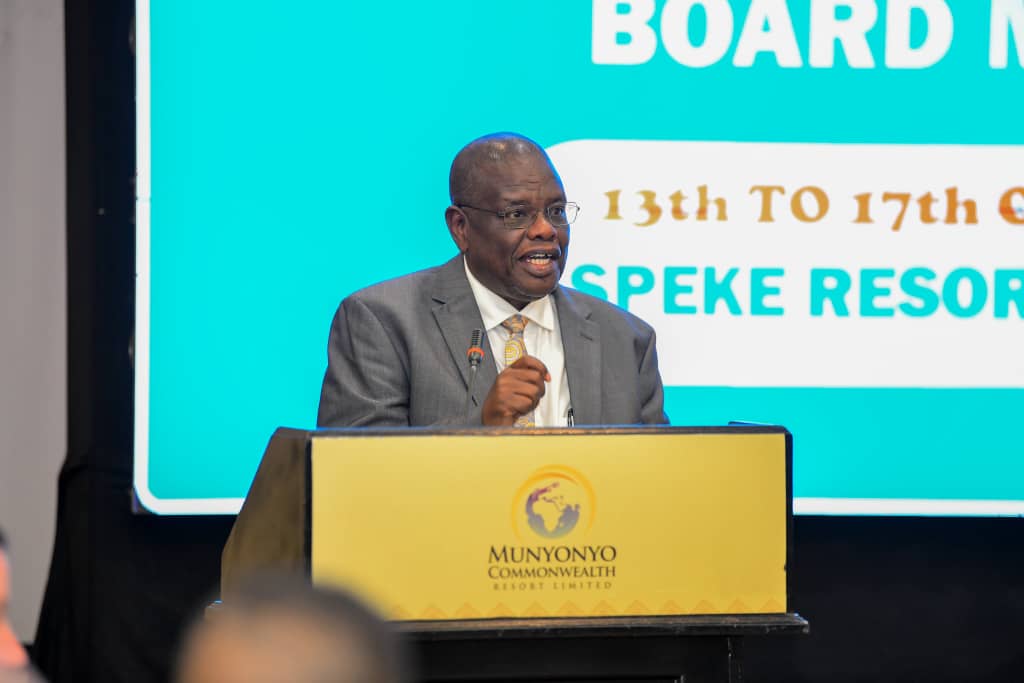

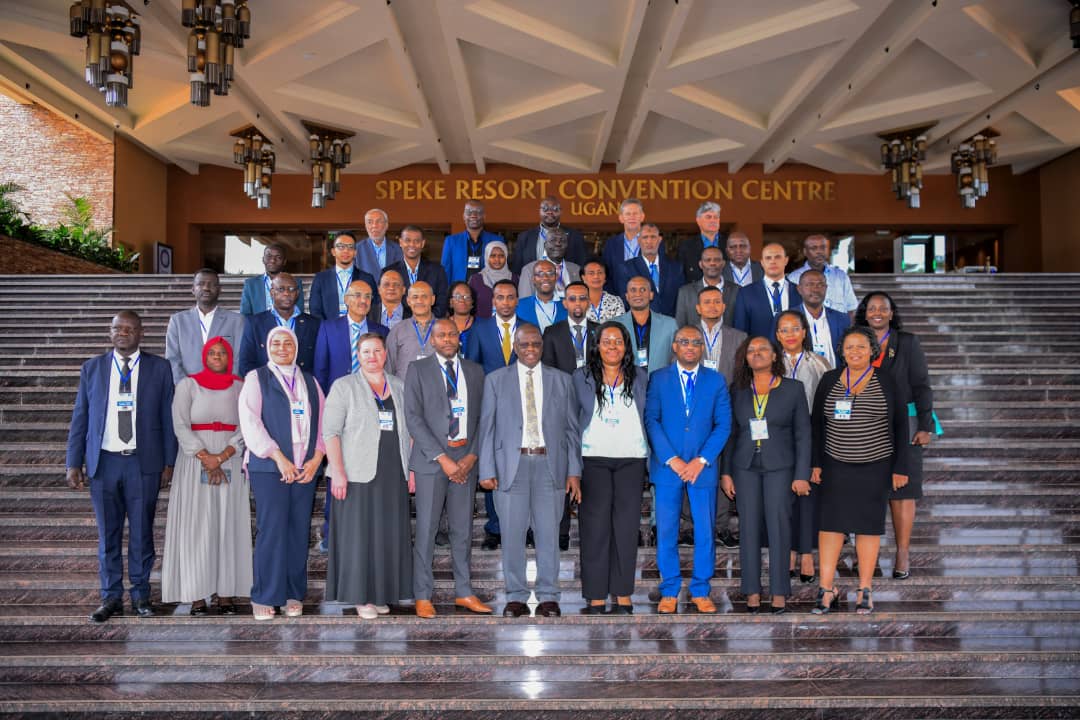
Uganda Civil Aviation Authority (UCAA) director general Fred Bamwesigye, has opened the 20th NAFISAT Supervisory Board Meeting.
The 4 Day meeting is taking place at common wealth Speke Resort Munyonyo in Kampala.

The meeting is organized by UCAA in collaboration with Air Traffic Navigation Services (ATNS) and the International Civil Aviation Organization – Eastern and Southern Africa (ICAO-ESAF).
The meeting has brought together representatives from 14 NAFISAT States, along with officials from ATNS, IATA, and the ICAO ESAF Office.
Addressing delegates at the official opening,UCAA director general Fred Bamwesigye, expressed happiness for Uganda to host the NAFISAT Maintenance and Management Centre at Entebbe International Airport, describing it as a hub that ensures operational integrity and technical coordination for the entire region.
Bamwesigye hailed NAFISAT as a true success story to proof that African States and institutions can achieve when we work together towards a common goal.
Meanwhile ICAO’s representative Harvey Gabriel Lekamisy noted that “NAFISAT was designed to support Aeronautical Fixed Telecommunication Network (AFTN), ATS/DS, and ATN services. Built on VSAT (Very Small Aperture Terminal) technology, it provides robust communication links in areas with limited terrestrial infrastructure while seamlessly integrating with networks like the Southern African Development Community Very Small Aperture Terminal (SADC VSAT) and the African Indian Ocean Satellite Network (AFISNET) to strengthen continental connectivity.
The meeting discussions will focus on strengthening interoperability, enhancing infrastructure, and aligning regional systems with ICAO’s Global Air Navigation Plan and Aviation System Block Upgrades (ASBUs).
UCAA boss Bamwesigye further stressed the importance of capacity building, innovation, and inclusivity, ensuring that all States, regardless of size or resources, benefit from the progress being made.
The 20th NAFISAT Supervisory Board Meeting marks more than just a review of technical systems. It is a reaffirmation of Africa’s collective vision: building safer, smarter, and more connected skies for the continent and the world.