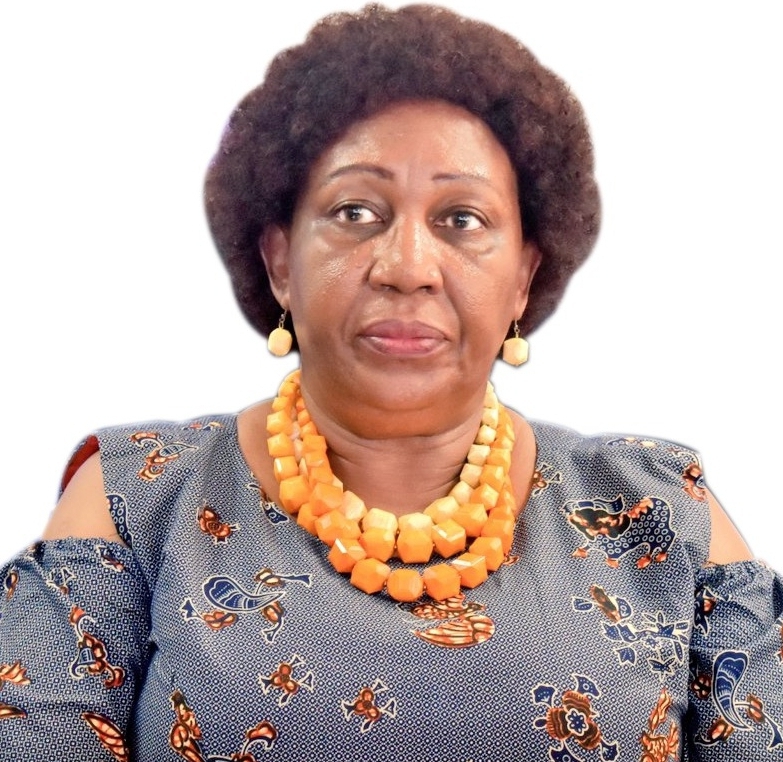
The Uganda Human Rights Commission (UHRC) chaired by Hajati Fauzat Mariam Wangadya has shared it’s position on the recent decision by President Museveni to pardon convicted NUP political prisoners. Similarly, Wangadya has expressed the Commission’s stand on the alleged abduction of FDC stalwart Kizza Besigye who’s currently in jail. In an extensive interview with The Inspector, the UHRC boss also shared the Commission’s achievements in this ending calender year 2024 and the plans ahead as we head to 2025 considered an electioneering year. Hereunder are the excerpts!Qn. We’re in the last quarter of the calendar year. The Uganda Human Rights Commission set targets to be achieved by the end of this year. Can you update us on the progress so far made and by what percentage?
Wangadya: The Uganda Human Rights Commission (UHRC) has been very intentional in setting specific, measurable targets for this year to fulfill our mandate of promoting and protecting human rights in Uganda. Considering that we are in the middle of the Financial Year, I am pleased to report that we are making significant strides in achieving our objectives which include enhancing public awareness of human rights, strengthening institutional capacity, investigating human rights violations, and playing our advocacy role. We estimate that we have so far achieved approximately 60-65% of the targets set for this financial year. We have so far been able to successfully complete public outreach programs, including human rights education campaigns across multiple districts. We are conducting investigations into human rights violations and flagging them off to relevant authorities. We have made legal interventions that have helped provide remedy to victims of rights violations, and increased awareness and response mechanisms for vulnerable groups, including women, children, and persons with disabilities. In fact, we are leading the charge in advocating for equal rights and inclusion for all individuals, regardless of their identity. For the first time, we’ve built strong partnerships with the broad civil society, media and we are leveraging the mutually beneficial relationship to achieve and surpass our objectives. We are confident that the remaining targets will be met before the end of the financial year, particularly with the continued collaboration of our stakeholders and partners in the human rights space.

Qn: To what extent has the public been able to utilize UHRC services this year compared to last year?
Wangadya: The public’s engagement with UHRC services has increased significantly this year compared to previous years. We have observed a marked rise in the number of complaints filed with the Commission, reflecting a greater level of trust in our ability to address human rights violations. In particular, we’ve seen a 25-30% increase in the number of cases reported, especially from marginalized and vulnerable communities such as key populations, rural communities, women, and persons with disabilities. Our outreach initiatives, such as the mobile clinics and human rights awareness programs, have helped increase public accessibility to our services. We have also embraced digital platforms to facilitate easier access to our services. The establishment of an online complaints portal has made it more convenient for citizens to report human rights violations, particularly for those who might have previously faced barriers in accessing our offices. Our social media presence has also significantly increased especially on X. We have seen a growth of X followers from 10,000 last year to 11,900 followers this year.
Qn. In this year, we have seen a lot of public activism, some in the form of street demonstrations against social injustices, mainly corruption among public officials. The demonstrations have largely been peaceful with no fatal incidents. Why do you think so?
Wangadya: The peaceful nature of these demonstrations is a testament to the growing awareness among Ugandans about their rights to peaceful assembly and free expression, as enshrined in the Constitution. The Uganda Human Rights Commission has been instrumental in promoting these rights through public education and advocacy, and I believe that this has contributed to the peaceful conduct of these protests. Where there has been unwarranted interference with peaceful demonstrations, I have engaged my law enforcement colleagues, but also condemned any unprofessional interference. We must also acknowledge the commitment of the Uganda Police Force and other security agencies in ensuring that public demonstrations are managed in a manner that upholds the rights of citizens to peacefully express their concerns. The fact that the demonstrations have been largely peaceful with no fatalities is a sign that our institutions are maturing in handling public dissent in a manner that respects human rights. Moreover, the role of civil society organizations and the media cannot be overstated in promoting a culture of peaceful protests and dialogue as a way of addressing social injustices. I hope to have continuous and regular engagements with the security, media and civil society as we get closer to the elections to ensure that freedoms of assembly, speech and right to peacefully demonstrate are protected at all time.
Qn. The issue of alleged political prisoners has been one of the key topics this year. A group of them subscribing to the NUP has since been convicted, sentenced, but pardoned by H.E the President. How did the Commission receive this news and could it have played any role in this milestone?
Wangadya: The Uganda Human Rights Commission welcomed the Prerogative of Mercy exercised by H.E the President in pardoning the political prisoners. This act was in line with the principles of reconciliation and restorative justice, which we firmly support as an essential part of building national cohesion. While the Commission does not have a direct role in advising on specific pardons, we acknowledge that our advocacy for the rights of political detainees and prisoners of conscience has contributed to creating a broader conversation around human rights and justice. Over the years, the Commission has played a crucial role in monitoring detention conditions, promoting the right to a fair trial, and advocating for the humane treatment of all prisoners. In this case, we commend the President’s action, which reflects a willingness to resolve political tensions through peaceful means and to uphold the right to dignity for all individuals, irrespective of their political affiliations.
Qn. Going forward, do you think H.E the President needs to regularly exercise his Prerogative of Mercy on some of the prisoners like he has done to the NUP prisoners?
Wangadya: The exercise of the Prerogative of Mercy is an important aspect of the President’s constitutional powers, and it serves as an essential mechanism for correcting wrongs, restoring justice, and promoting national reconciliation. The Commission believes that consistent and fair application of this power is crucial, especially in cases where individuals may have been wrongfully or disproportionately punished for their political beliefs. It is our position that the Prerogative of Mercy should be exercised, not only for political prisoners but also for others in detention who may benefit from rehabilitative justice, particularly those convicted for minor or victimless offenses or even those who have demonstrated remorse. The Commission encourages dialogue and continuous engagement between the government and civil society to ensure that all such decisions align with Uganda’s human rights obligations.
Qn. Reports of abductions of opposition activists continue to persist in our country, with the latest allegation being that of Kizza Besigye, who is said to have been snatched from Kenya. What is the Commission’s stand on abductions?
Wangadya: The Uganda Human Rights Commission strongly condemns all forms of abduction, arbitrary detention, or any violation of a person’s right to liberty. These actions are a direct violation of both national and international human rights laws, including the African Charter on Human and Peoples’ Rights, to which Uganda is a signatory. While we understand the gravity of these allegations, it is important to conduct thorough investigations to establish the facts. The Commission has called for accountability in such cases and will continue to monitor the situation closely, ensuring that those responsible are held to account. Furthermore, the Commission remains committed to advocating for improvements in law enforcement and the protection of individuals from unlawful acts of this nature.

Qn. The coming year 2025 is a political year because that’s when we’re going to conduct our General Elections. There are also going to be internal political party primaries, most of which are usually characterized by human rights abuses. What special package has the UHRC prepared to ensure that the election period remains peaceful?
Wangadya: As a Commission, we are already working closely with stakeholders, including the Electoral Commission (EC), security agencies, civil society organizations, and political parties, to develop a comprehensive strategy for monitoring human rights during the election period. Our focus is on ensuring that all actors respect the rights of citizens, particularly their rights to free and fair participation in the electoral process. We have designed special human rights monitoring programs to focus on; preventing and addressing human rights abuses during the election period, raising awareness on the rights of voters, particularly marginalized groups, to ensure they are not disenfranchised, and promoting the peaceful conduct of political party primaries and general elections through public campaigns. Additionally, we have strengthened our early warning systems to quickly respond to emerging human rights violations. The Commission is going to be at the forefront of mitigating the potential of violence through convening regular engagements with security and other relevant stakeholders to address threats and risks that are occasionally associated with electoral periods.
Qn. How is the UHRC coordinating with the Electoral Commission to ensure that the coming elections are free and fair?
Wangadya: The Uganda Human Rights Commission maintains an ongoing partnership with the Electoral Commission (EC), aimed at ensuring that all electoral processes are transparent, accountable, and uphold human rights principles. We are actively involved in; election monitoring to ensure that all citizens can exercise their rights freely, training for election officials on respecting human rights during the electoral process, providing a platform for grievances related to human rights violations in elections, and conducting civic education together with the EC itself. Our collaboration with the EC ensures that any human rights concerns raised during the election period are promptly addressed, and that the elections are conducted in line with both Uganda’s Constitution and international human rights standards.
Qn. The Commission has been struggling to have an increase in its budget. What is the status now, and what does this mean to the public who are the consumers of UHRC services?
Wangadya: The Commission has indeed faced challenges with securing adequate funding, which has impacted our ability to effectively carry out our duties, especially in terms of outreach and addressing a growing number of cases. However, we are pleased to report that we are currently in discussions with government authorities to secure an increased budget allocation for the next financial year.The increase in funding will directly benefit the public by expanding our reach to more communities, particularly in rural and underserved areas, increasing our capacity to provide legal aid and human rights education, and enhancing the efficiency of investigations and responses to human rights violations. We continue to advocate for a budget that is commensurate with the Commission’s expanding mandate and the increasing demand for our services.