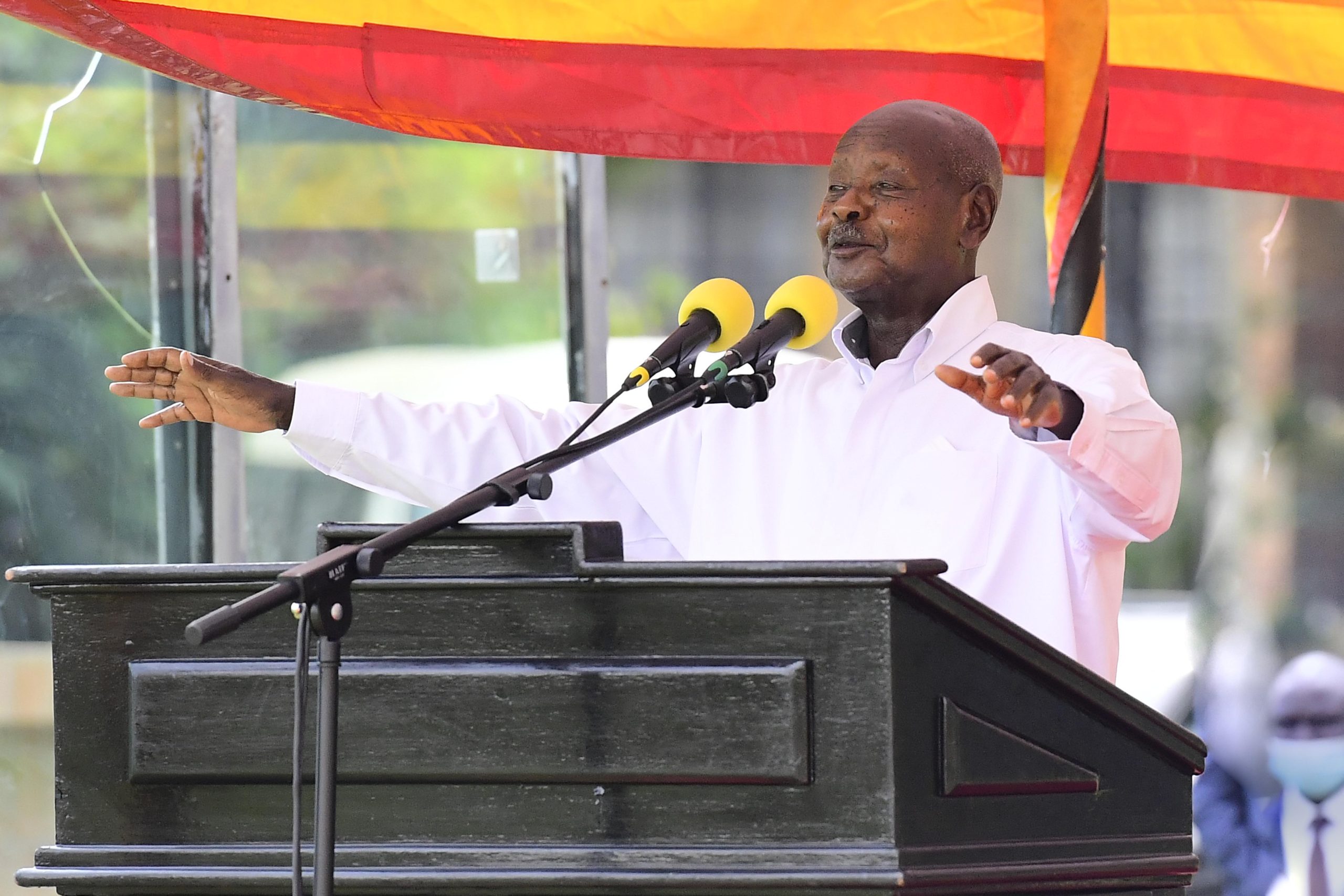
President Museveni has urged public administrators to liaise with reformers or political leaders who make a diagnosis in society when it comes to issues of philosophy and ideology.
According to the President, this will help the society to achieve effective administration.
“As you discuss the techniques on how to administer, what are you administering? Neo-colonialism or socio-economic transformation? Ensure that the context in which you administer is correct for socio-economic issues,” he said.
The President made the remarks while officiating at the 4-day 43rd African Association of Public Administration and Management (AAPAM) Round Table Conference and Annual General Meeting running from November 26-29, 2024, at Speke Resort Munyonyo, Kampala.

The conference, themed: “Agile and Resilient Public Administration Framework for Sustainable Development in Africa”, has brought together over 1,000 delegates from across the continent.
Participants will deliberate on strategies to strengthen governance systems to address Africa’s social, economic, and environmental challenges.
The gathering is expected to highlight Uganda’s progress and leadership in public administration, while boosting its reputation as a top destination for international events.
Museveni said when his NRM came into power in 1986, it found the public administrators operating and administering under the Neo-colonialism mode, which was a hurdle to political and economic development of the country.
“We told our people that leadership is like medical work, a doctor must look at the patient in front of him and make a diagnosis to know what he is suffering from. If you make a correct diagnosis and prescription, the patient will be healed or vice versa. In society, the political leader or social transformer makes the diagnosis.” he said.
Museveni explained that since public Administrators before the NRM government were working under the neo-colonial mode, Uganda had a small island of the enclave economy which later collapsed due to the political difficulties the country faced from 1962 to 1986.
“Uganda was exporting copper and processed up to 94 percent purity and you could not use it in your factory here. It will go all the way to Mombasa to be exported. Then we had to import the fully processed copper to be used in the cables factory.” he said.
He added that due to NRM’s clear analysis, they came up with the 10-point program, with point number five focusing on the economy.
“We said we should build an independent, integrated and self-sustaining economy whereby the whole society joins the money economy. Therefore, we had to advise and put forward our program which was to identify for our people the four sectors of the economy; commercial agriculture with “ekibaro” (calculation), manufacturing, services and ICT,” he expounded.
The President cautioned the attendees against the politics of identity based on tribe, religion and gender chauvinism, saying it’s detrimental to the development of Africa.
“Wars are caused by ideological bankruptcy. Ideologically bankrupt leaders make misdiagnoses on society. Politics of identity based on tribe, religion and gender chauvinism has caused many countries to break up,” the President said adding that “When you push the politics of identity, do you know where your future lies? You are commiting suicide.”He also called for political and economic integration for the socio-economic transformation of Africa.
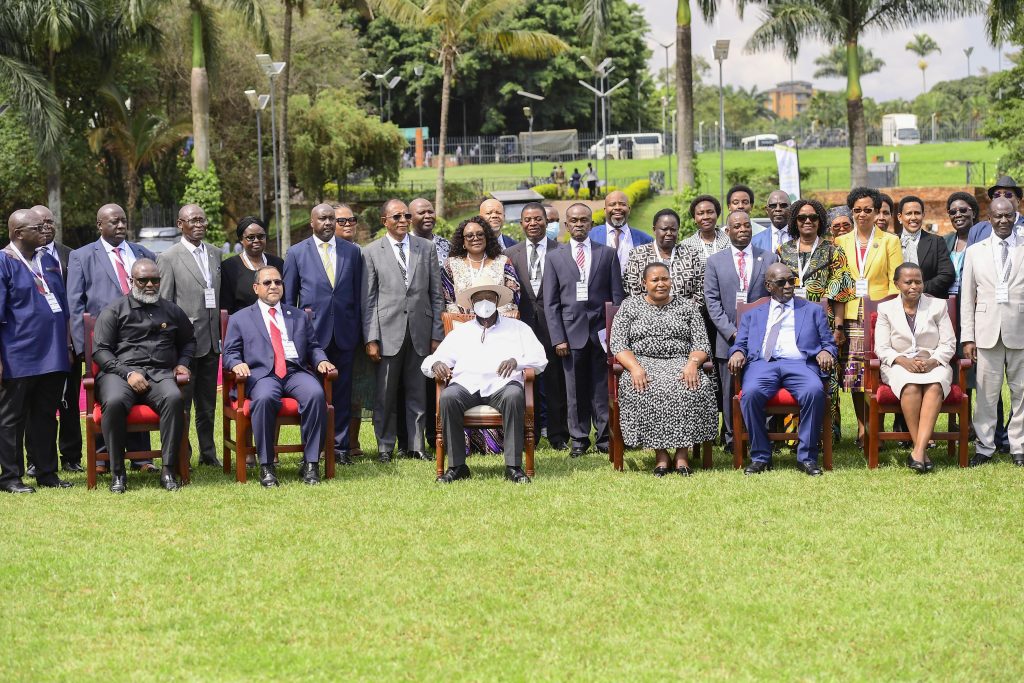
Meanwhile, the Minister for Presidency, Babirye Milly Babalanda informed the attendees that their participation in this session is a clear demonstration of their unwavering commitment to collectively shape the future of Africa.
She also informed the President that his leadership and commitment to excellence in public administration and management is truly commendable and his involvement has made the event memorable.

“Your Excellency Sir, The African Association for Public Administration and Management annual roundtable conference brings together public administration and management experts, practitioners and stakeholders across Africa and beyond. The round table conference serves as a platform for fostering dialogue, knowledge sharing and collaboration,” she noted.
Babalanda also revealed that in Uganda, they have made significant progress in promoting effective governance and public administration, emphasising that the country has implemented reforms to strengthen its institutions in order to improve public financial management, and to enhance citizen participation in decision-making processes.
“However, we are not immune to the challenges facing our continent. We must address the impact of climate change, conflict, and economic instability on our societies. We must also leverage technology and innovation to drive sustainable development,” she said.
The Minister also noted that Public Administrators are at the heart of promoting strong government or where they falter, governments necessarily cannot function optimally.
“I therefore commend AAPAM for providing a platform for knowledge sharing, capacity building, and networking among public administration professionals. Your work is critical to promoting effective governance and public administration in Africa,” she said.