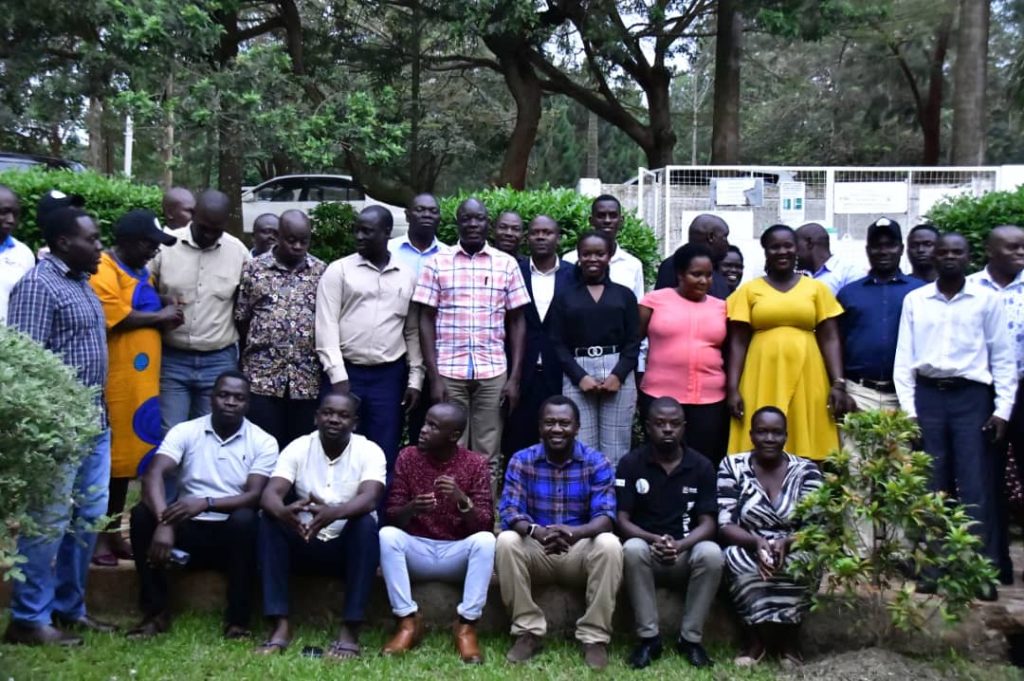
The Ministry of Agriculture Animal Industry and Fisheries (MAAIF) has started implementation of the Uganda Climate Smart Agricultural Transformation Project (UCSATP).
The activities of the project started with a three day training of the project implementation team as trainers of trainees led by the Permanent Secretary, Maj. Gen. David Kasura-Kyomukama and the Project co-ordinator, Eng. Boniface Okanya.

The nobel training which started on November 5 at the Nile Resort Hotel in Jinja City, brought together all MAAIF Heads of Departments and Agencies with components under this project.
According to Eng. Okanya, the brain behind this Nobel project, its development objective is to increase productivity, market access, and resilience of select value chains in the project area and to respond promptly and effectively to an eligible crisis or emergency.
Uganda Climate Smart Agricultural Transformation Project is a six (6) year project funded by the World Bank and is expected to end its operations by the year 2028.
FIVE COMPONENTS
Eng. Okanya told the meeting that the project consists of five components among which includes; Strengthening Climate-Smart Agricultural Research, Seed and Agro-climatic Information Systems; Promoting Adoption of Climate-Smart Agricultural Technologies and Practices and Investments in Market Development and Linkages to Selected Value Chains. Other components are Contingency Emergency Response and
Project Coordination, Management, Monitoring, Evaluation and Learning.
ABOUT CLIMATE SMART AGRICULTURE
Climate-smart agriculture is an integrated approach to managing landscapes, cropland, livestock, forests and fisheries that address the interlinked challenges of food security and climate change/shocks.
It is a blessing to Ugandans as it would support government to identify, develop, and incentivize adoption of climate smart agriculture technologies and management practices that contribute to climate adaptation of agricultural value chains to sustainably increase productivity and household incomes while enhancing resilience to climatic shocks.
According to the Ministry, climate change has had a devastating impact on on food security in Uganda.

“The rising temperatures and changing rainfall patterns are continuing to lead to crop failures and decreased agricultural productivity. This has greatly had a significant impact on food security in Uganda. Droughts and floods are also becoming more frequent and severe, which can damage crops and make it difficult for farmers to access water for irrigation” Eng. Okanya explained.
In addition, he said pests and diseases are expected to become more prevalent as the climate changes, further reducing crop yields.
Other factors are human activities, such as the use of fossil fuels, deforestation, wetland encroachment, and unsustainable agriculture contribute to climate change. He said this decreases the availability of nutritious food and clean water and destroys ecosystems and secure living environments.
“Eventually, this leads to malnutrition, ill health, and migration. These factors if not handled properly by the Government are likely to lead to increased food insecurity and malnutrition, particularly among vulnerable populations such as smallholder farmers and communities living in poverty” he noted.