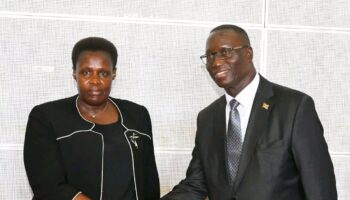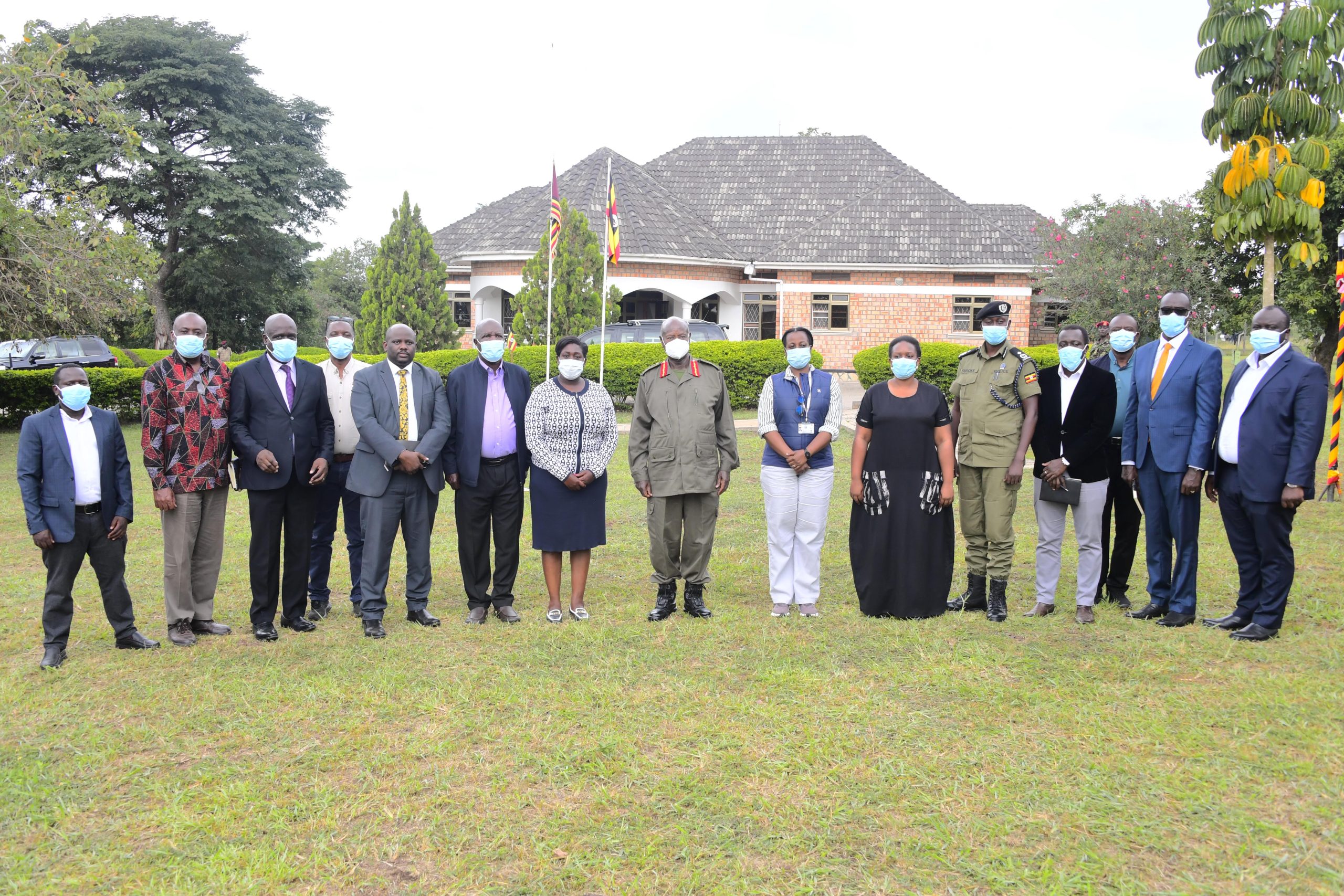
First son-in-law Odrek Rwabwogo has told President Yoweri Museveni that Cabinet Ministers need to be coached on how to speak about Uganda and also how to keep ‘kitchen’ secrets.
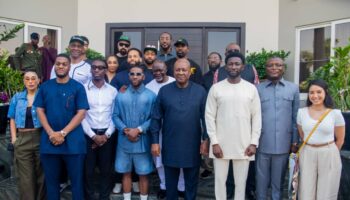
This is part of the proposals his team of government communicators he led to meet Gen. Yoweri Museveni at Kyankwanzi told him in an effort to improve on communication of government messages in order to improve on its image both locally and internationally.

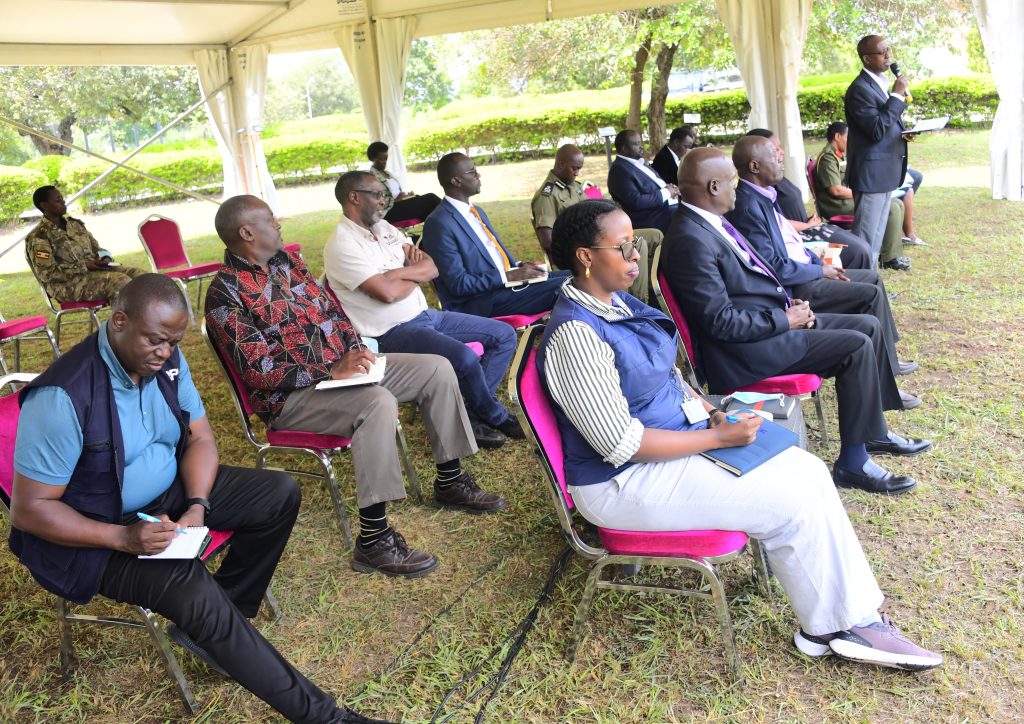
Rwabwogo made the remarks as he spoke about media-related challenges before an attentive H.E the President. Also the Chairperson of the Presidential Advisory Committee on Exports and Industrial Development, Rwabwogo said that over the past 18 months, efforts had been made to improve Uganda’s international image through various media engagements.
He however, noted that despite these efforts, local media often undermine the positive image being built.
“Only 12% of the citizens are positive about the government and 78% of online messages are negative perceptions about Uganda. This is bad” he said.
He called for the implementation of directives to centralize government communications, ensuring that actions in one sector do not negatively affect the overall market and reputation.
COACHING MINISTERS
He proposed robust daily research, immediate responses to negative news, and sensitizing public sector officials on the damage caused by irresponsible reporting.
“We need to coach cabinet members in international communication practices and extend this training to local governments. We are not against reporting issues, but it’s crucial how and where they are reported. Publishing everything inside our ‘kitchen’ can be dangerous,” Mr. Rwabwogo
ENTER GEN. MUSEVENI
Meanwhile, the host and President Yoweri Museveni expressed concern over the impact of what he called irresponsible media coverage on Uganda’s development and reputation.
The President condemned some media houses for distorting facts and creating harmful narratives, highlighting an incident in 1989 to illustrate his point.

At that time, he was working to commercialize milk production in the cattle corridor with a view of integrating traditional pastoralists into the money economy by promoting milk production.
“From 1989, we started acquiring Friesian cows and quickly produced a lot of milk. However, because the volumes were large, prices dropped. We needed to broaden milk products beyond liquid milk, so I sought investors to produce powdered milk, cheese, butter, and other products,” President Museveni said.
He recalled leasing the government-owned Uganda Dairy Corporation factory to an investor from Thailand to boost milk processing.
However, a journalist’s misleading headline—”Uganda Sells Uganda Dairy Corporation for $1”—caused public outcry and discouraged the investor from proceeding.
“This man stopped investing after seeing the negative stories. It took me another four years to secure another investor from India,” he recounted.
President Museveni also stressed that such irresponsible journalism can have long-term detrimental effects on the economy.
“This irresponsibility is very dangerous. I fully support forming a committee to address this issue,” he stated.
The meeting concluded with an agreement to have monthly discussions in the cabinet about Uganda’s global perception and strategies to improve it.
President Museveni and the meeting participants emphasized the need for order and discipline in media reporting to safeguard Uganda’s economic progress and democratic values.