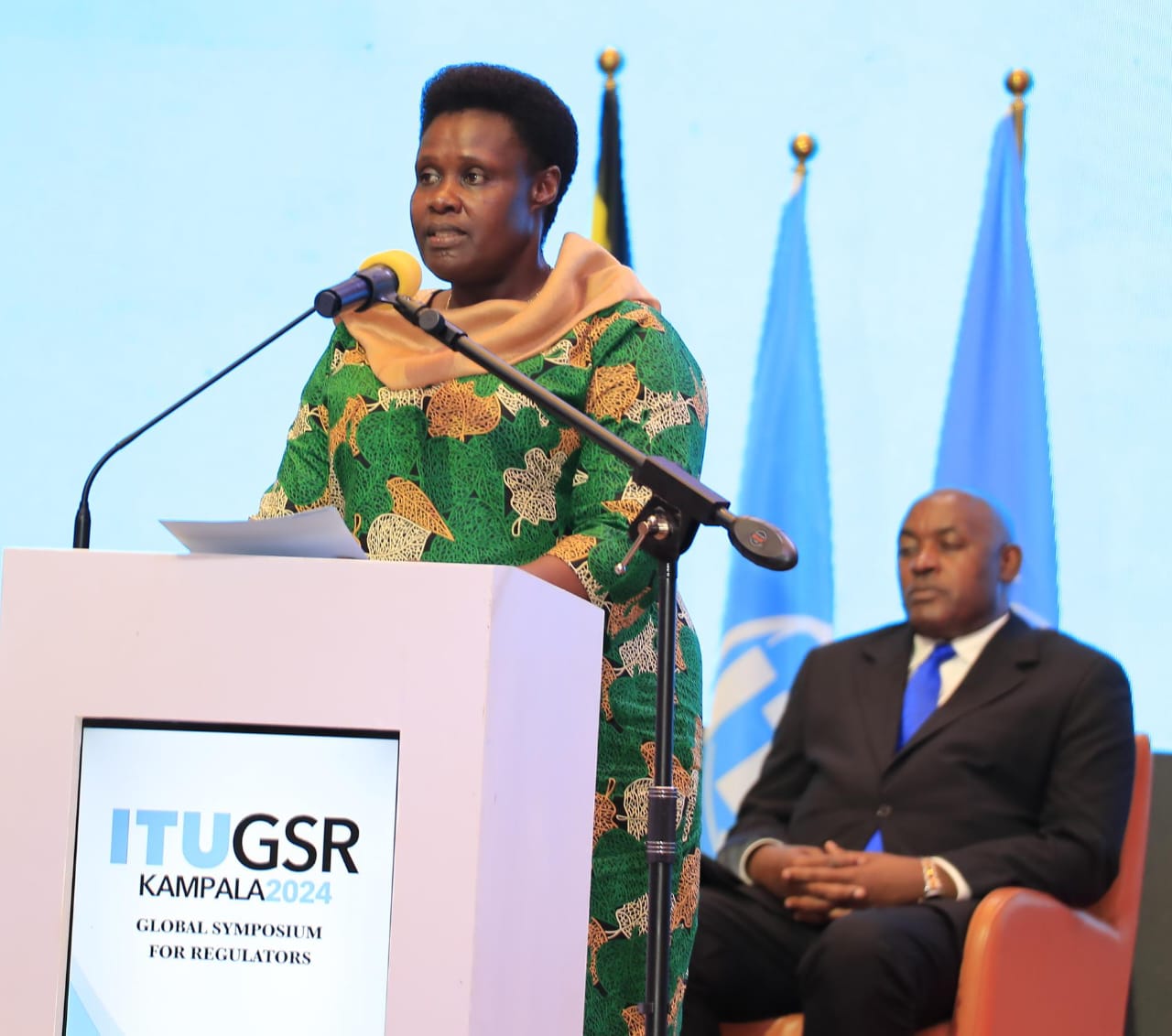
President Yoweri Museveni has revealed that government has developed a Digital Transformation Roadmap which partly aims at taking communication services to every household in the country.
He says this roadmap will transform Uganda into an inclusive digital economy adding that it will bridge the digital gaps and integrate ICT in all aspects of everyday life.

The President says once ICTs become accessible and affordable to all, the cost of doing business will be lower, more employment opportunities will be created and social services will get even closer to the voters.
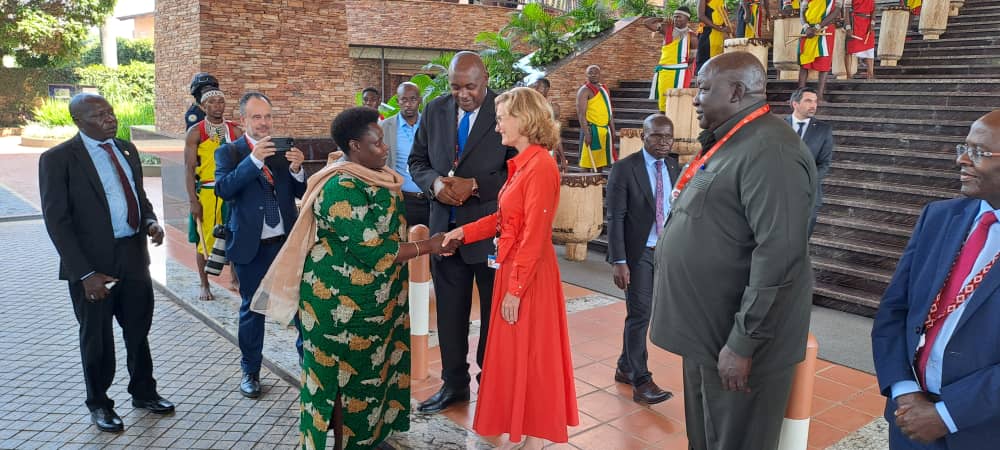
Museveni made the remarks in his speech read by Vice President Maj. Jessica Alupo who represented him at the opening of the Global Symposium of Regulators-2024 themed ‘Regulation for Impact’ at Munyonyo.
“ICT is at the centre of our socio-economic transformation agenda. This is because digital technology has the potential to accelerate economic development through innovation,
job creation and increased productivity” the President said.
Gen. Museveni noted that Uganda’s communication sector has registered growth over the last 25 years since reforms into the telecommunications sector were undertaken leading to the creation of the Uganda Communications Commission. He said the total number of fixed and mobile telephone customers has risen from a mere 68,196 in 1998 to over 36.5 million today.
As for the Internet, users have risen to 15.3 million while mobile money subscriptions are now at 40.6 million.
Museveni said the decision by government to reform the telecommunication sector sought to increase penetration and raising the standard of telecommunication services in the country with Uganda Communications Commission being created as an independent regulator to oversee the orderly development of the sector.
“It was a fundamental departure from the previous framework where policy,
regulation and operations were fused together. Uganda was one of the pioneering African countries to establish an independent regulatory body” he noted.
WHY LOW UPTAKE OF ICT

Museveni however, noted that in spite of that progress, there are some key factors responsible for the relatively low uptake of ICT services in developing countries. He cited low per capita incomes, unfriendly regulatory frameworks and
limited internet infrastructure as some of the bottlenecks that must be addressed so that people can enjoy the full benefits of ICTs.
He added that Artificial Intelligence, a component of the 4th Industrial Revolution, is increasingly becoming part of our daily lives in our homes and workplaces.
Museveni said with its ability to analyze vast amounts of data, identify patterns and provide accurate predictions, Artificial Intelligence has the potential to foster development across several sectors, including healthcare, agriculture, education, transportation, finance and manufacturing.
He said to ensure that Uganda is not a left behind on the 4th Industrial Revolution, government established the National Task Force on the 4th Industrial Revolution to coordinate the integration of Artificial Intelligence into the country’s development agenda.
Museveni noted that Uganda has a fast-growing communication sector that is ripe for more investment, citing its conducive investment environment, a robust regulatory framework, a good return on investment and a young population that is ICT savvy.
DANGEROUS TREND
The Head of State however, cautioned that the rapid change in technology, although beneficial and inevitable, poses regulatory challenges.
“As we embrace ICTs, we must not forget its potential downside. Cyber security is an issue that deserves greater attention. In recent years, we have witnessed technology being used as a tool for political interference and economic sabotage” Jjajja Museveni warned.
He noted that unlike traditional warfare where a country could secure its own borders by guarding them against intrusion, cyber warfare calls for collaborative efforts especially when emanating from outside the national jurisdiction.

“Technology must not be used to undermine the peace and sovereignty of nations but rather to support development” he cautioned.
He commended the International Telecommunications Union (ITU) Secretary General, Doreen Bogdan-Martin and her team for choosing Uganda to host this year’s GSR-24 meeting.